US Acknowledges Orbiting Counter-Space Weapons
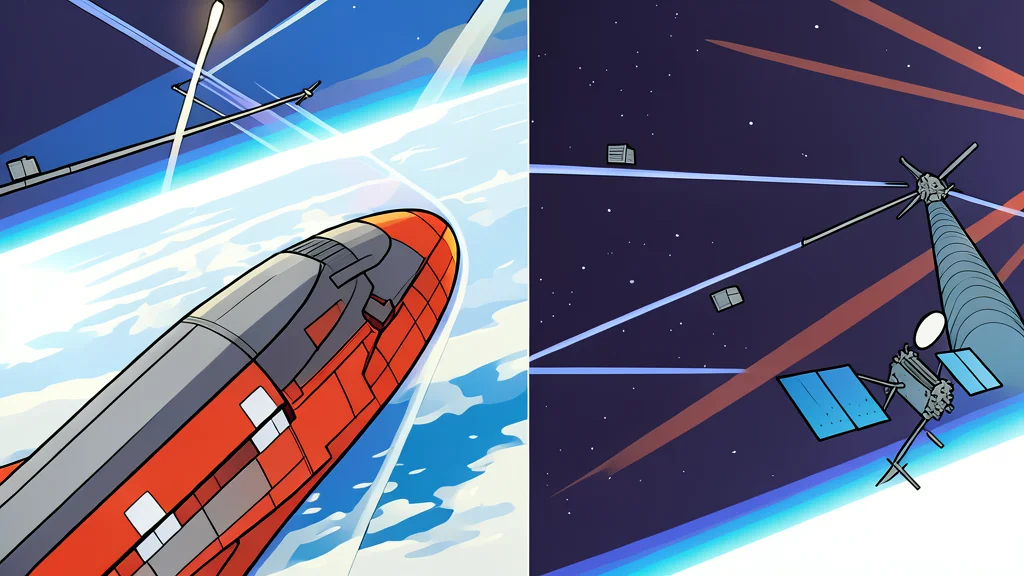
The United States has publicly confirmed the existence of weapons in orbit, a move that shatters decades of diplomatic ambiguity and signals a new era in strategic deterrence.
Washington has broken a long-standing diplomatic silence by officially acknowledging that it maintains weapons capable of countering hostile actions in orbit. US Air Force Secretary Troy Meink revealed this at a recent conference near the capital, stating that these systems are designed to defend joint forces against adversary actions. This admission confirms what many security analysts had long suspected: the outer atmosphere is transitioning from a realm of scientific exploration to a strategic military domain.
The disclosure arrives against a backdrop of rising tensions, with Beijing and Moscow already developing their own counterspace capabilities. According to reports from the GN auto geopolitics/global: arms race desk, the US position is framed as one of deterrence and protection rather than aggression. However, the move is expected to accelerate a competitive dynamic among major powers, as Russia and China are likely to respond by enhancing their own orbital defenses and offensive systems.
Ambiguity in Orbital Capability
Precise details regarding the nature of these weapons remain classified, leaving room for speculation about their specific functions. Experts suggest that the deployed systems may include non-kinetic tools such as electronic jammers or sensor-disrupting devices. Victoria Samson of the Secure World Foundation has noted that US offensive counterspace systems previously identified were likely jammers. While these do not involve physical destruction, they can disable critical infrastructure by interfering with satellite communications and data transmission.
The distinction between kinetic and non-kinetic weapons is significant for global stability. Kinetic weapons, which physically destroy satellites, create hazardous debris fields that can threaten other spacecraft for decades. In contrast, jammers pose a different kind of risk by potentially crippling essential services like GPS, weather forecasting, and financial networks. The uncertainty surrounding the exact capabilities deployed makes it difficult for other nations to calibrate their responses appropriately.
Legal and Strategic Paradox
The 1967 Outer Space Treaty prohibits weapons of mass destruction in orbit but does not explicitly ban conventional weapons. This legal gap has allowed for a gradual militarization that contradicts the diplomatic rhetoric of keeping space peaceful. The US announcement highlights a paradox where major powers publicly advocate for preventing an arms race while simultaneously investing in the very capabilities that define such a race. This shift marks the end of a six-decade diplomatic fiction that the United States would not be the first to weaponize the skies.
Reactions from Global Powers
China and Russia have reacted swiftly to the US disclosure. Beijing has urged Washington to cease preparations for war in outer space, warning against turning the heavens into a battlefield. Moscow has similarly called for the prevention of space militarization, asserting that space should remain free of weapons. Both nations possess substantial counterspace programs, with China having demonstrated anti-satellite technology and Russia maintaining strong capabilities in electronic warfare and proximity operations. India is also expected to monitor the situation closely as the strategic landscape evolves.