Uzbekistan Joins Global Space Cooperation Dialogue in Paris
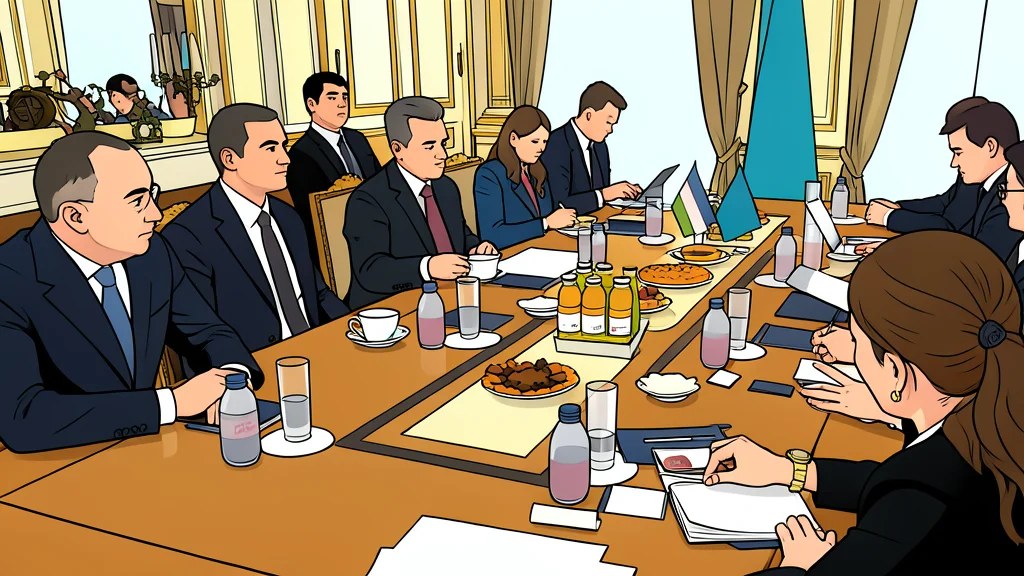
Uzbekcosmos officials participated in the inaugural International Space Summit in Paris, engaging in high-level discussions on sustainable space use and multinational cooperation.
Representatives from Uzbekistan’s Uzbekcosmos agency recently attended the first International Space Summit held at the Grand Palais in Paris. According to reports, the two-day event was initiated by French President Emmanuel Macron and convened delegates from ninety nations, alongside senior government officials and industry leaders. The gathering marked a significant moment for global space diplomacy, focusing on the future of international collaboration in orbital activities.
During their participation, Uzbek officials engaged in a series of bilateral meetings aimed at identifying new areas of cooperation. Discussions centered on sharing best practices and exploring prospective projects that could benefit from multilateral support. This engagement underscores a broader trend of Central Asian nations seeking to integrate into the global space ecosystem through structured diplomatic channels.
High-Level Diplomatic Presence
The summit attracted a notable roster of political figures, including heads of state from Rwanda, the Republic of the Congo, and Djibouti, as well as prime ministers from Greece, the Czech Republic, and Armenia. European Commission President Ursula von der Leyen also featured prominently in the proceedings. According to the event program, these leaders addressed critical topics such as space security, the development of the sector, and Europe’s strategic priorities in the final decade of the century.
The presence of so many senior dignitaries highlighted the growing geopolitical significance of space infrastructure. Leaders discussed how national space programs can serve as tools for soft power and technological sovereignty. The inclusion of various African and European leaders suggests a desire to build a more inclusive framework for global space governance, moving beyond traditional power blocs.
Scientific and Economic Priorities
Beyond political discourse, the summit placed a strong emphasis on the scientific and economic dimensions of space exploration. Panel discussions covered the global space economy, security frameworks, and the transformation of historic space organizations. European Space Agency Director General Josef Aschbacher participated in debates regarding the adaptation of established institutions to the changing commercial landscape of the industry.
A distinct focus was placed on the views of African leaders regarding the development of the space sector, reflecting the continent’s increasing interest in satellite technology and remote sensing. These discussions were complemented by roundtables on future space infrastructure, indicating a collective interest in building sustainable systems that can support long-term scientific research and commercial ventures.
Astronaut Participation and Live Links
The human element of space exploration was a central feature of the summit, with nineteen astronauts from fourteen countries in attendance. Notable participants included French astronaut Thomas Pesquet and Italian astronauts Samantha Cristoforetti and Luca Parmitano. A roundtable involving these astronauts, joined by the French president, provided a unique perspective on the practical realities of life in orbit.
On the second day of the event, a live link-up with the International Space Station featured French astronaut Sophie Adenot. This direct connection served as a powerful reminder of the collaborative nature of current space operations. The presence of such a diverse group of astronauts underscores the shared interest in maintaining open channels of communication and cooperation among all parties involved in space activities.