Iraq Suspends Border Traffic with Iran Amid Security Review
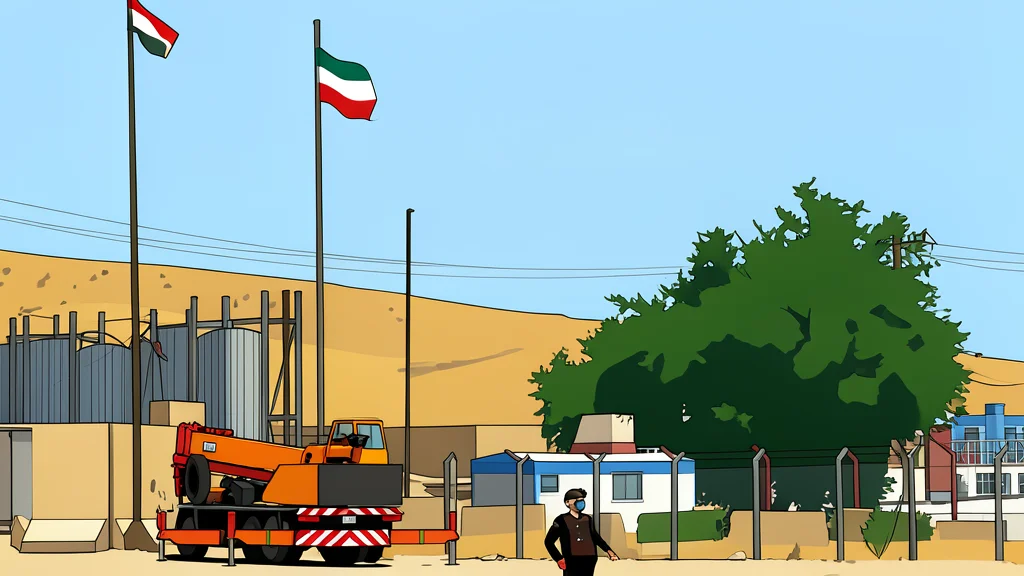
Baghdad has temporarily halted operations at key border points with Iran to investigate security lapses following recent drone incidents targeting Saudi energy infrastructure.
Iraq’s government announced on Saturday that several border crossings with Iran have been closed for administrative and security reviews. The decision follows reports of breaches and violations at these sites, which authorities say require immediate investigation. This move comes in the wake of drone strikes launched from Iraqi territory that targeted Saudi Arabia’s critical oil infrastructure.
According to a statement from Iraq’s security media cell, the closures are part of legal measures designed to determine the circumstances surrounding the recent incidents. While the measures are described as temporary, they represent a significant escalation in cross-border security protocols. Officials emphasized that efforts are underway to reopen the crossings once necessary organizational and upgrading requirements are finalized.
Specific Crossings Under Review
State media reported that the Al-Shib crossing in Maysan province and Al-Shalamjah in Basra were among the sites where operations were suspended. A high-level security committee was dispatched to the area to investigate the reported security breaches. Additionally, the Mandali crossing in Diyala province was closed, according to reports from Iraq’s border ports authority.
The Border Ports Commission clarified that cross-border movement has not entirely ceased. Operations continue around the clock at the Zurbatiyah and Al-Munthiriya crossings. The authority stated that it is working to finalize organizational requirements at the affected sites, paving the way for the resumption of normal operations once procedures are complete.
Consequences for Security Officials
In response to the drone attacks, Iraqi Prime Minister Ali al-Zaidi directed a thorough investigation into the incidents. Following confirmation that the attacks originated from Maysan province, the commander of Maysan’s operations was removed from his post. On Saturday, the prime minister ordered the dismissal of the police chief in the province and transferred security service directors to the command for further investigation.
Government spokesperson Sabah al-Numan indicated that Baghdad agreed to an Iranian request for a joint investigation. This collaboration aims to examine the discovery of drone launch platforms near the Iraqi-Iranian border. The joint effort reflects a shared interest in understanding the mechanics and origins of the recent provocations.
Regional Energy Implications
The targeted East-West pipeline serves as an essential energy lifeline for Riyadh. It allows Saudi Arabia to export up to 7 million barrels of crude oil per day, a capacity that is increasingly vital amid maritime restrictions in the Strait of Hormuz. According to GN geopolitics/migration (en-US), the stability of this route is crucial for global supply chains during periods of heightened regional tension.
These developments follow coordinated attacks by Saudi Arabia and the United States against several Popular Mobilization Forces bases in late July. Those strikes were reportedly a response to threats against Saudi oil facilities by Iran-aligned militias. The current border closures underscore the ongoing friction between state security apparatuses and non-state actors operating in the cross-border space.