AI Demand Reshapes Data Center Supply Chains
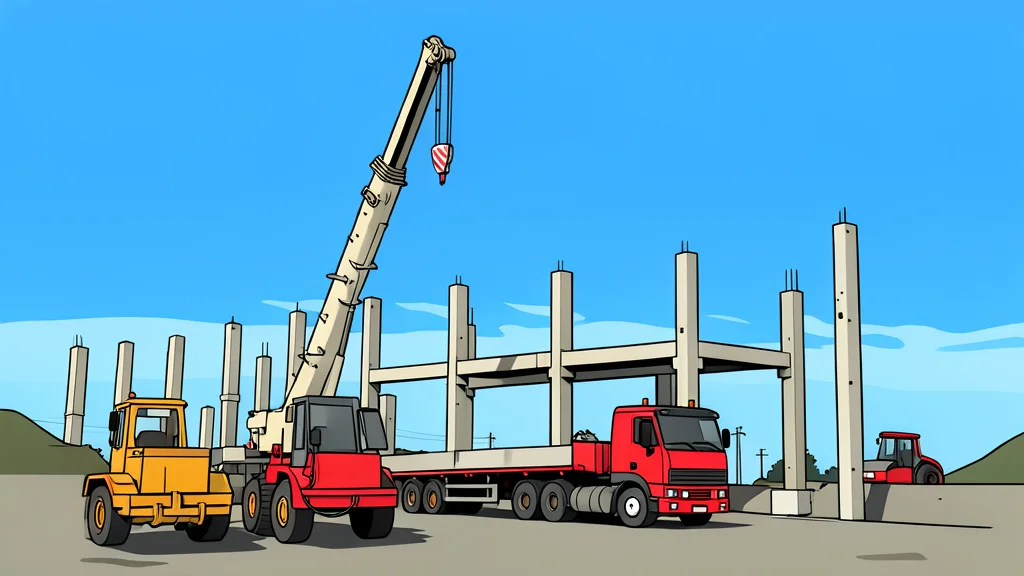
Major firms are merging to control the entire lifecycle of AI infrastructure, shifting power from fragmented specialists to integrated platforms.
The rapid expansion of artificial intelligence infrastructure is fundamentally altering how data centers are built and maintained. Companies are no longer satisfied with providing single components or isolated construction services. Instead, they are consolidating resources to manage the entire lifecycle, from initial planning to long-term operations. This shift creates a new market for specialized firms that can handle the complex logistics and technical demands of high-density AI facilities.
Recent transactions highlight this trend toward integration. T5 Services is separating its construction and operations units, allowing the construction arm to operate independently while the operations side moves toward acquisition. Similarly, JK Technology Services has acquired 360 Rigging to strengthen its heavy-lift capabilities. Limbach Holdings has expanded its role in program management by acquiring CYMCOR. These moves reflect a broader industry strategy to offer end-to-end solutions rather than piecemeal services.
Power infrastructure becomes central to deals
Energy supply is the dominant constraint in data center development, and acquisitions are increasingly focused on this bottleneck. Solaris Energy Infrastructure acquired Omega Foundation Services to add specialized engineering and construction capabilities to its existing power generation and distribution platform. This allows the company to manage the full spectrum of energy needs, from generation to maintenance. The move underscores that capacity is no longer just about megawatts, but about the ability to execute and operate complex power systems at scale.
Global suppliers are also extending their reach into energy. Vertiv agreed to acquire UtilityInnovation Group for approximately 1.45 billion dollars, expanding its portfolio beyond internal cooling equipment to include microgrids and grid interconnection. Flex’s 4.4 billion dollar acquisition of EPC Power adds advanced power-conversion technology for AI data centers. These deals signal a strategic shift where suppliers are moving beyond single layers of the infrastructure stack to assemble integrated platforms that span power delivery, facility systems, and the path from grid to chip.
Specialized services drive market consolidation
Historically, developers assembled large teams of architects, engineering firms, contractors, and facilities operators to build data centers. While these specialties remain important, service companies are increasingly combining multiple pieces of the project lifecycle under larger platforms. This consolidation aims to streamline coordination and reduce the risk of fragmentation during construction and operation. The goal is to provide a single point of accountability for complex projects that require precise technical execution.
The demand for these integrated services is driven by extraordinary infrastructure growth. North American data center absorption reached a record 25 gigawatts in the first half of 2026, doubling the level from the previous year and quintupling the figure from two years earlier. With vacancy rates remaining around one percent, the market is tightening. This scarcity forces developers to seek partners who can deliver projects faster and more reliably, favoring companies that can manage the entire process from planning to day-two operations.
Trade-offs in choosing integrated providers
Developers now face a strategic choice between assembling traditional project teams or relying on integrated service providers. The traditional approach offers flexibility but requires significant coordination effort across multiple vendors. The integrated model promises efficiency and reduced liability but may limit choice and increase dependency on a single entity. The catch is that while these platforms offer streamlined execution, they also concentrate risk and require deep trust in the provider’s ability to deliver across diverse technical domains.
As the industry evolves, the definition of value is shifting. It is no longer just about providing hardware or construction labor, but about the ability to navigate the complexities of AI infrastructure. Companies that can demonstrate expertise in power, cooling, and operational management are gaining leverage. For developers, the priority is ensuring that the chosen partner can handle the scale and density of modern AI facilities without compromising on quality or speed.