American Anxiety over AI Energy Costs Rises
A recent survey reveals a significant jump in public worry regarding the environmental footprint of artificial intelligence, with many citizens backing restrictions on new data center construction.
Concern among Americans about the environmental impact of artificial intelligence has climbed sharply. According to a recent survey, 53% of U.S. residents now describe themselves as extremely or very worried about AI’s effect on the environment. This represents a twelve-point increase from last year, when 41% shared similar feelings. The data comes from a joint study by the Associated Press-NORC Center for Public Affairs Research and the University of Chicago Energy Policy Institute, as reported by TIME.
This skepticism is not limited to one political camp. While Democrats show the highest level of concern at 65%, Republicans also express significant worry at 42%, and independents sit at 49%. A majority of Americans, roughly six in ten, indicate they support limiting the number of new data centers that can be built. This suggests a broad desire to manage the physical footprint of the technology driving the AI boom.
Energy and Water Usage Worries
Specific resource consumption drives much of this anxiety. Sixty percent of respondents are highly concerned about how data centers affect local electricity prices and water supplies. The demand for water is particularly notable, as these facilities use massive amounts of it for cooling systems. Consequently, two-thirds of U.S. adults support requiring data centers to switch to clean energy sources, such as wind or solar power.
Support for clean energy requirements crosses partisan lines, though it is stronger among Democrats, where eight in ten back the mandate, compared to 56% of Republicans. In contrast, the perceived benefits of these facilities are viewed with much less optimism. Only a quarter of respondents consider data centers extremely useful for technological development, and just two in ten believe they are highly beneficial for job creation.
Data Center Expansion Trends
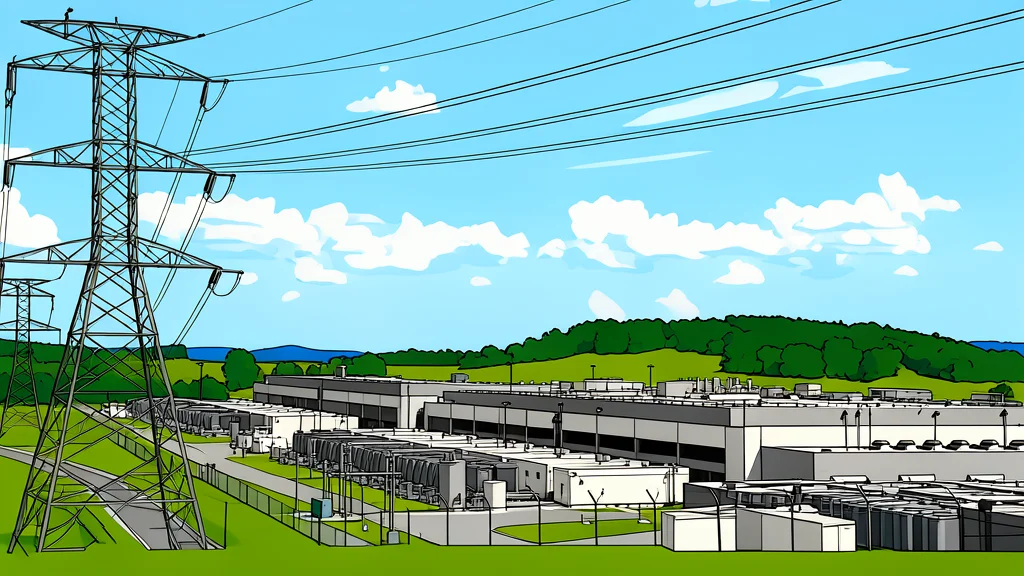
The physical expansion of these facilities is accelerating rapidly. Industry tracker Clearview reports that 1,287 data centers are currently operating in the United States, with over 2,000 additional projects in the planning stages. Virginia and Texas host the largest clusters, but new construction is spreading into rural areas of the South and Midwest. This growth is largely driven by the need for hyperscale facilities capable of training large AI models.
The energy implications of this expansion are substantial. An estimate from the Lawrence Berkeley Laboratory suggests that data centers could account for 11.8% of total U.S. electricity consumption by 2030. This projection underscores the trade-off between technological advancement and grid capacity, a tension that is increasingly visible in local communities.
Local Restrictions on Construction
Local governments are beginning to push back against this boom. According to the Urban Institute, 313 moratoriums on data center development had been introduced across the country as of late 2026. These restrictions affect 44 states and more than 200 local communities, including cities and counties. These local actions reflect the growing pressure on developers to address environmental and infrastructural concerns before proceeding with construction.