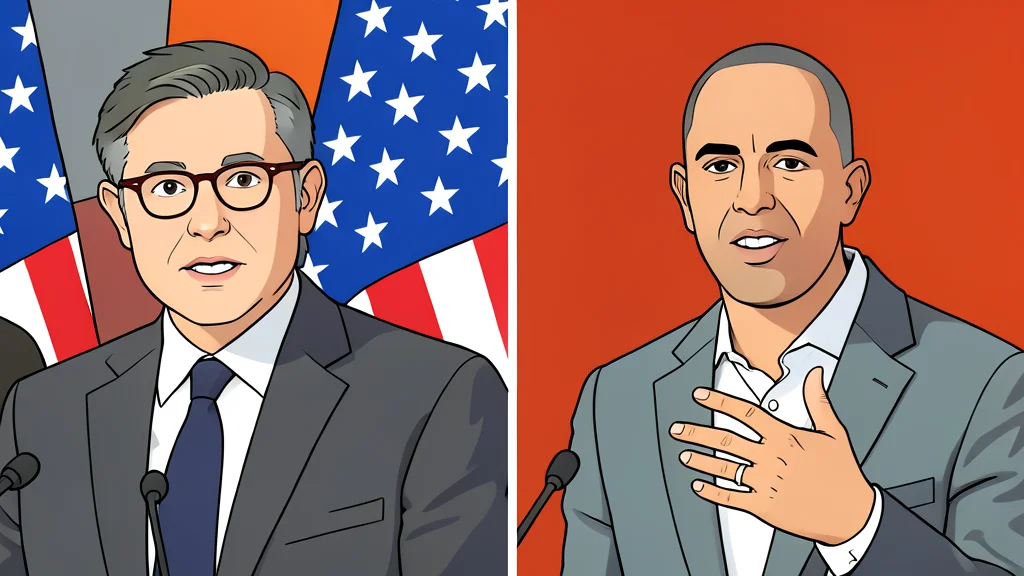
House Democrats Plan Urgent AI Safety Vote

House Democratic Leader Hakeem Jeffries is calling for immediate legislative action to slow down artificial intelligence development, citing warnings from industry insiders about potential existential risks.
Hakeem Jeffries, the Democratic leader in the House of Representatives, stated on Sunday that Congress must act urgently to address the challenges posed by artificial intelligence. Speaking on ABC’s This Week with George Stephanopoulos, Jeffries argued that decisive action is required now to protect the American public. He emphasized that the goal is to slow the pace of AI development to ensure it proceeds safely, a stance he said aligns with recent acknowledgments by technology CEOs about the need for caution.
This call for regulation follows stark warnings from former Anthropic researcher Jacob Coxon, who posted on social media that AI developers genuinely believe the technology could be fatal to humanity by the end of the decade. Jeffries indicated that the Democratic caucus will meet on Tuesday, with AI policy designated as a high priority. The push for legislative intervention represents a significant shift in how lawmakers are framing the rapid advancement of machine learning and its societal impact.
Political debate intersects with tech policy
Jeffries’ comments on AI arrived alongside a broader political confrontation with President Donald Trump. Jeffries dismissed Trump’s promise to pay Americans $5,000 if Republicans win the midterm elections, calling it an insincere proposal. He pointed to rising costs of living and gas prices as evidence of the administration’s failure to deliver on economic promises. The leader of the House Democrats also challenged Trump’s request for voters to pretend he is on the ballot, asserting that the current economic crisis and foreign policy decisions are the true measures for voters to consider in November.
The internal dynamics of the Democratic Party also remain a focus. Jeffries faced questions about his leadership confidence following recent primary victories by progressive candidates who often align with more radical policy platforms. He defended his position, stating that the primary mission is to retake control of the House to lower costs and hold officials accountable. He also addressed a late August meeting with Jared Kushner, arguing that dialogue with the opposing side is necessary at times, even amidst partisan tensions.
Industry warnings drive legislative urgency
The push for regulation is being fueled by growing concerns within the tech sector itself. While Jeffries did not name specific companies in his Sunday interview, he referenced recent acknowledgments by CEOs that the pace of development needs to be slowed. This aligns with the warnings issued by Jacob Coxon, whose public statements have added weight to the argument that current safety measures are insufficient. The convergence of political pressure and industry apprehension creates a unique environment for potential legislative action on AI governance.
According to GN technics/ai (en-US), the situation highlights a growing divide between rapid technological deployment and the slower pace of legal and ethical review. For readers, the stakes involve not just abstract safety protocols, but the tangible impact of AI on jobs, privacy, and economic stability. As the Democratic caucus prepares to prioritize AI on their agenda, the coming weeks may see a more formalized effort to establish guardrails for the technology, a move that could significantly influence the future of the tech industry in the United States.