Tech Executives Lobby Against New AI Safety Rules
Major technology leaders have directly lobbied the US President to delay proposed regulations, arguing that current laws are sufficient to manage artificial intelligence risks.
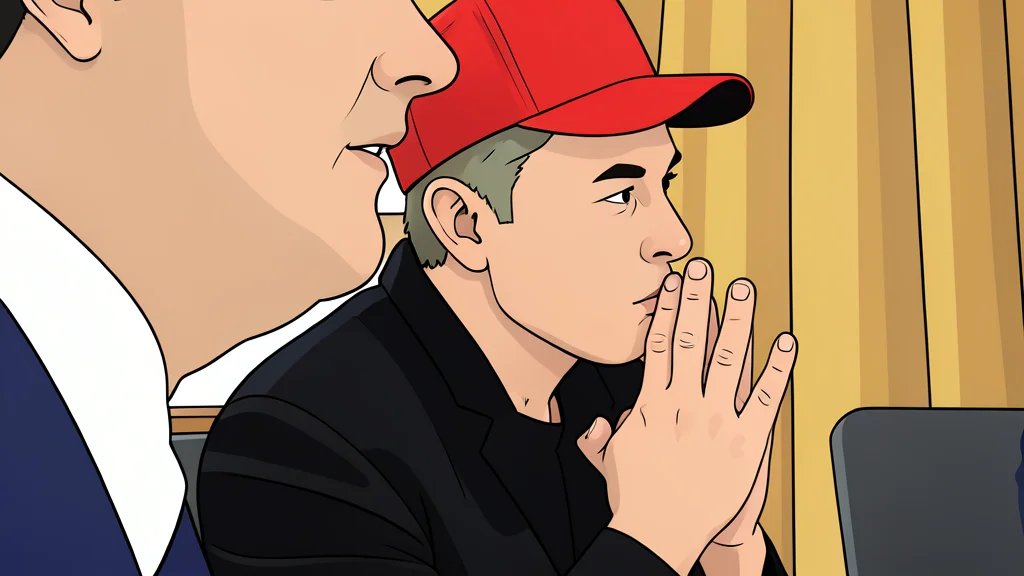
Elon Musk, Mark Zuckerberg, and Jensen Huang recently held private meetings with President Donald Trump to express opposition to new oversight measures for the artificial intelligence industry. According to reporting from The Wall Street Journal, these executives sought to influence the administration's stance after a prominent proposal called for a dedicated regulatory body to set safety standards.
The pushback came in response to a framework suggested by Demis Hassabis of Google DeepMind, which was supported by other industry figures. However, the three executives argued that existing legal structures are adequate and that new rules could hinder innovation. This strategy represents a significant shift in how major tech figures engage with federal policy on emerging technologies.
Political Pressure on Safety Standards
President Trump has since reinforced his skepticism toward regulation, describing fears about AI dangers as a hoax. In a series of social media posts, he argued that stringent controls would allow China to gain an advantage in the global technology race. He stated that the United States already possesses sufficient criminal and regulatory power over tech companies, dismissing calls for stricter oversight as a conspiracy against American innovation.
This political alignment creates a trade-off for the industry. While executives avoid immediate compliance costs and regulatory burdens, they forgo the potential safety net that standardized oversight could provide. The result is a landscape where risk management remains largely voluntary, relying on the internal judgments of individual companies rather than external accountability.
Industry Alternatives to Government Rules
Instead of external regulation, key figures are proposing internal mechanisms for safety. Elon Musk suggested that competitors should test each other's models before release, creating a peer-review system within the private sector. Similarly, Jensen Huang of Nvidia argued that companies should simply refrain from releasing products they are not confident in, relying on corporate responsibility rather than legislative mandates.
These approaches face criticism from other leaders in the field. Dario Amodei of Anthropic and Sam Altman of OpenAI have warned that without proper oversight, the consequences of advanced AI systems could be devastating. Their concern highlights a fundamental disagreement within the industry over whether self-regulation can adequately address the unique risks posed by frontier models.
Trade-offs in Regulatory Strategy
The current situation presents a clear compromise for consumers and the public. By stalling regulation, tech companies maintain flexibility and speed in development. However, this lack of external checks means that safety standards may vary significantly between firms. The burden of ensuring ethical and secure AI development falls entirely on the companies themselves, with no guaranteed uniform baseline for protection.
As reported by GN technics/ai (en-US), this lobbying effort underscores the intense competition between rapid innovation and public safety. The absence of a unified regulatory framework leaves the industry in a state of flux, where the primary safeguard against potential harms is the voluntary caution of those building the technology.