Silverado EV Towing Range Gap Remains
A former aerospace engineer reports that while the Silverado EV handles long family road trips efficiently, it still lacks the towing range required for practical heavy-duty work.
David Rosing, a former systems engineer at Caltech’s Jet Propulsion Laboratory, has offered a detailed assessment of the Chevrolet Silverado EV’s capabilities. His analysis, shared in response to a report by GN auto tech/ev: electric vehicle, highlights a distinct split in the truck’s performance. While the vehicle excels at passenger transport and on-site power generation, it currently falls short of the requirements for heavy towing over long distances.
Rosing’s experience suggests that the electric pickup is nearly ready for most long-haul applications but requires a significant increase in battery capacity to become a true workhorse. The core issue is not the speed of charging, but the total energy available when pulling a heavy load. For professional users who cannot rely on frequent stops, the current range creates a practical bottleneck that limits the truck’s utility in certain industrial scenarios.
Road Trips Are Efficient
For passenger travel, the Silverado EV performs strongly. Rosing noted that he and his family covered 500 miles in a single day using the Extended Range version, which offers approximately 400 miles of unladen range. The routine was straightforward: charge overnight at a hotel, drive the morning leg, and stop for a quick midday recharge. The entire process was seamless enough that the charging pause felt negligible compared to the necessary breaks for the family.
Charging speeds were a key factor in this efficiency. Rosing reported that high-power stations restored the battery to 80% capacity faster than it took to eat lunch. In some instances, the truck charged at rates exceeding 300 kilowatts, though most sessions hovered between 170 and 200 kilowatts. This speed allowed for a travel pattern that rivals or exceeds the convenience of traditional gasoline vehicles for long-distance family trips.
Towing Requires Double The Range
The situation changes dramatically when the truck is used for towing. Rosing argues that a 300-mile towing job requires a vehicle with roughly 600 miles of real-world range to be practical. This is not a matter of marketing estimates, but a working rule of thumb based on physics. Towing increases aerodynamic drag and energy consumption significantly. When you factor in cold weather, hills, and the need to arrive with a usable buffer of charge, the effective range drops sharply.
Current owner reports support this assessment. While the EPA estimates for the Silverado EV range from 408 to 492 miles depending on the model, real-world towing figures are much lower. One owner reported only 150 to 170 miles of range while pulling a travel trailer, while another in a cold climate saw it drop to about 124 miles with a heavy load. This means a single charge is often insufficient for long towing tasks, forcing drivers to make multiple stops or unhitch the trailer to recharge, which is impractical for many work scenarios.
Power Outlets Aid On-Site Work
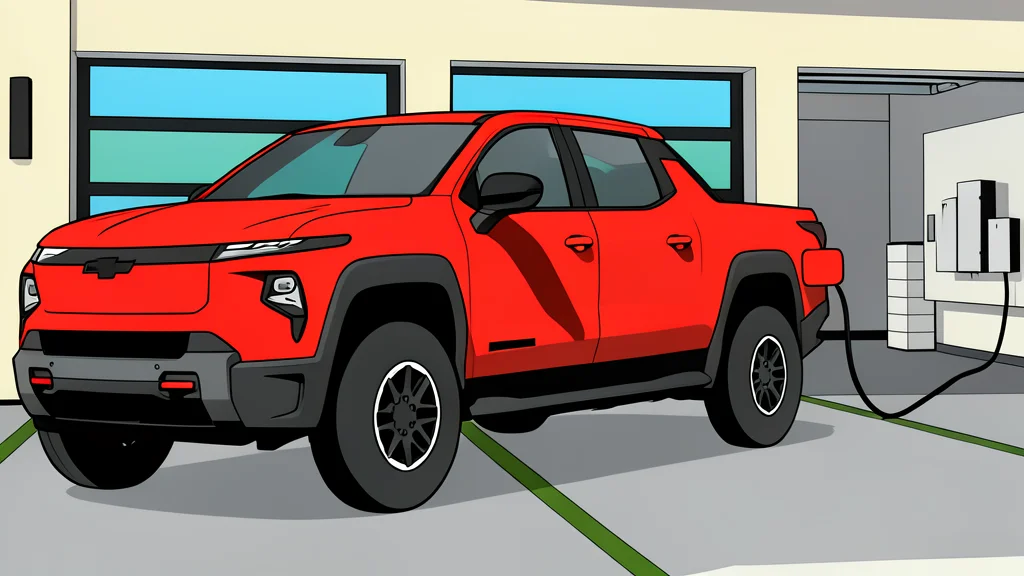
Despite the towing limitations, Rosing highlights a significant advantage in the truck’s role as a mobile power source. Once the vehicle arrives at a job site, it can power corded tools and charge equipment directly from its battery. This capability allows the electric truck to replace noisy and polluting gas generators for on-site operations. It is a compelling feature for crews that need reliable power without the maintenance and fuel logistics associated with combustion engines.
The trade-off, however, remains clear. The Silverado EV is an excellent highway cruiser and a capable power station, but it is not yet a direct replacement for gas trucks in high-towing, long-haul applications. Until battery technology provides the 600-mile towing range that Rosing deems necessary, professional users will likely need to keep their internal combustion vehicles for heavy-duty work, using the electric model for travel and on-site power instead.