Chinese EVs Capture a Third of South Korea's Market
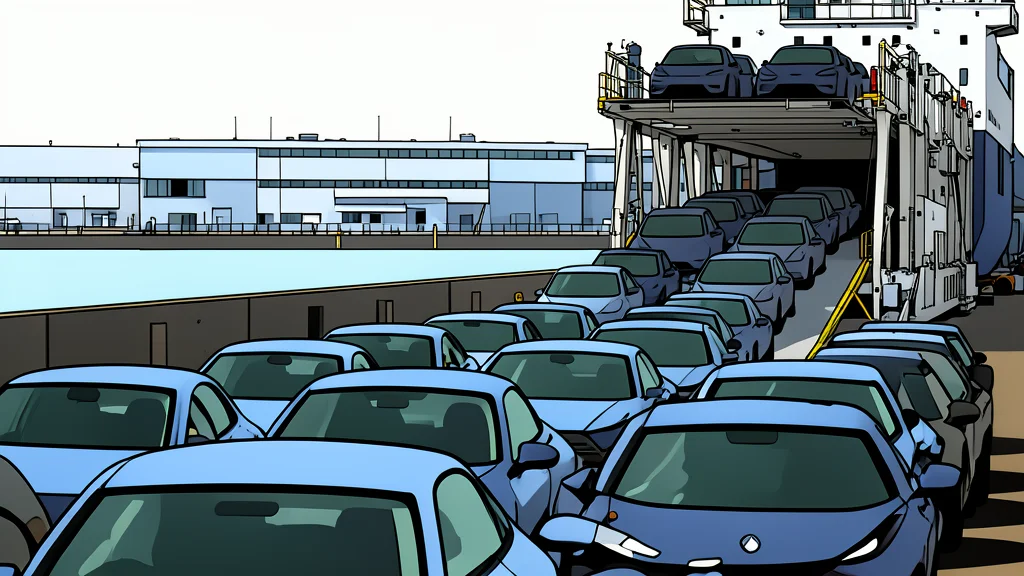
South Korea's electric vehicle market has seen a rapid shift, with Chinese brands overtaking local rivals despite existing trade barriers.
Chinese-made electric vehicles now account for more than a third of sales in South Korea, a dramatic rise from just over 10% two years ago. This surge has triggered serious concerns among local industry leaders, who warn that the domestic auto sector faces a risk of structural collapse similar to what happened in Italy.
The expansion is not limited to finished cars. Chinese manufacturers like BYD and Geely are climbing the sales rankings, while Chinese suppliers are acquiring local parts companies. This dual pressure on both the final product and the supply chain threatens to unravel the entire ecosystem that supports South Korea's automotive industry.
Italy’s Collapse Warns of Supply Chain Failure
Experts point to Italy as a cautionary tale. Once a major producer of two million vehicles a year, Italy’s output dropped to fewer than 240,000 units last year. The loss of its finished-vehicle industry caused a cascading failure in the parts sector, pushing the country out of the top 20 global producers. South Korea fears a similar domino effect if it cannot protect its core manufacturing base.
The concern is that when the main vehicle producers disappear, the specialized suppliers and component makers that depend on them also vanish. This creates a vacuum in local employment and technological capability that is difficult to refill, leaving the country dependent on imported complete vehicles rather than producing them.
Low Tariffs Leave Market Exposed
South Korea’s defensive barriers are significantly lower than those of its trading partners. While the United States imposes total tariffs of over 127% and the European Union applies rates up to 45%, South Korea charges only 8% on Chinese passenger cars. This rate is even lower than the 15% tariff China places on Korean vehicles, creating an unbalanced trade environment.
According to data from the Korea Automobile & Mobility Association, this low barrier allows Chinese EVs to flood the market despite price differentials. In contrast, open markets like Chile see Chinese vehicles hold nearly 40% of all auto sales, demonstrating how quickly dominance can shift without protective measures. South Korea’s current stance offers little resistance to this trend.
State-Driven Subsidies Fuel Price Aggression
The competitive advantage of Chinese automakers is largely driven by a coordinated national strategy. The central government sets industrial direction, while local governments provide subsidies that enable massive overcapacity. This surplus production is then exported globally, allowing Chinese brands to undercut competitors on price in markets like South Korea.
This approach, often described as a swarm strategy, involves multiple companies entering the market simultaneously, imitating and competing with one another. The result is a wave of affordable vehicles that erodes market share rapidly. For South Korea, the challenge is not just competing on price, but preserving the industrial infrastructure that currently supports its economy.