Egypt Pushes for $12bn Digital Export Goal via Data Center Buildout
Cairo is accelerating its push to become a regional technology hub by ordering the expansion of data centers and 5G networks. The government aims to reach $12 billion in digital outsourcing exports by 2029, betting heavily on cloud infrastructure and artificial intelligence to drive economic growth.
Egypt’s President Abdel Fattah Al-Sisi has directed a significant upgrade to the country's digital backbone. The order focuses on scaling up large-scale data centers, expanding 5G coverage, and increasing investment in cloud computing. These moves are central to a national strategy that targets eight billion dollars in digital exports by 2028 and twelve billion dollars in outsourcing services by 2029.
The directives were issued during a high-level meeting with the Prime Minister, the Communications and Information Technology Minister, and senior military signals officials. The agenda covered a broad range of topics, including cybersecurity, electronics manufacturing, and the development of government digital services. Officials emphasized that strengthening these infrastructure layers is essential for positioning Egypt as a competitive hub in the global data economy.
Infrastructure expansion drives export targets
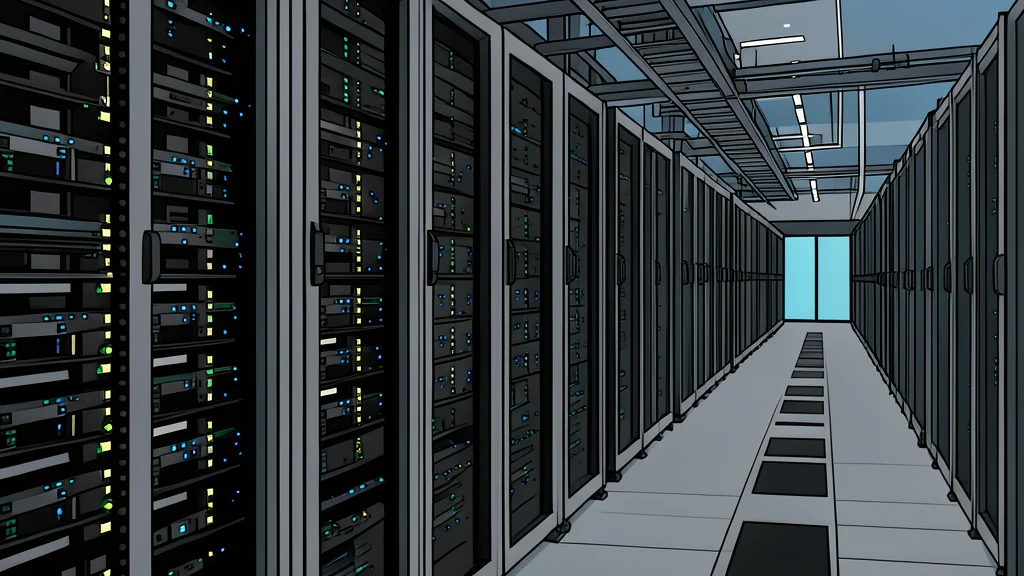
The core of the strategy involves building the physical capacity to host international data. By expanding data centers, Egypt aims to attract foreign companies seeking to store and process information within the Middle East. This infrastructure is described as a key pillar of the digital economy, providing the necessary foundation for cloud services and AI applications. The government also plans to increase the number of companies involved in electronics design to one hundred and twenty by 2030, indicating a shift toward localizing high-tech manufacturing.
Alongside data storage, the rollout of 5G networks is a priority to ensure faster and more resilient communication links. This expansion is intended to reduce concentration risks in the telecommunications market and support the growing demand for high-speed connectivity. The government views these upgrades as critical for maintaining competitiveness against neighboring regions that are also investing heavily in digital infrastructure.
Artificial intelligence and digital sovereignty
A major focus of the meeting was the development of local artificial intelligence capabilities. The government is pushing the “Karnak” AI program, which seeks to achieve digital sovereignty by creating Arabic-language generative AI tools. This initiative is designed to reduce reliance on foreign technology platforms and ensure that AI solutions are tailored to the local linguistic and cultural context. The Applied Innovation Center is working to develop these solutions across various sectors.
However, the push for rapid AI adoption comes with significant trade-offs. Building a robust AI ecosystem requires substantial investment in both hardware and specialized talent. The government is addressing the skills gap through the “Digilians” initiative, a training program run with the Egyptian Military Academy. This effort aims to prepare workers for the labor market while ensuring that the selection of beneficiaries remains transparent and neutral to maintain public trust.
Balancing growth with security risks
As digital services expand, cybersecurity has become a central concern for policymakers. Officials described security as a core pillar of the transformation strategy, noting that trust in digital services is essential for attracting international clients. The government is also moving to protect vulnerable users, including a recent joint decision to restrict harmful content on social media for children under fifteen. While these measures aim to create a safer digital environment, they also add layers of regulatory complexity that businesses must navigate.
The broader picture presents a nation attempting to leapfrog traditional industrial stages by focusing on high-value digital services. The ambition is clear, but the execution depends on consistent power supply, skilled labor, and regulatory stability. For investors and readers, the stakes are high: success could reshape Egypt’s economic profile, while failure would leave a costly infrastructure with limited immediate returns. The coming years will test whether these directives can translate into tangible economic gains.