Waaree Expands Data Center Footprint with Two New Subsidiaries
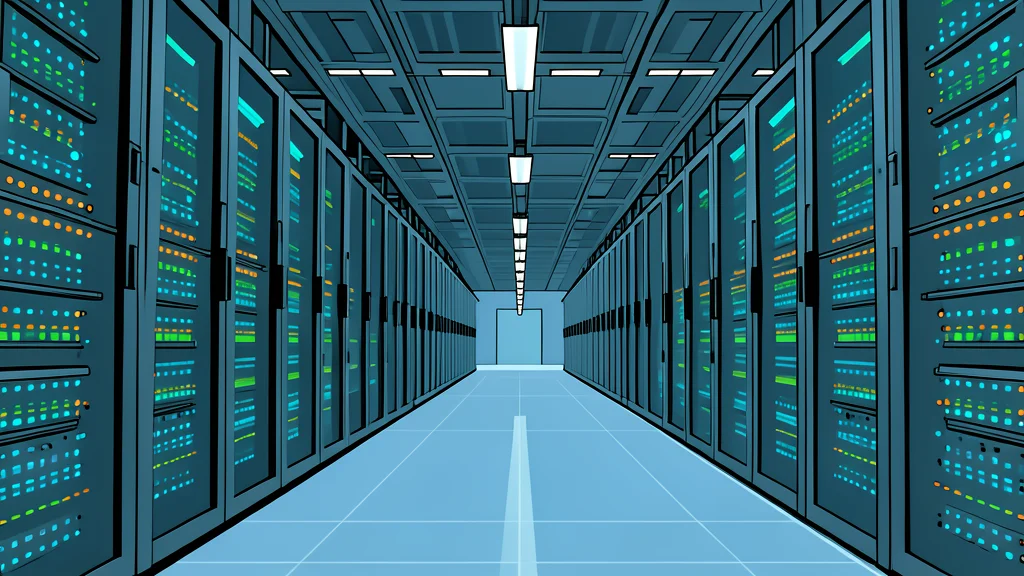
An Indian renewable energy major is betting on the AI infrastructure boom by launching two new data center entities, aiming to capture a rapidly growing market while managing significant capital risks.
Waaree Green Data Centers, a unit of the Indian renewable energy firm Waaree Renewable Technologies, has incorporated two new wholly-owned subsidiaries: Aurovault Data Centers and Sunstar Data Centers. Both entities were registered in September 2026 and are currently dormant, meaning no construction or operations have begun. The move positions the company to enter the high-growth segment of hyperscale and AI-ready infrastructure.
The strategy aligns with a broader trend in the Indian data center sector, where capacity is projected to triple from 4.48 gigawatts in 2025 to 15.21 gigawatts by 2031. This surge is driven by global tech giants pre-committing to large capacity blocks and signing long-term power purchase agreements. However, entering this market requires substantial upfront investment and carries the risk of technological obsolescence if AI hardware requirements shift before facilities are built.
New entities target global and local markets
Aurovault Data Centers is designed to handle the full lifecycle of data center projects, from design and financing to construction and commercialization. Its scope includes not only traditional colocation and cloud connectivity but also specialized services like GPU hosting and high-performance computing. The company intends to operate both within India and internationally, aiming to serve clients needing disaster recovery and business continuity solutions.
Sunstar Data Centers was incorporated on the same day and shares the same ownership structure, with Waaree Green Data Centers holding 100 percent of the shares in both. The split into two separate legal entities likely allows the parent company to manage risk, segregate assets, and potentially pursue different financing strategies or market segments without exposing the entire portfolio to a single point of failure.
High stakes in the AI infrastructure race
The push for AI-ready facilities is driven by the intense demand for computational power required to train and run large language models. According to reports from ET Datacenters, this segment is seeing significant interest from hyperscalers who are locking in power capacity years in advance. For Waaree, leveraging its renewable energy background could be a competitive advantage in a sector where electricity costs and sustainability metrics are increasingly critical decision factors for customers.
Challenges of scaling data center capacity
Despite the optimistic market projections, the path to profitability is fraught with challenges. Data centers are capital-intensive assets with long construction timelines, often taking three to five years from groundbreaking to operation. During this period, technological standards can change rapidly, potentially rendering early equipment inefficient or obsolete. Additionally, securing reliable land, permitting, and power supply in a competitive market remains a logistical hurdle for new entrants.
The trade-off for investors is clear: the potential for high returns in a booming sector comes with the risk of overcapacity and high maintenance costs. As Waaree moves from renewable energy generation into infrastructure operations, it must navigate a more complex regulatory and operational landscape. The success of these new subsidiaries will depend on their ability to secure long-term contracts and manage the heavy financial load of building and maintaining these facilities.