Bradford College Opens £19m EV Training Hub
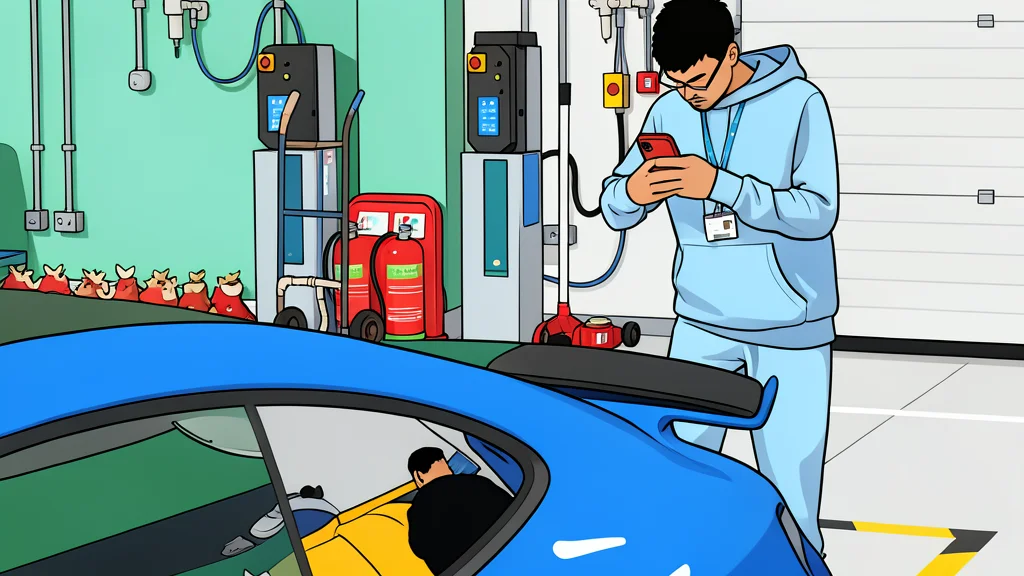
A new four-storey facility aims to address the shortage of technicians skilled in electric and hybrid vehicle maintenance.
Bradford College has opened a new £19.3 million training centre designed specifically to teach mechanics how to work on hybrid and electric vehicles. The facility, located at Junction Mills on Thornton Road, occupies the site of a former textile mill and can accommodate up to 650 students at a time. This development marks one of the largest construction projects in the city centre in recent years, taking two years to complete from groundbreaking to opening.
The primary goal of the centre is to close a widening skills gap in the automotive industry. As vehicle technology shifts away from traditional combustion engines, there is a shortage of technicians qualified to service modern drivetrains. By providing specialized training from entry-level to advanced degrees, the college aims to produce graduates who can immediately enter the workforce with relevant technical experience, rather than requiring extensive on-the-job retraining.
Specialized Equipment for Modern Drivetrains
The new building houses state-of-the-art workshops that include professional vehicle lifts capable of handling MOT testing standards. Beyond traditional garages, the centre features dedicated bays for electric vehicles and high-voltage battery systems. This infrastructure allows students to interact with the specific components that define modern cars, such as inverters and battery management systems, which differ significantly from internal combustion engine parts.
One of the most distinct features of the facility is its hydrogen fuel cell training rig. According to Steve Smith, the Head of Department for Motor Vehicle and Engineering, Bradford College is among a very small number of institutions in the country offering hands-on experience with hydrogen-powered vehicle technology. This inclusion positions the college to train students for an emerging sector that may become increasingly important as governments push for zero-emission transport solutions.
Funding and Industry Partnerships
The project was largely financed by public funds, with £17.8 million coming from the Department for Education’s Further Education Capital Transformation Fund. Bradford College contributed the remaining £1.5 million from its own resources. This split in funding reflects a broader national effort to modernize vocational education infrastructure to match the changing demands of the labor market.
Local businesses are already expressing interest in collaborating with the college. Smith noted that there are over 280 garages in the Bradford area actively seeking technicians with these specialized skills. By aligning the curriculum with industry needs, the college hopes to reduce the time it takes for new graduates to become productive employees. This direct pipeline between education and employment is a key trade-off, as it requires the college to constantly update its equipment to stay ahead of rapid technological changes.
Bridging the Technical Skills Gap
The initiative also seeks to broaden the demographic of students entering the trade. Traditionally, mechanics were recruited from a narrow pool of candidates, but the new facilities aim to attract a more diverse group of learners. By emphasizing electrical and hybrid technologies, the college hopes to appeal to students who may not have considered traditional auto repair as a career path due to the perceived physical demands or lack of technical complexity.
While the centre represents a significant investment in infrastructure, it does not solve all challenges facing the sector. The rapid pace of technological change means that even state-of-the-art equipment can become obsolete within a few years. However, by establishing a robust training environment now, Bradford College positions itself as a leader in automotive education, ensuring that its graduates are prepared for the immediate future of the industry. As reported by GN auto tech/ev: electric vehicle, this move is part of a larger trend to professionalize EV maintenance.