China Targets 50 Million kW of EV Grid Capacity by 2030
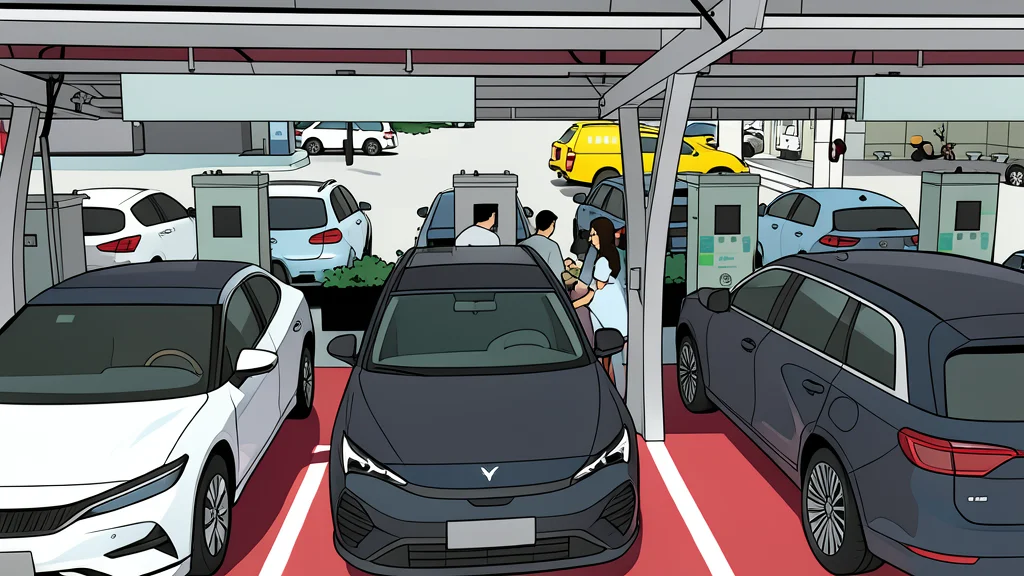
China is scaling vehicle-to-grid trials to use electric cars as backup power, aiming for 50 million kilowatts of capacity by 2030.
Key points
- Shanghai's recent V2G trial saw private home chargers supply 65.67% of the electricity returned to the grid.
- China aims to achieve 50 million kilowatts of flexible charging capacity by 2030 under its 15th Five-Year Plan.
- Current pricing rules require V2G users to pay transmission fees for charging without offsets for discharging.
China is accelerating the deployment of vehicle-to-grid technology, a system that allows electric vehicles to feed stored electricity back into the power network during peak demand periods. This shift marks a transition from small-scale demonstrations to large-scale integration, positioning EVs as critical tools for stabilizing the national grid.
According to China Daily, recent trials in Shanghai highlighted a significant change in participation. For the first time, privately owned home chargers provided the majority of the power supplied to the grid, accounting for over 65 percent of the electricity delivered in a recent exercise. This indicates that household vehicles are becoming a major source of flexible energy rather than just a minority of commercial fleets.
Shanghai trial shows private charger dominance
In a September test, Shanghai’s grid recorded a peak response capacity of 34,600 kilowatts, with nearly 5,900 kilowatt-hours of electricity returned to the network. State Grid Shanghai Municipal Electric Power Co. noted that public charging stations had previously dominated these efforts. The new data suggests that the necessary infrastructure and user engagement are now reaching a scale where individual car owners can collectively act as a virtual power plant.
National targets drive large-scale adoption
China’s 15th Five-Year Plan explicitly calls for the widespread use of bidirectional charging between 2026 and 2030. The government aims to raise aggregated flexible charging capacity to 50 million kilowatts by the end of the decade. State Grid estimates that if just 10 percent of new energy vehicles participate in these programs, the potential capacity could reach 86 million kilowatts, significantly easing pressure on traditional power generation during high-demand hours.
Pilot programs in other regions are already showing tangible results. In Hubei province, a trial running from August 2025 to March 2026 recorded over 21,000 discharge transactions, supplying more than 376,000 kilowatt-hours to the grid. Wuhan has also launched a one-year pricing trial for electricity sold back to the network, signaling a move toward formal market mechanisms for this energy flow.
Battery concerns and pricing barriers persist
Despite the potential benefits, significant hurdles remain. Battery degradation is a primary concern for car owners, though experts note that most batteries are designed for thousands of cycles, leaving ample room for grid services over a vehicle’s lifespan. However, the current pricing structure penalizes participants, as they pay transmission fees to charge but do not receive offsets when discharging, reducing the financial incentive for users.
Technical compatibility is another challenge. The lack of unified communication standards between different vehicle and charger brands creates operational friction. Automakers are also cautious due to warranty complexities and the cost of retrofitting chargers for bidirectional use. Industry leaders argue that scaling this technology requires coordinated standards and business models that address these user and manufacturer concerns to ensure long-term viability.