AI Demand Drives RTX 5090 Prices to Five Times Launch Cost
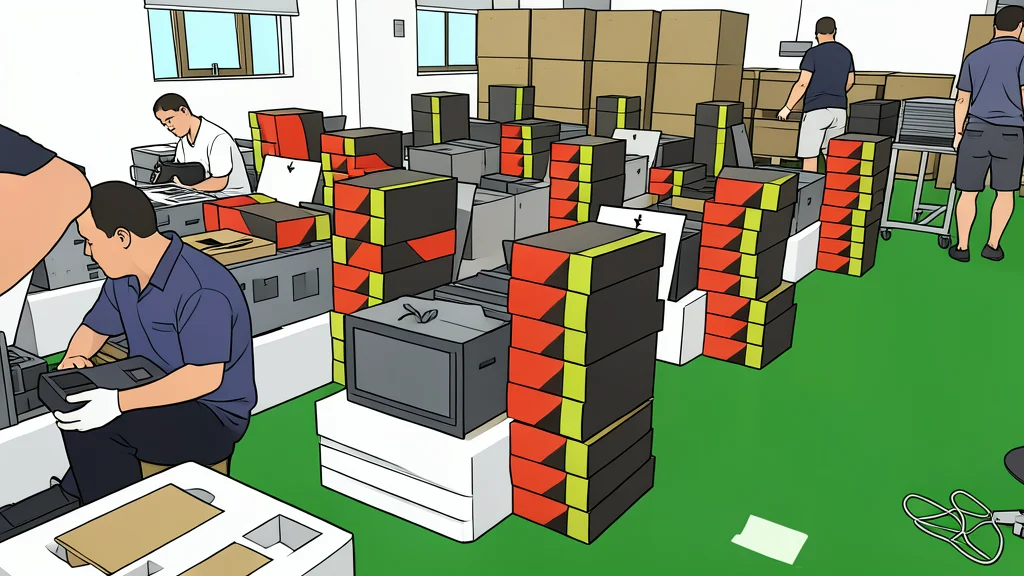
Gaming graphics cards are disappearing from retail shelves as artificial intelligence firms buy them in bulk, driving prices far above their original value.
The GeForce RTX 5090 launched with a suggested price of $2,000, but that figure is now largely theoretical for consumers. In the United States, available units have recently traded for approximately $5,000, while prices in Europe have surpassed €5,200. This sharp increase is not due to a shortage of components or manufacturing issues, but rather a shift in who is buying the hardware.
Newly surfaced images reported by GN technics/gaming show large quantities of these consumer-grade graphics cards stacked on wooden pallets. These are not specialized data center accelerators, but the exact same models sold to PC gamers. The photos suggest that AI companies are purchasing these cards in bulk to build their own server infrastructure, effectively removing them from the consumer market.
AI workloads replace crypto mining
This scenario mirrors the cryptocurrency boom of the 2010s, where mining farms bought graphics cards in massive quantities, leaving gamers with little choice but to pay high premiums. At that time, NVIDIA attempted to mitigate the issue by releasing Lite Hash Rate versions of its cards, which slowed down cryptocurrency mining without affecting gaming performance. Those restrictions were eventually bypassed, but the underlying dynamic of bulk commercial purchasing remains the same.
The current demand is driven by the high computational requirements of artificial intelligence models. Companies are assembling multi-GPU systems using standard retail cards because they offer a cost-effective alternative to specialized, more expensive enterprise hardware. The result is a familiar scarcity for individual users, as the supply chain prioritizes large commercial orders over single-unit retail sales.
NVIDIA faces limited enforcement options
NVIDIA has already introduced variants of the RTX 5090 with reduced AI performance to comply with export restrictions and lower attractiveness for certain workloads. However, the standard version remains fully capable of handling AI tasks. The company has not implemented strict controls to prevent board partners from selling large quantities of these cards to commercial AI firms, despite the clear impact on consumer availability.
While each card has a unique serial number that could theoretically be tracked, there is no evidence of NVIDIA actively blocking bulk sales to data centers. Given the company’s strong financial interest in the AI sector, it is unlikely to impose restrictions that would reduce the utility of its hardware for these high-value customers. For gamers, this means the RTX 5090 is increasingly becoming a component for business infrastructure rather than a product for personal use.
Consumers face steep premiums
The trade-off for individual buyers is significant. While the hardware specifications remain unchanged, the market price has inflated to levels that are prohibitive for many enthusiasts. The convenience of using widely available consumer cards for AI tasks benefits enterprise buyers, but the cost is borne by the general public. As long as the demand from AI firms remains high, the gap between the launch price and the actual market price is likely to persist.