Dragon Age Veteran Uses Factorio to Reveal His Programming Style
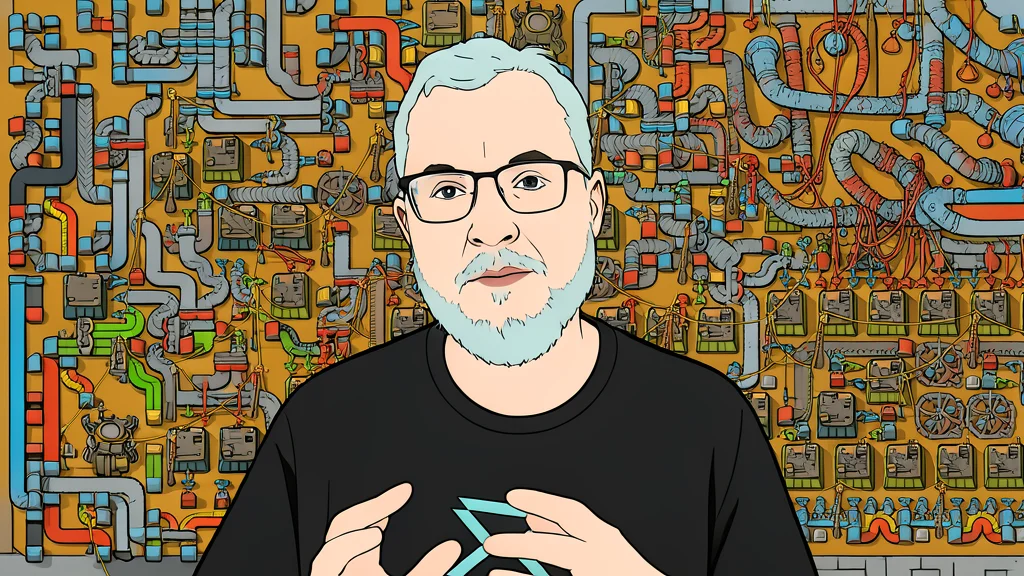
Mark Darrah, a veteran game developer, admits his factory layouts are chaotic compared to his son's precision, using the game as a diagnostic tool for coding habits.
Mark Darrah, best known for his role as co-director of Dragon Age: Origins and executive producer of the broader series, has spent over a decade playing Factorio. While his career is defined by narrative-driven role-playing games, his personal gaming habits reveal a different side of his professional identity. He describes the factory-building game as a practical way to assess how he approaches problem-solving and system design.
Darrah’s relationship with Factorio is not just about leisure; it serves as a mirror for his engineering mindset. He notes that his bases often look like chaotic, organic shapes rather than structured grids. This contrast highlights a fundamental difference in how he and others, including his son, approach complex systems. For him, the goal is functionality over aesthetics, a trait he believes is common among certain types of programmers.
Factory layouts reflect coding habits
According to Darrah, observing how a player builds their base in Factorio offers clear insights into their programming style. He suggests that a tidy, optimized layout indicates a methodical approach, while a sprawling, connected mess suggests a developer who prioritizes getting things working over perfect organization. His own bases, which he compares to amoebas held together by binder twine, reflect a pragmatic style where the system functions effectively despite its lack of visual order.
This self-assessment aligns with his professional background. Having spent over two decades at BioWare on titles like Baldur's Gate and Dragon Age, Darrah is accustomed to managing complex systems. However, the iterative nature of Factorio, where efficiency is constantly improved, allows him to test his instincts in a low-stakes environment. It provides a clear picture of his problem-solving tendencies without the pressure of a production deadline.
Playing alongside a different mindset
Darrah frequently plays Factorio with his son, who approaches the game with a distinct engineering mindset. Where Darrah builds and tweaks in real-time, his son plans extensively, deconstructs bases, and reconstructs them with precision. This difference in playstyle is evident in their respective in-game creations. The son’s bases are structured and efficient, while Darrah’s remain organic and improvised. This dynamic offers a unique perspective on how different individuals tackle the same complex puzzle.
The interaction between father and son in the game highlights the variety of approaches to automation. Darrah finds value in the immediate feedback of building, whereas his son prefers to map out the entire system before execution. This contrast serves as a practical demonstration of different cognitive styles, showing that there is no single correct way to solve the challenges presented by the game. It underscores the idea that efficiency can be achieved through various methods, each with its own trade-offs.
The game evolves into three distinct phases
Darrah observes that Factorio has evolved into what he perceives as three separate games. The initial phase involves manual labor, which he finds tedious. The middle phase focuses on automation, where the core mechanics of the game shine. The final phase, introduced with the Space Age expansion, shifts the focus to multi-planetary logistics and spaceship construction. This shift reduces the player’s direct presence in the game, changing the nature of the engagement.
While the later stages offer new challenges, they also alter the fundamental experience of the game. The player’s avatar becomes less relevant as the scale of operations expands. This trade-off between scale and personal involvement is a key aspect of the game’s design. For Darrah, who values the hands-on aspect of building, this evolution presents both an interesting challenge and a potential loss of the intimate connection he initially sought with the game.