AMD Launches Budget Chips to Offset RAM Price Surge
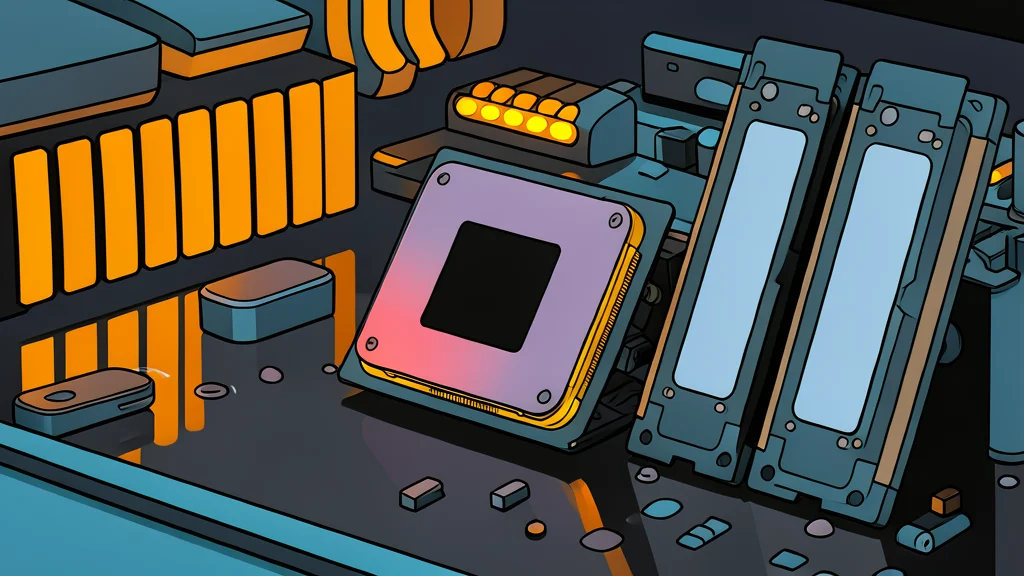
AMD has released two new processors designed to lower the entry barrier for PC builders facing a significant increase in memory costs.
On September 10, 2026, AMD introduced two new desktop processors, the Ryzen 5 5500F and Ryzen 5 7500, in a direct response to the skyrocketing cost of computer memory. The launch was notably low-key, with no press event or major keynote, as pricing details appeared on retailer sites before official announcements. This quiet rollout underscores the urgency of the situation, with industry reports noting that DDR5 memory prices have climbed as much as 500 percent over the past year.
The primary goal of these releases is to soften the financial blow for consumers building budget systems. While AMD cannot control the global memory market, it can reduce the cost of the central processing unit. By offering lower-priced chips that utilize older, more affordable platforms, the company aims to keep the total system cost manageable despite the expensive RAM. This strategy effectively decouples the processor price from the volatile memory market, allowing builders to upgrade their systems without paying a premium for the CPU.
Older Platform Offers Affordable Upgrade Path
The Ryzen 5 5500F targets the AM4 socket, a platform that has been supported for nearly a decade. This chip uses the Zen 3 architecture and supports DDR4 memory, which remains significantly cheaper than the newer DDR5 standard. According to GN technics/hardware, this allows users with existing AM4 motherboards to upgrade their performance without having to replace their entire system. The processor features six cores and twelve threads, with a base clock of 3.6 GHz and a boost up to 4.2 GHz.
At a $99 price point, the 5500F is positioned as a value option for gamers who already own compatible hardware. However, there is a trade-off: the chip lacks integrated graphics, meaning users must have a discrete graphics card to see a display. Additionally, while it supports PCIe 4.0, the platform itself is aging, offering less future-proofing than newer sockets. This makes it a practical choice for immediate performance gains but not the best option for long-term expansion.
Newer Silicon Brings Integrated Graphics
The Ryzen 5 7500 represents a different approach, bringing current-generation Zen 4 technology to the AM5 socket. Unlike the 5500F, this chip includes integrated graphics, which is a significant advantage for users who do not plan to buy a separate graphics card immediately. It offers six cores and twelve threads, with a higher boost clock of 5.0 GHz and a larger cache size. This makes it more suitable for users building new systems who want modern features and better efficiency.
The inclusion of integrated graphics allows the 7500 to function as a complete system on its own, reducing the initial cost of assembly. However, this comes at the cost of requiring newer, more expensive DDR5 memory and AM5 motherboards. While the CPU itself is affordable, the surrounding ecosystem is more expensive than the AM4 option. Buyers must weigh the benefit of integrated graphics against the higher cost of the necessary supporting components.
Market Strategy Amidst Memory Shortage
AMD’s move highlights a broader shift in the PC hardware market, where component pricing is becoming a critical factor in consumer decisions. By releasing these two distinct chips, the company is catering to different needs: one for upgrading existing systems and one for new builds. This dual approach ensures that budget-conscious consumers have options regardless of their current hardware situation.
The situation serves as a reminder that PC building is no longer just about raw performance but also about cost management. With memory prices remaining high, the value of a low-cost processor becomes paramount. AMD’s strategy to keep CPU prices low while memory costs rise is a pragmatic response to a challenging market environment. For builders, the choice between the two new chips depends on whether they prioritize immediate savings or future compatibility.