AGIBOT Founder Predicts Major Breakthrough in Humanoid Utility
Chinese robotics leader AGIBOT claims humanoid machines will reach mass-market reliability within five years, shifting focus from athletic stunts to industrial precision.
Humanoid robots have moved out of the laboratory and into the public eye, recently performing athletic feats like sprinting and weightlifting at competitions in Beijing. While these demonstrations capture attention, industry leaders suggest the technology is not yet ready for widespread practical use. Maoqing Yao, co-founder of the Chinese robotics firm AGIBOT, recently stated that the sector is approaching a critical turning point. He predicts that embodied AI will reach a level of general competence comparable to the early days of large language models within the next three to five years.
Yao made this prediction during the Fortune Leaders Forum in Macau, drawing a parallel between current robot capabilities and the GPT-3.5 model. That earlier version of the AI chatbot was notable for handling common, everyday tasks with an 80 to 90 percent success rate, marking the transition from specialized tools to general-purpose assistants. For humanoid robots, this milestone would mean they can reliably perform routine jobs rather than just executing specific, programmed movements. This shift is crucial for the technology to move beyond novelty and into the mainstream economy.
Shift from Stunts to Service
The industry is currently divided between two paths of development. Some companies focus on high-visibility applications, such as dance performances or boxing matches, which generate headlines but offer limited commercial value. Others are quietly integrating robots into service and industrial settings. Keenon Robotics, for instance, has deployed units in Shanghai hotels to greet guests, deliver room service, and clean rooms. The company’s leadership views these practical, repetitive tasks as the future of the sector, where reliability matters more than spectacle.
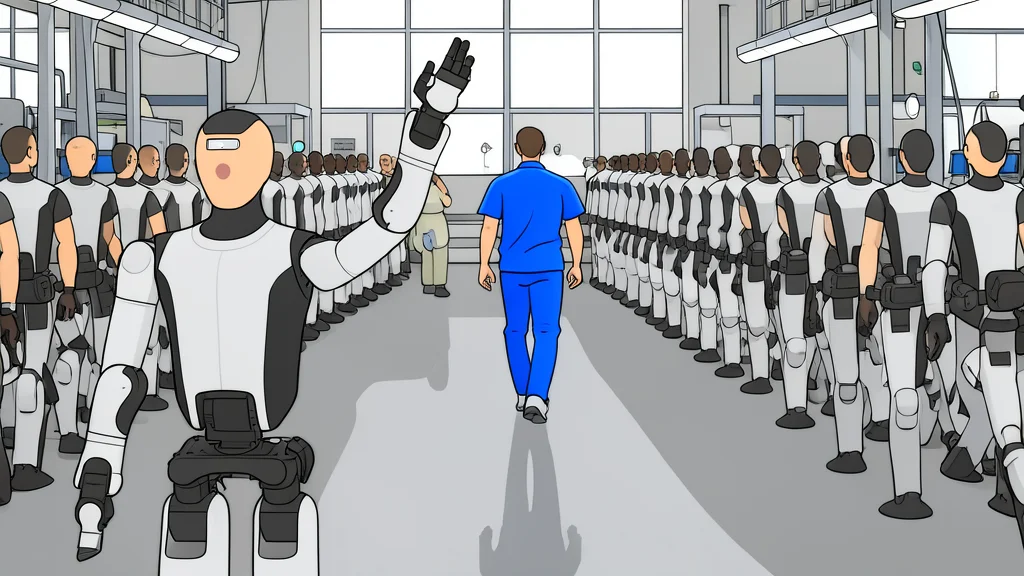
AGIBOT itself is leading in hardware deployment, shipping nearly 10,000 units in the first half of the year. The company is currently considering an initial public offering in Hong Kong, signaling its ambition to scale operations. However, the transition from demonstration to daily use is not without friction. Manufacturers are frantically searching for real-world applications where the return on investment justifies the high cost of development. The goal is to find scenarios with a large enough market size to sustain the technology’s growth.
Industrial Standards Demand Perfection
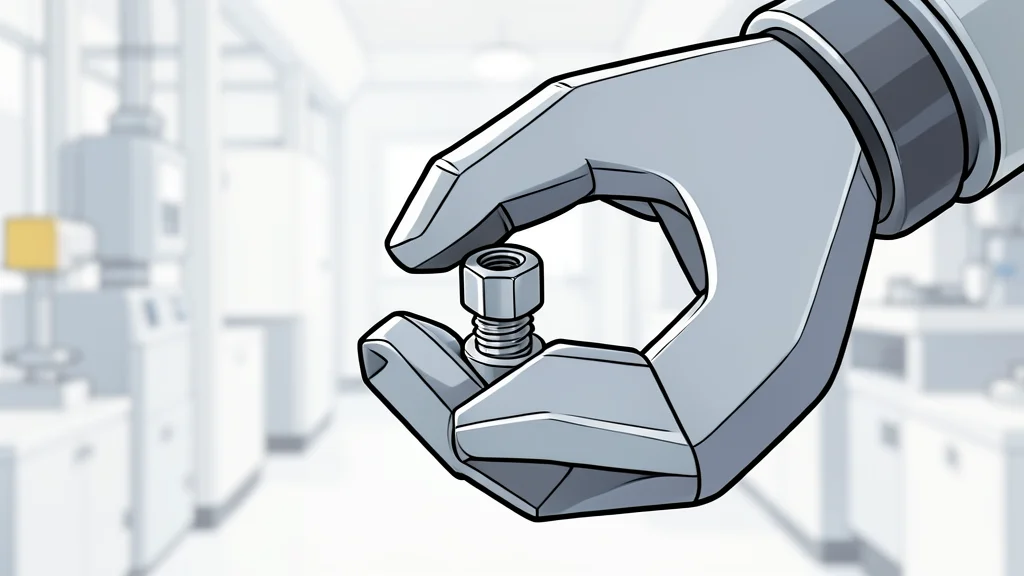
Building robots for factories presents a significantly higher bar than those for hotels. Industrial clients are less interested in the underlying technology and more focused on hard metrics: success rate, cycle time, stability, and cost. Yao acknowledges that creating a robot that runs stably inside a factory is genuinely difficult. To meet these demands, AGIBOT recently conducted a six-day livestream where its robots completed over 64,000 manufacturing tasks with a 99.99 percent success rate. Achieving this level of precision required intensive training sessions, including eight-hour overnight work periods over the course of a month.
Scaling Laws Drive Progress
Despite the current challenges, optimism remains high among technical teams. Yao believes that embodied AI will follow the same exponential scaling laws that transformed digital intelligence. As the volume of training data increases and model parameters grow, there will be a distinct step-up in robot intelligence. This trajectory suggests that the gap between current capabilities and broad utility is not a fundamental flaw in the design, but a matter of time and data accumulation. The industry is betting that consistent scaling will bridge the final gap to mainstream adoption.