Boston Dynamics IPO Delayed Due to Scaling Challenges
Boston Dynamics is not expected to go public in 2027, as the company faces significant hurdles in deploying humanoid robots at scale and remains unprofitable, according to a senior executive.
Boston Dynamics, the humanoid robot maker owned by Hyundai Motor Group, is unlikely to pursue an initial public offering in 2027. A senior executive at the parent company, who spoke on condition of anonymity, indicated that the company is not yet ready for a stock market debut. The primary obstacles are the lack of large-scale deployment of its flagship Atlas robots and ongoing financial losses.
This assessment stands in contrast to the strong investor enthusiasm that previously drove Hyundai Motor shares to record highs earlier this year. While the robotics sector has captured significant market attention, the reality of manufacturing and deploying these machines at an industrial scale remains a complex and costly challenge that may push a potential listing years further into the future.
Scaling production remains a major hurdle
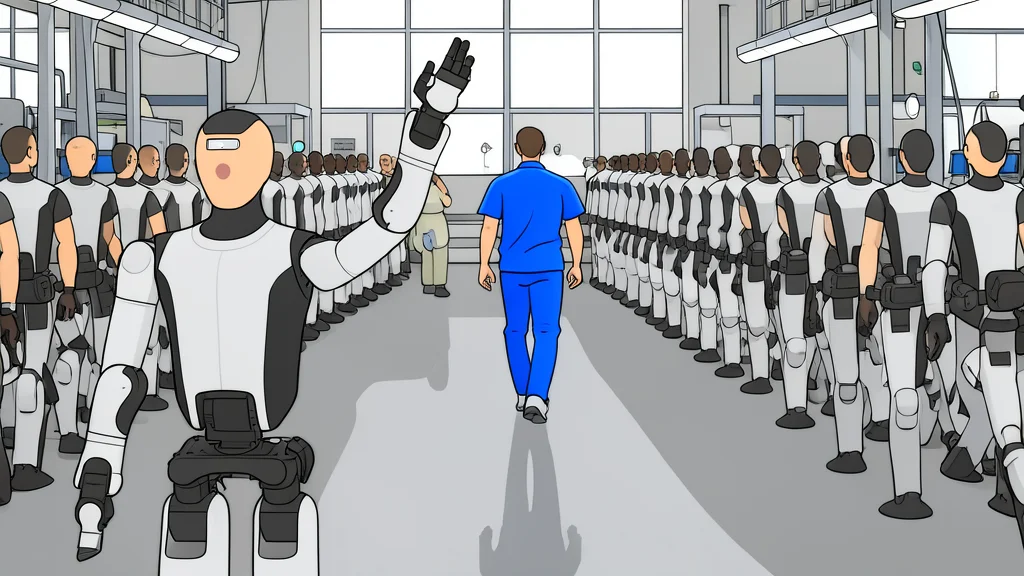
Hyundai has set ambitious targets to build a factory capable of producing 30,000 robots annually by 2028. The plan involves deploying these units at its U.S. plant in Georgia before expanding across its global manufacturing network. However, analysts note that these goals are difficult to achieve, as humanoid robots currently struggle with the heavy loads and repetitive tasks required in automotive assembly.
Kim Hyun-su, a senior fund manager at IBK Asset Management, pointed out the gap between demonstration and utility. While it is relatively easy to program robots for choreographed movements, making them reliable workers on a production line is significantly more difficult. Even industry leaders like Tesla have described humanoid robotics as their hardest product to scale, underscoring the technical barriers involved.
Financial losses delay market entry
The company’s financial health is another factor keeping it away from the public markets. Boston Dynamics recorded a loss of 528.4 billion won in 2025, according to recent filings. For a company seeking to attract public investors, a track record of profitability or a clear path to it is typically essential. The current unprofitable status suggests that the company needs more time to refine its business model before facing the scrutiny of a public listing.
Valuation estimates for the company vary widely among analysts. Some firms place the value between 50 trillion and 100 trillion won, while others predict much higher figures by 2030. However, these projections depend on the company successfully generating revenue through broad sales to external customers, a milestone that has not yet been reached.
Investors expect a later timeline
Market watchers are increasingly aligning their expectations with a later timeframe. Kim Joon-sung, an analyst at Meritz Securities, suggests that a more realistic window for an IPO is 2029 or 2030. This delay allows Hyundai to gather substantial operational data and improve robot capabilities before attempting to sell them broadly. The focus is shifting from immediate market entry to long-term operational success.
The situation highlights the trade-off between rapid capital access and operational readiness. By waiting, Boston Dynamics avoids the pressure of public market expectations while it works through the technical and economic challenges of industrial robotics. The path forward is less about hype and more about demonstrating that these machines can work reliably in real-world factory settings.