China’s Sprint Robots Face Military Deployment Push
A humanoid robot just broke the 100-meter sprint record, but the real story is its rapid move from the track to the battlefield.
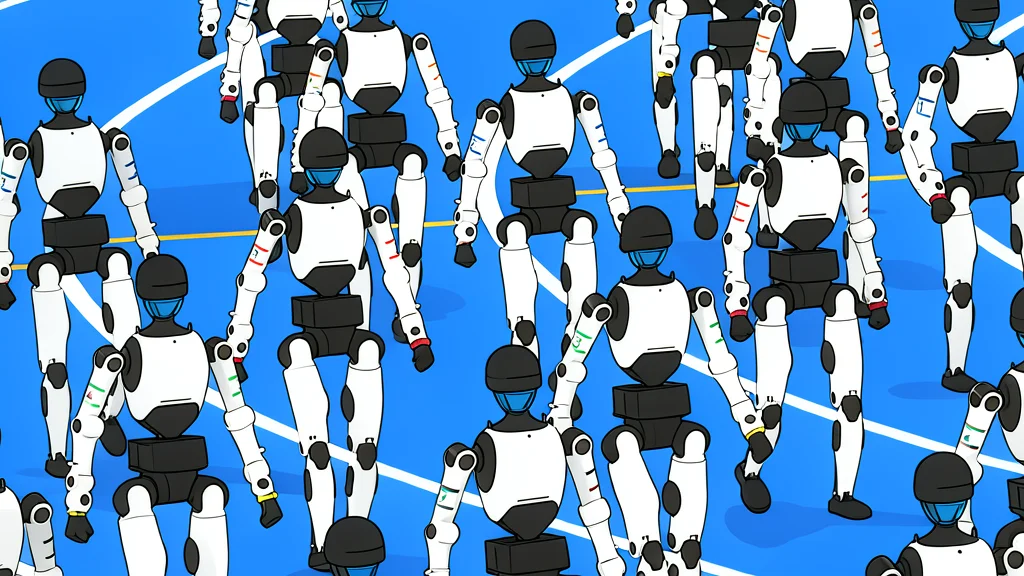
At the World Humanoid Robot Games in Beijing, a machine named Tiangong Ultra ran 100 meters in 8.64 seconds, officially beating Usain Bolt’s long-standing human record. While the internet shared clips of the robot’s awkward, lurching finish, the event highlighted a significant shift in robotics capability. The speed was impressive, but the context matters more: just days later, China’s People’s Liberation Army called for these machines to be moved from laboratories to military training grounds.
This is not merely about a robot running fast. It is about a mature industrial system that can integrate complex hardware with advanced software at scale. As reported by GN auto tech/robotics, the breakthrough lies in the ability to combine powerful motors, precise gears, and sophisticated control algorithms into a single, functional unit. The robot’s performance signals that the era of clunky, experimental humanoids is ending, replaced by machines that can handle high-speed physical tasks with increasing reliability.
Software drives physical agility
The core advantage of these new robots is not just their hardware, but how they are trained. Engineers use virtual simulation environments to run millions of trial-and-error scenarios before the physical robot takes a step. This process, known as reinforcement learning, allows the machine to learn how to balance, recover from trips, and react to uneven ground in real time. The result is a system that bridges the gap between controlled lab conditions and the unpredictable real world, making the robots far more stable and responsive than previous generations.
However, there is a trade-off. These humanoids are complex and expensive. In open fields, simpler tracked or wheeled drones are often superior because they can carry heavier loads and operate more efficiently. The humanoid design is a specialized choice, not a universal solution. It requires more energy and maintenance, and its complexity introduces more points of failure. The decision to use one depends entirely on the specific environment and mission requirements.
Designed for human spaces
The primary reason for developing humanoids is their ability to navigate environments built for people. Cities are designed with human anatomy in mind. A tracked robot cannot easily climb a vertical fire escape, turn a standard door handle, or sit in a driver’s seat. A humanoid robot acts as a direct replacement for a human soldier in these spaces, requiring no custom infrastructure or ramps. This makes them uniquely suited for urban scenarios where standard military vehicles would be ineffective or easily detected.
Ethical concerns remain unresolved
The rapid military adoption of these technologies raises serious ethical questions. While many in the robotics field do not support offensive warfare, the capabilities being developed are undeniable. The same technology that allows a robot to run a sprint can be adapted for combat roles. The line between a helpful assistant and a combat tool is becoming increasingly blurred, and the speed of development outpaces the public debate on how these machines should be used. The catch is that once the technology is proven, controlling its application becomes significantly harder.