Humanoid Robots Aim to Take over Dirty Farm Tasks
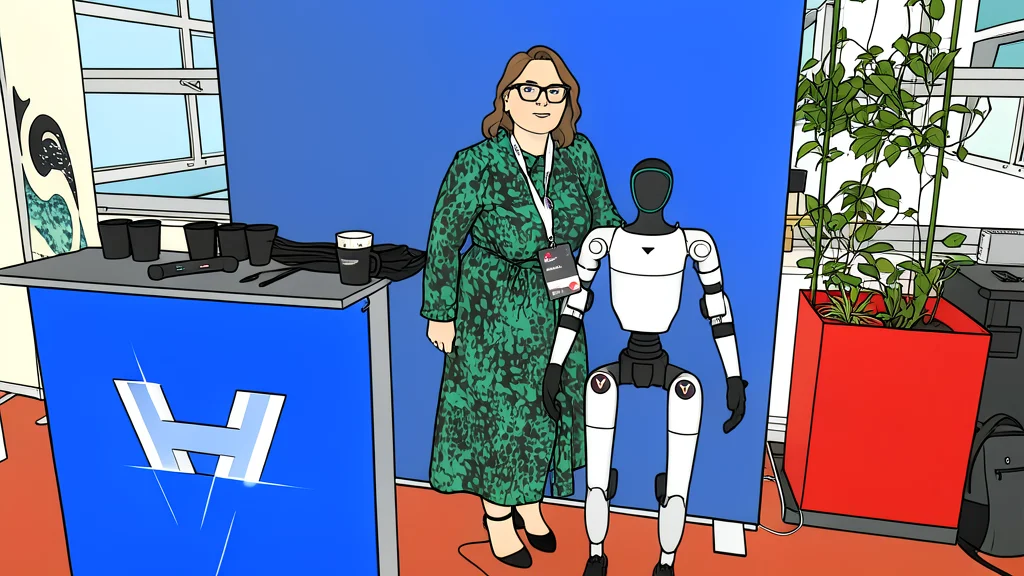
Croatian firm Abysalto is testing a walking robot designed to handle the toughest agricultural jobs, though it remains a research tool for now.
A bipedal robot walked the corridors of a recent agricultural conference in Croatia, shaking hands with delegates and demonstrating its dexterity. The machine, developed by Croatian tech company Abysalto, is intended to tackle what farmers call the "3 Ds": dirty, dull, and dangerous work. While the prototype is not yet available for general commercial use, it signals a shift in how labor-intensive farming tasks might be handled in the coming years.
Abysalto uses a Unitree G1 chassis, a model originally manufactured in China, to power its agricultural applications. The company’s head of marketing, Maja Pavlinusic, explained that the robot is currently sold to laboratories and research institutions. Its primary goal is to assist humans with repetitive or unsanitary tasks, such as picking and placing items, reducing the physical burden on farm workers.
Humanoid Design Fits Human Workspaces
A key question surrounding this technology is why a full humanoid form is necessary when a robotic arm could perform many tasks more efficiently. Nenad Mandic, Abysalto’s head of artificial intelligence, noted that while a single robotic hand is superior for isolated functions, most farm work is designed for human hands and bodies. By mimicking human movement, the robot can navigate existing spaces and tools without requiring significant infrastructure changes.
The company is also developing new ways for farmers to interact with the machine. Beyond standard voice commands, researchers are testing gesture-based controls. Imagine standing in a field with the robot and simply pointing or waving to direct its movements. This intuitive interface aims to make the technology accessible to workers who may not be tech-savvy, bridging the gap between complex AI and practical field use.
High Costs and Limited Battery Life
Despite the potential, significant barriers remain. The robot is not yet a commodity like a tractor; it is currently a research tool. Demo units cost around $50,000, with total software and hardware investments reaching into the tens of thousands. Furthermore, the current battery life is limited to approximately two hours of active use. Abysalto acknowledges these constraints, noting that while the technology is promising, it is still in the early stages of development.
Safety is another focal point. Pavlinusic assured that the robots are not fully autonomous in a way that poses risk to humans. Operators set strict limitations on the robot’s movements and tasks, ensuring it stops when instructed. The goal is to create a collaborative environment where the robot aids humans rather than replacing them entirely, addressing fears about job displacement and safety concerns in agricultural settings.
Research Focus Before Commercial Rollout
Currently, only hundreds of these humanoid robots exist globally, with the majority located in China, the US, and the EU. All are currently used for research purposes. Mandic predicts that industrial use will become common in the "very, very near future," but widespread adoption on farms will take longer. The technology needs to prove its reliability and cost-effectiveness before it can compete with traditional labor and machinery.
As the agricultural sector faces labor shortages, these robots offer a potential solution. However, the trade-offs between cost, battery life, and current capabilities mean that for most farmers, this remains a distant prospect. The focus for now is on refining the technology in controlled environments, ensuring that when it does reach the fields, it is safe, efficient, and truly useful.