Japan Launches Mobile Repair Unit for Humanoid Robots
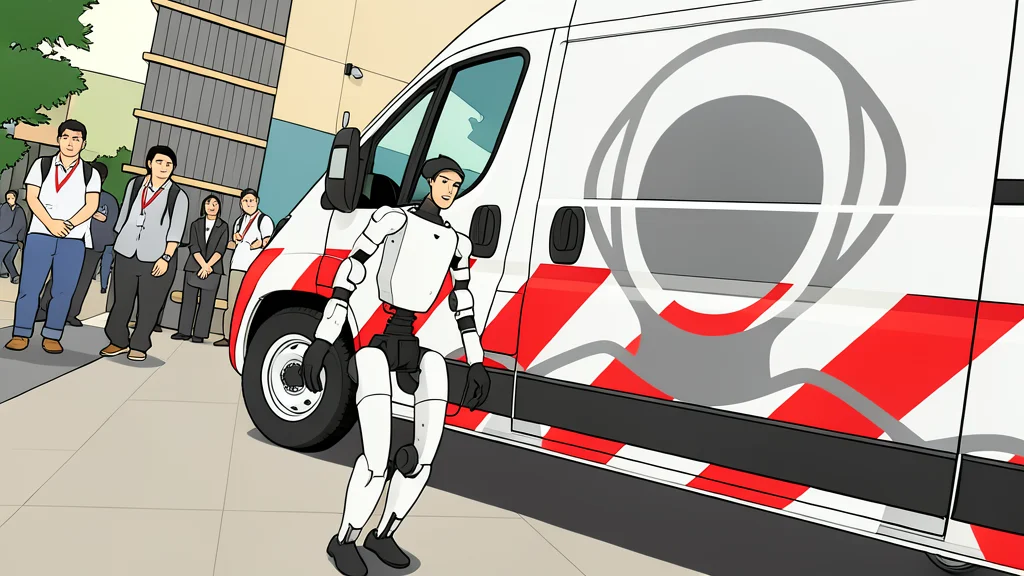
A Japanese tech company has introduced a specialized van to provide roadside assistance for humanoid robots, aiming to reduce downtime for businesses relying on these machines.
GMO Air, a division of Japan’s GMO Internet Group, has unveiled a service vehicle designed to maintain and repair humanoid robots directly at customer sites. The initiative addresses a critical gap in the emerging robotics ecosystem: the lack of rapid field support. When a humanoid robot fails, traditional repair models often require shipping the machine back to a central facility, a process that can leave businesses without essential labor for days.
The new
Field repairs replace costly downtime
The core function of this mobile unit is to compress the repair timeline by bringing engineers, diagnostic tools, and spare parts to the location of the fault. As reported by GN auto tech/robotics, the van is equipped to carry a replacement humanoid robot. If the on-site team cannot fix the issue immediately, they swap the damaged unit for the spare one. The broken robot is then taken away for more extensive repairs, while the customer’s operations continue uninterrupted.
This model mirrors the roadside assistance industry that developed around automobiles and industrial machinery. For businesses using robots in hotels, warehouses, or offices, uptime is a primary concern. A machine worth tens of thousands of dollars breaking down is a significant financial risk. By offering immediate replacement, GMO Air aims to ensure that commercial operations do not halt due to mechanical failures, treating the robots as critical infrastructure rather than just high-tech gadgets.
Human operators remain essential
Despite the futuristic name, the service relies heavily on human intervention. The van is not autonomous, and the repairs are not performed by another robot. Instead, human engineers drive to the scene and perform the diagnostics and maintenance. This hybrid approach acknowledges the current limitations of autonomous repair capabilities. It provides a practical, near-term solution while the technology for fully self-maintaining robots matures.
The catch is that this service is currently limited to a single vehicle based in Tokyo. It serves as a pilot program to test the viability of field support. If demand grows, the company plans to expand the fleet. However, the reliance on human drivers and technicians means the service is bound by labor availability and geographic constraints, unlike a purely automated system which could theoretically scale more efficiently.
Preparing for mass robot adoption
This move aligns with broader national goals in Japan, where the government has set targets for widespread robotic adoption by 2040. As competition intensifies with developments in the US and China, the supporting infrastructure becomes just as important as the robots themselves. The emergence of specialized service vehicles suggests that the industry is moving beyond prototypes toward practical, commercial deployment.
The existence of a