ESA Honors Three Firms for Resilience and Self-Healing Tech

European Space Agency recognizes companies for delivering missions under pressure and developing materials that repair themselves in orbit.
The European Space Agency has recognized three companies for their contributions to recent space missions, highlighting both operational resilience and technological breakthroughs. These awards, presented at the Industry Space Days event in the Netherlands, serve as a formal acknowledgment of the critical role played by industry partners in meeting the agency's scientific and engineering goals.
The selection process involved a detailed review of supplier performance across various projects. Rather than focusing on marketing claims, the agency evaluated how these firms handled real-world constraints, including tight schedules, technical hurdles, and the need for innovative solutions that can be applied to future exploration efforts.
Meeting tight deadlines under pressure
Surrey Satellite Technology Limited received an award for its work on two HydroGNSS satellites. The project faced a significant challenge when the launch service provider changed late in the development cycle. The company had to rapidly reorganize its workflow to maintain the original launch date. This required additional testing and resource mobilization to ensure the satellites were ready for shipment without compromising quality. The agency valued this response because their Earth Observation Scout missions are designed to deliver scientific data quickly and cost-effectively, meaning schedule slips can disrupt broader research plans.
Sener, a Spanish aerospace firm, was also recognized for its role as a subcontractor on the MetOp Second Generation program. This mission involves satellites that provide critical data for weather forecasting and climate prediction. Sener was praised for its ability to support urgent activities at both the instrument and satellite levels. The company demonstrated flexibility by mobilizing expertise and facilities to resolve issues effectively, ensuring that the complex coordination required for such a large-scale Earth observation system remained intact.
Materials that repair themselves
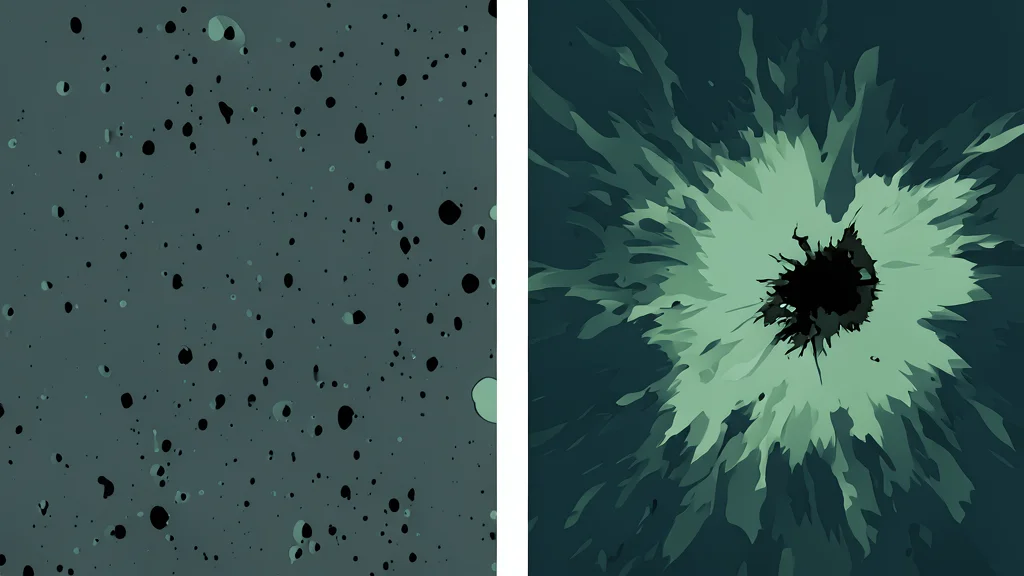
CompPair Technologies from Switzerland received the agency's Innovation Award for developing a self-healing composite material. This technology is particularly relevant for reusable launch systems and long-duration space missions. The material contains embedded sensors and a distributed heating system that continuously monitor the structural health of the spacecraft. If cracks or microfractures are detected, the system activates a targeted heating mechanism in the affected area.
This thermal activation triggers a healing agent within the composite, allowing the material to repair itself autonomously. According to GN auto tech/science: space discovery, this approach offers a new way to maintain structural integrity in environments where manual repair is impossible. The innovation addresses a common trade-off in aerospace engineering: the need for lightweight structures that can withstand the stresses of launch and re-entry while maintaining long-term reliability.
Why supplier recognition matters
These awards highlight the interdependence between the space agency and its industrial partners. Success in space programs often depends on the ability of suppliers to adapt to changing requirements and solve complex technical problems. By publicly recognizing these achievements, the agency aims to encourage further investment in high-quality engineering and research. It signals to the broader industry that reliability and innovation are valued as highly as cost efficiency, creating a standard for excellence in international space collaboration.