NASA Scales Back Lunar Launch Plans for This Year
NASA has revised its timeline for robotic lunar missions, confirming that only one lander will attempt a landing in the current calendar year. The agency’s Moon Base program manager outlined the delays at a recent technology symposium in Ohio.
According to Carlos García-Galán, who oversees the lunar surface base initiative, Voyager Technologies’ Griffin lander remains on track to launch no earlier than November. However, three other robotic landers originally scheduled for this year have been pushed back to 2027. This shift reduces the immediate activity on the lunar surface but keeps the long-term goal of establishing a permanent base intact.
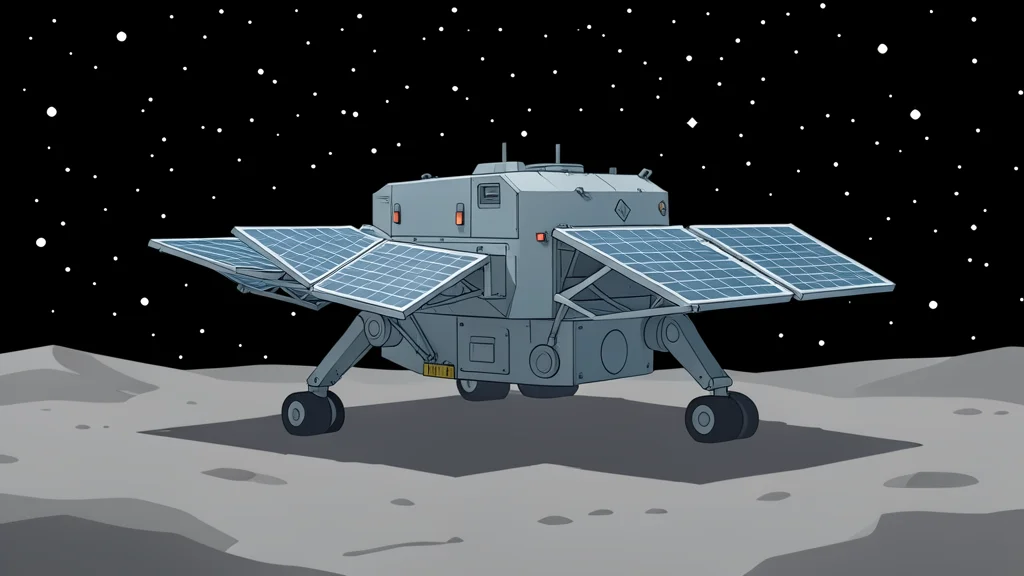
The Griffin mission is designed to test critical hardware for future crewed exploration. It will carry a robotic rover to a high point near the south pole, aiming to prove that NASA can reliably access the moon and gather essential data. This step is foundational for the broader infrastructure project that is expected to be partially complete by 2030.
Technical setbacks delay multiple landers
Blue Origin’s Mark 1 Endurance and Intuitive Machines’ Nova-C Trinity are now expected to launch in the first part of 2027, according to reports from GN auto tech/space: space launch. A fourth mission, Firefly Aerospace’s Blue Ghost 2, has slipped even further to later in 2027. These delays are not uniform; each company faces distinct operational hurdles that have forced a recalculation of their launch windows.
For Blue Origin, the primary obstacle is the infrastructure damage caused by a rocket explosion in May. The company is currently rebuilding its launch pad in Florida, a process that has interrupted the timeline. Meanwhile, Intuitive Machines stated that their spacecraft is already in final assembly and powered on, but the launch window has simply shifted to align with other logistical requirements.
Preparing for a permanent lunar presence
The current phase of the Moon Base program, which extends to 2029, focuses on technology demonstrations and site selection. García-Galán explained that the agency needs to scatter assets across hundreds of square miles to test reliability and gather ground truth data. This approach allows engineers to identify locations with favorable lighting, thermal conditions, and line of sight to Earth.
Once these initial demonstrations are successful, the program will move to Phase Two, which involves building out permanent infrastructure. The trade-off for the current delays is that these missions remain high-risk first flights. While the timeline has stretched, the strategic goal of establishing a sustainable human presence on the moon remains unchanged.