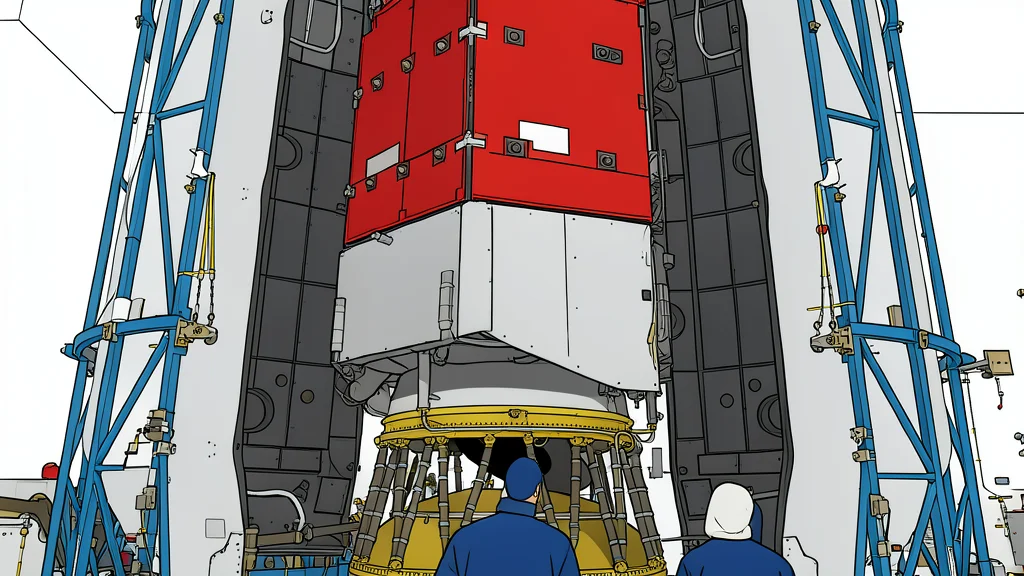
Rocket Lab Adds Twelfth StriX Satellite to Japan's Radar Network

A new radar satellite has joined Japan's growing constellation, marking the 96th flight for Rocket Lab's Electron rocket and setting the stage for a decade of regular Earth monitoring.
Rocket Lab has successfully placed a new Earth observation satellite into orbit, marking a steady step in the company's expansion of space-based monitoring services. The mission, launched from New Zealand, was specifically designed to support Japan's Synspective, a firm focused on providing high-resolution data for various industrial and governmental needs. This launch represents the 96th flight of the Electron rocket, underscoring the vehicle's reliability for small-payload missions despite its limited capacity compared to larger heavy-lift rockets.
The satellite, identified as the 12th unit in the StriX series, now orbits at an altitude of 572 kilometers. According to reports from GN auto tech/space, this specific mission was named "Owl By The Dozen," a playful nod to the growing number of satellites in the constellation. The company has confirmed that this is its 17th launch of the year, reflecting a consistent schedule that allows for frequent updates to satellite constellations. The successful insertion into low Earth orbit means the satellite is now ready to begin collecting data for its operators.
Radar technology serves critical ground needs
The primary utility of this satellite lies in its use of synthetic aperture radar, a technology that allows for imaging regardless of weather conditions or daylight. Unlike optical cameras that rely on visible light, this radar system can penetrate cloud cover, making it invaluable for continuous monitoring. The data collected is intended to support urban development planning, construction oversight, and infrastructure monitoring. For city planners and engineers, this means having a consistent stream of high-quality data to track changes in the built environment over time.
A significant portion of the satellite's data will also be directed toward disaster response efforts. In the event of natural catastrophes such as floods or earthquakes, the ability to quickly assess damage and map affected areas is crucial for coordinating relief efforts. By integrating this satellite into an existing constellation, Synspective ensures that there is always a satellite in view to capture necessary imagery. This redundancy is a key trade-off; while building a large constellation is costly, it provides the reliability required for time-sensitive emergency operations.
Long-term deployment plan continues through 2030
This launch is not a one-off event but part of a broader, multi-year agreement. Rocket Lab is scheduled to conduct 15 additional missions for Synspective by 2030 to complete the deployment of the satellite constellation. This long-term commitment highlights the growing demand for dedicated, specialized space assets that can provide niche services to specific industries. For Rocket Lab, these recurring contracts provide a stable revenue stream and help maintain the operational tempo of its launch facility in New Zealand.
The focus on small, specialized satellites reflects a broader trend in the space industry where constellations of smaller craft are often more cost-effective and easier to replace than single, massive platforms. If one satellite fails, the others in the constellation can continue to provide service, minimizing downtime. This approach allows companies like Synspective to offer consistent data products without the high financial risk associated with large, single-point-of-failure systems. The trade-off is the need for frequent launches to maintain and expand the network, a capacity that Rocket Lab is currently well-positioned to meet.