Space Stocks Rally as Starship Prepares First Revenue Flight
Investors are rotating capital toward mid-cap space firms like Voyager and Rocket Lab, driven by Starship's upcoming commercial debut and significant spectrum acquisitions.
The U.S. space sector has experienced a broad market rally this week, but the spotlight has shifted away from industry giant SpaceX. Instead, mid-cap companies such as Voyager Technologies, Rocket Lab, and AST SpaceMobile have outperformed the sector leader. This shift reflects a strategic rotation of capital toward operators with concrete order backlogs and near-term technology milestones.
Voyager Technologies led the gainers with an increase of over 8%, closely followed by Rocket Lab, which also rose approximately 8%. AST SpaceMobile climbed 5%, while Planet Labs and Intuitive Machines each gained 3%. In comparison, SpaceX shares advanced by only 2%. This divergence highlights a market that is increasingly valuing specific operational progress over general brand recognition.
Starship Targets Commercial Satellite Deployment
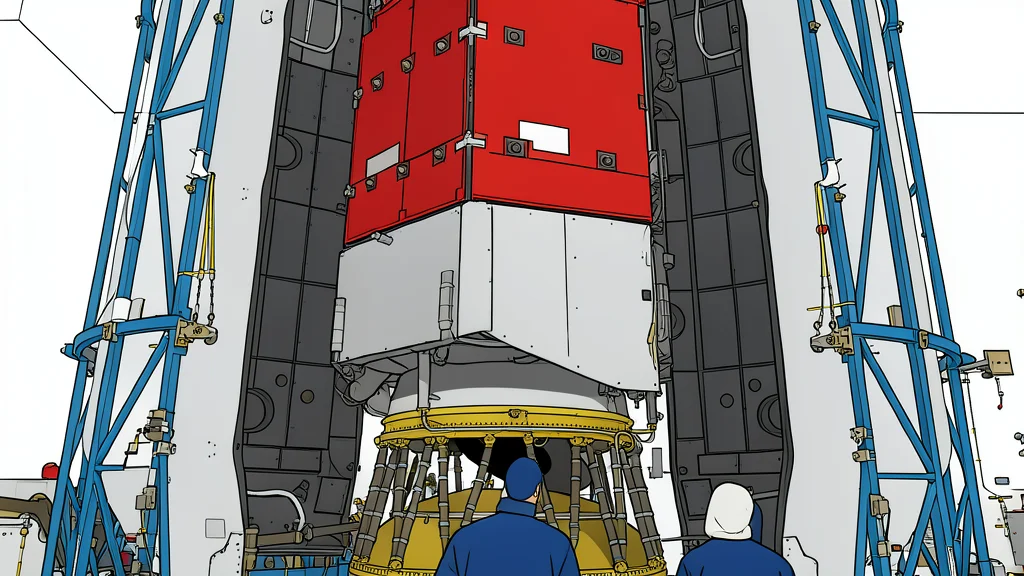
SpaceX is preparing for a pivotal moment with the fourteenth flight of its Starship vehicle, scheduled for as early as September 28. This mission marks the first attempt to place the upper stage into Earth orbit and will deploy 26 operational Starlink V3 satellites. By doing so, Starship will execute its first revenue-generating flight, adding significant data capacity to the global constellation.
The commercial potential of this vehicle is substantial. Analysts estimate that a fully loaded Starship could generate approximately one billion dollars in annual revenue for Starlink. If SpaceX achieves its ambitious goal of 10,000 flights per year, the market potential for the system could reach trillions of dollars by 2030. However, this trajectory relies on consistent reliability and rapid deployment cycles that have yet to be fully demonstrated.
Spectrum Acquisition Bolsters Mobile Plans
Beyond launch capabilities, SpaceX has strengthened its position in mobile communications. The company recently received authorization from the Federal Communications Commission to provide international telecommunications services. This allows Starlink Mobile to operate across U.S. and overseas markets, moving beyond its current reliance on T-Mobile for consumer handset coverage.
Following the completion of a $17 billion transaction with EchoStar, SpaceX now controls approximately 65 megahertz of nationwide mid-band spectrum. The company is targeting a 5G-class mobile product launch in the first half of 2028. Executives suggest that coverage in dead zones and global roaming capabilities will be key differentiators against traditional terrestrial carriers.
Rocket Lab Secures Financing for Iridium
Rocket Lab has completed a major financing round, raising nearly two billion dollars through the sale of shares. This capital was used to terminate a bridge loan that supported its $8 billion acquisition of Iridium Communications. The deal will add Iridium's 66 operational satellites and 2.55 million subscribers to Rocket Lab's portfolio, diversifying its business model.
On the hardware front, Rocket Lab has made progress in testing its reusable Neutron rocket, including pre-flight tests for its fairing. However, the company faces significant hurdles. The acquisition is not expected to close until mid-2027, and the Neutron rocket's 2026 debut remains uncertain due to previous delays and a fuel tank rupture incident. As noted by GN auto tech/space, the sector is balancing high growth expectations with the realities of complex engineering timelines.