SpaceX Falcon Fleet Reaches 700 Launches
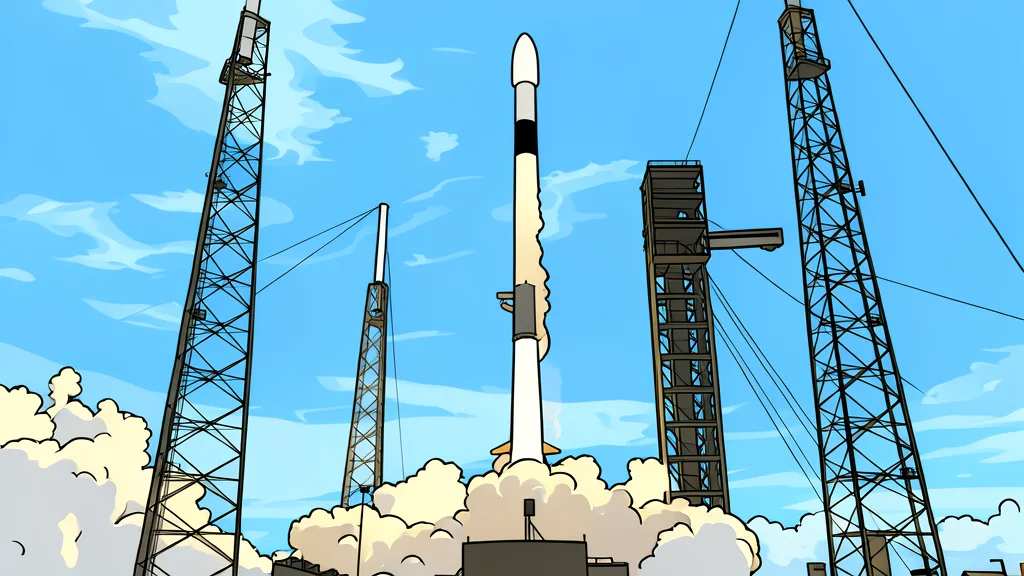
SpaceX’s Falcon rocket family has completed 700 missions, a milestone driven by commercial demand rather than government contracts. The achievement highlights how reusable boosters have reshaped launch economics.
SpaceX’s Falcon rocket family crossed the 700-mission mark in September 2026, a volume that would have seemed impossible when the first Falcon 1 flew in 2006. The milestone was achieved during a commercial satellite deployment, reflecting how the fleet’s dominance is built on paying customers rather than prestige projects.
According to reporting from GN auto tech/space, this volume underscores a shift in the industry. The 700th launch was the O3b mPOWER F mission, which carried the final three satellites for a Luxembourg-based operator. This specific flight completed the count, turning the odometer from 699 to 700.
Reusability drives launch economics
The core of this success is the 98% success rate for booster landings. When SpaceX first landed an orbital-class booster in 2015, many industry experts doubted that reusability could reduce costs effectively. Ten years later, a single booster has flown 37 times, doing more missions than some entire national launch programs.
This reusability directly impacts pricing. By recovering and reflown fairing halves more than 300 times, SpaceX has eliminated a six-million-dollar expendable cost per launch. This efficiency allows Falcon 9 to hold the majority of global commercial launch contracts.
Block 5 handles most missions
Of the total 700 missions, 630 were flown by the Falcon 9 Block 5 variant. Introduced in 2018, this version was designed specifically for rapid reuse. It has turned reusability from a proof-of-concept into a standard production operation.
The Falcon Heavy, which uses three Block 5 cores, accounts for 13 of the 700 launches. It handles the heaviest payloads, but the bulk of the work is done by the smaller, more frequent Falcon 9.
Launch pace continues accelerating
The speed of these launches has increased dramatically. SpaceX’s first 100 missions took about ten years, but the most recent 100 have occurred in less than two years. This acceleration is driven by the Starlink constellation build and a full commercial manifest.
At current rates, the 800th mission is expected within 18 months. However, the future balance may shift as Starship begins to absorb some of the manifest currently owned by Falcon 9, potentially changing the role of the workhorse rocket in the broader space economy.