SpaceX Team Wins First Neil Armstrong Space Prize
SpaceX engineers have officially received the inaugural Neil Armstrong Space Prize, recognizing their development of reusable rocket technology that has fundamentally altered the economics of spaceflight.
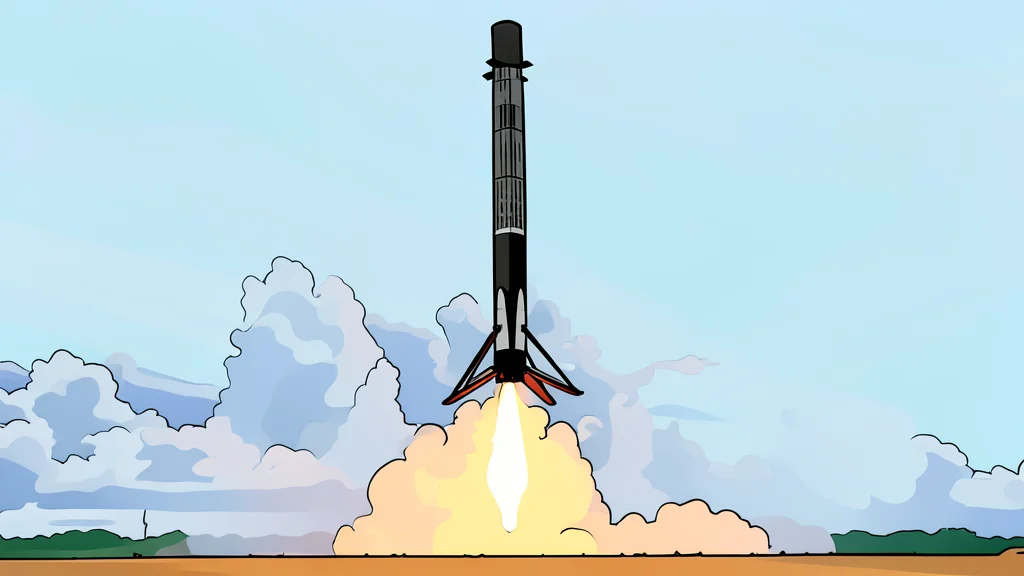
Five SpaceX employees representing the Falcon 9 booster landing team were presented with the first-ever Neil Armstrong Space Prize during a ceremony in Washington, D.C. The award, established by Purdue University, honors the team for mastering the vertical landing of rocket first stages, a feat that was once considered a theoretical possibility but is now a routine part of global space operations.
The prize was announced in April but formally bestowed on September 15 at the Cosmos Club. Purdue University created the award to recognize extraordinary engineering and teamwork in space exploration, naming it after its most famous alumnus. The university views the prize as a potential benchmark for achievement in the field, similar to how the Nobel Prize functions in other sciences.
Engineering breakthroughs changed space economics
Mark Lundstrom, the Dean of Engineering at Purdue, noted that the Falcon 9 team carried forward the spirit of Neil Armstrong by making rocket reuse practical at an unprecedented scale. This capability has shifted the cost structure of space missions, allowing for more frequent launches and opening new avenues for scientific research and commercial activity. The team’s work transformed a complex engineering challenge into a reliable industrial process.
The journey to this achievement was lengthy. While initial hand calculations suggested the landing concept was feasible, turning that theory into reality took several years of development. The first successful vertical touchdown occurred in December 2015, followed by a landing on a drone ship in the Atlantic Ocean in April 2016. These early milestones paved the way for the current standard of operation where boosters are routinely recovered and reflown.
Reusable boosters dominate global launches
Today, SpaceX has landed boosters more than 650 times during orbital missions. Several first stages have accumulated over 30 launches and landings, with one specific booster having flown 37 times. This extensive reuse has established the Falcon 9 as the dominant rocket in the world, accounting for approximately half of all global launches in 2025, with a perfect success rate for those missions.
The success of this technology has inspired competitors. Recent reports indicate that two different Chinese rockets have successfully landed their first stages, with one employing foldable landing legs similar to the Falcon 9 design. SpaceX engineers view this imitation positively, noting that the industry benefits from the shared advancement of landing capabilities. The ability to land first stages is now becoming a common expectation rather than a unique differentiator.
Purdue aims for space science benchmark
Purdue University, known as the cradle of astronauts because 30 of its graduates have flown in space, intends for the Neil Armstrong Space Prize to become an annual recognition of excellence. The university hopes the award will serve as a significant marker for progress in space science and exploration. By highlighting the engineering and teamwork required to achieve such feats, the prize underscores the human element behind technological milestones.
The five awardees represent a much larger team of engineers and specialists who contributed to the development of the landing system. Their work exemplifies the kind of collaborative effort that the prize seeks to celebrate. As the space industry continues to grow, such recognitions help to define the standards of achievement and honor the individuals who push the boundaries of what is possible in spaceflight.