Few Weak Cells Drive Early EV Battery Retirement
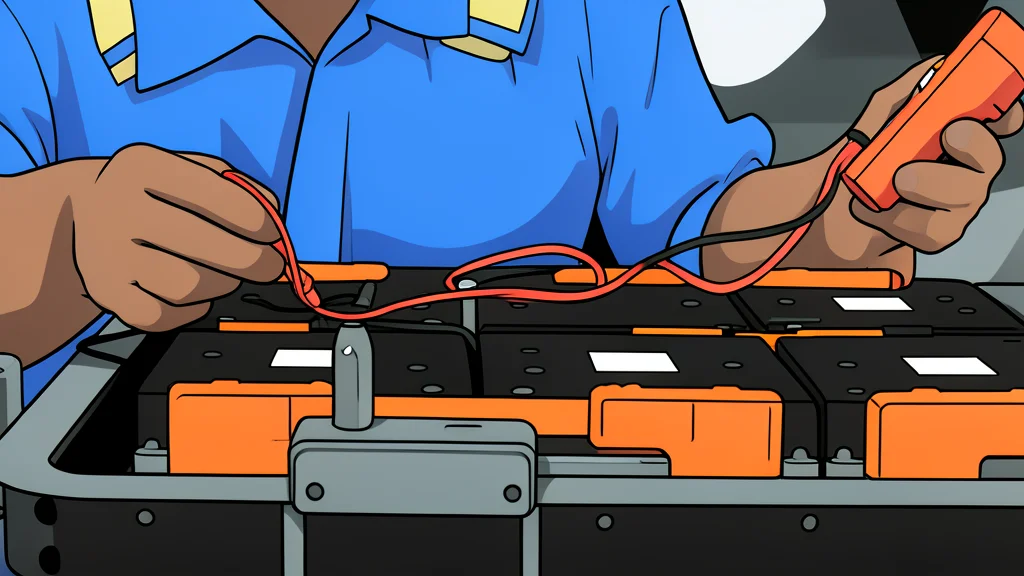
A joint study from China and Sweden reveals that a small cluster of aging cells, not the average pack condition, dictates when electric vehicle batteries must be retired.
Electric vehicle battery packs are often retired long before their full potential is reached, and a new international study identifies the specific cause: a small number of underperforming cells. Researchers from China and Sweden found that these weaker cells age faster than the rest of the pack, triggering safety or voltage limits that force the entire battery system out of service. This phenomenon means that the health of the majority of cells is irrelevant if a few outliers deteriorate too quickly.
The findings carry significant financial and operational implications for drivers, fleet managers, and transit authorities. By understanding that a handful of cells can compromise the whole system, manufacturers can focus on preventing this disparity. For consumers, this knowledge highlights why some batteries feel unreliable at high mileage despite appearing healthy on average. For large fleets, reducing early retirements could lower maintenance costs and reduce vehicle downtime, making electric transport more economically viable.
Real-world data reveals aging patterns
The study, reported by GN auto tech/ev: electric vehicle, moved beyond laboratory testing to analyze real-world usage data from passenger cars and buses. The research team examined nickel-manganese-cobalt batteries in cars and lithium-iron-phosphate batteries in buses, tracking performance over three years. Some vehicles in the dataset logged as many as 186,000 miles, providing a robust view of how batteries degrade under actual driving conditions rather than controlled settings.
The data showed that cell-to-cell differences remain minor at lower mileage. However, once vehicles pass the 105,000-mile mark, the gaps widen significantly. Some cells begin to deteriorate much faster than their neighbors, creating a pronounced performance divide within the same pack. This divergence is the key factor that leads to early retirement, as the system is only as strong as its weakest component.
Quantifying the cost of weak cells
The impact of this uneven aging is measurable and substantial. When researchers compared actual retirement points against a standard threshold, they found that passenger car packs lost approximately 17.7% of their potential lifespan due to this effect. Bus packs suffered an even greater loss, with 22.8% of their useful life cut short. This represents a significant amount of remaining capacity that is discarded because a few cells cannot keep up with the rest.
The lead researchers, Professor Chen Zhongwei from Dalian Institute of Chemical Physics and Professor Zou Changfu from Chalmers University of Technology, emphasized that average aging levels do not determine pack lifetime. Instead, the strongest constraint comes from the fastest-aging cells. This insight shifts the focus from simply making all cells age evenly to identifying and managing the outliers that drag down overall performance.
Industry solutions for better longevity
To address this issue, the study points to several technical improvements that could extend battery life. These include more consistent manufacturing processes to reduce initial cell variance, smarter grouping of cells during assembly, and enhanced balancing controls that actively manage energy distribution. Better thermal management is also cited as a critical factor, as heat accelerates the degradation of weaker cells.
Additionally, reconfigurable battery systems offer a promising path forward. By allowing the system to bypass or isolate failing cells, manufacturers could prevent a few bad actors from forcing the retirement of the entire pack. This approach aligns with broader industry efforts to improve battery utilization and lifetime management, ensuring that electric vehicles deliver reliable performance over their entire operational life.