GM CFO Says Major EV Gains Will Not Arrive Until 2028

General Motors is entering a pause in its electric vehicle strategy, with executives warning that significant financial and technical breakthroughs are years away.
General Motors has told investors that the most meaningful improvements to its electric vehicle business will not materialize until 2028. Paul Jacobson, the company’s chief financial officer, described 2027 as a flat spot in the EV journey where the company will focus on stabilizing operations rather than scaling up rapidly. This pause comes after GM booked nearly $11 billion in EV-related charges since mid-last year, a figure Jacobson expects to remain relatively stable for the time being.
The delay reflects a strategic shift toward profitability over rapid expansion. While GM currently holds about 13% of the US EV market, it remains unprofitable in this segment. The company is currently trimming production capacity to match current demand and using cash flow to settle debts with suppliers. The goal is to fix the underlying economics of the business before attempting to grow again, a process that GM believes requires at least another year of careful adjustment.
Battery Chemistry Drives Future Cost Savings
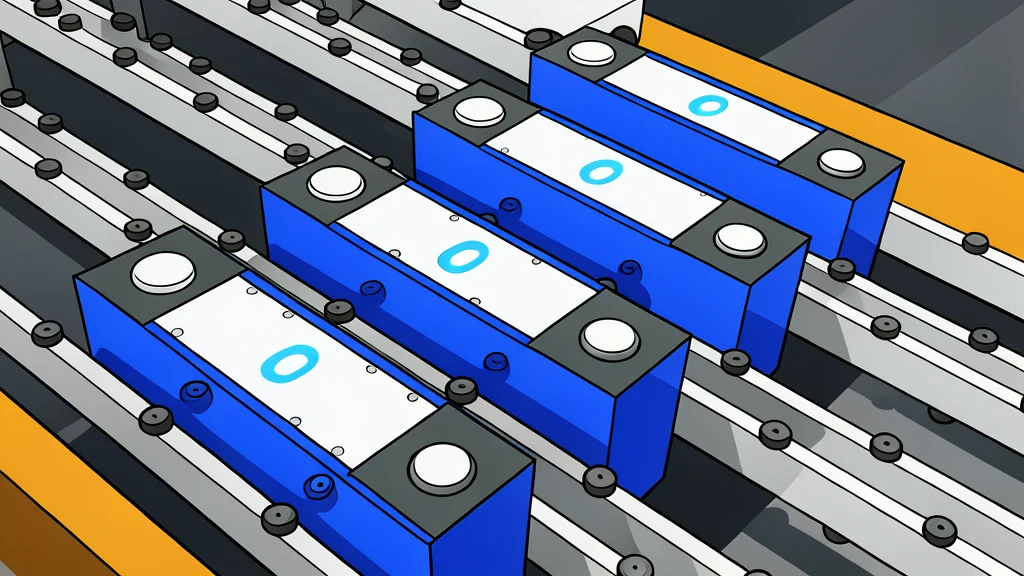
A central part of the 2028 outlook involves a new type of battery called lithium manganese-rich, or LMR, developed in partnership with LG Energy Solution. According to Jacobson, this technology offers a 33% higher energy density than standard lithium iron phosphate cells while maintaining similar manufacturing costs. This combination allows GM to offer higher performance and range without increasing the price for consumers, potentially saving thousands of dollars per vehicle at the pack level.
The trade-off for this advantage is time. Because the LMR battery requires a new production line and supply chain integration, it will not be widely available until the late 2020s. Until then, GM must rely on existing battery technologies that are less efficient. This delay means the company cannot yet achieve the lower costs necessary to make EVs broadly profitable, forcing it to accept lower margins in the interim.
Competitors Prioritize Supply Chain Expansion
While GM pauses, rival Rivian is accelerating its production plans. Rivian CEO R.J. Scaringe stated that the company is preparing to launch a second shift at its Illinois plant to support the delivery of its new R2 model. Unlike GM, Rivian is focused on immediate volume growth, aiming to deliver tens of thousands of vehicles next year. However, Scaringe noted that the primary challenge is not factory capacity, but rather ensuring that suppliers can deliver enough parts to keep the lines running.
Rivian is targeting a different market segment than Tesla, focusing on consumers who currently buy gas-powered SUVs like the Toyota RAV4 or Ford Bronco. This approach avoids direct competition with Tesla’s Model Y and instead addresses the largest segment of the US car market. The company’s strategy relies on coordinating supply chain ramp-ups tightly with production increases, a logistical challenge that GM has also faced while trying to reduce costs.
Market Stability Over Rapid Growth
The differing approaches highlight a key tension in the EV industry: the choice between rapid expansion and financial stability. GM is betting that slowing down now will allow it to build a more sustainable business model by 2028. Rivian is betting that it can manage the complexity of scaling up quickly to capture market share. Both strategies carry risks, as EV demand can be volatile and supplier relationships are fragile.
According to reporting from GN auto tech/ev, the industry is still searching for a formula that balances high costs with consumer demand. GM’s decision to treat 2027 as a breather year suggests that even major automakers are struggling to find a path to profitability in the current market environment. For consumers, this means that while EV options are available, the most significant advancements in range and price are still on the horizon.