Nigeria's EV Push Faces High Costs and Grid Limits
The end of fuel subsidies has increased interest in electric vehicles in Nigeria, but high upfront costs and infrastructure gaps remain significant barriers for local drivers.
Nigeria recently removed fuel subsidies, a move that sharply increased petrol prices for millions of drivers. While this economic shock was painful, it has inadvertently improved the value proposition for electric vehicles. For many Nigerians, the daily savings on fuel now make the higher initial purchase price of an EV more justifiable, signaling a potential shift in how the country's most populous nation thinks about transportation.
Despite this improved economic logic, electric vehicles remain a niche segment, accounting for only about 1% of the 720,000 vehicles imported annually. The industry is trying to bridge this gap by building local ecosystems for charging and financing, but structural challenges persist. The central issue is not just the availability of cars, but whether the broader support system can handle the financial and logistical demands of a mass market.
Financing models drive adoption
Local companies are betting that accessibility is the key to scaling clean tech. Qoray Mobility & Energies, a four-year-old firm, argues that advanced technology is less important than affordability and financeability. Their approach focuses on the
This strategy contrasts with traditional sales models that rely on high upfront capital. By integrating software and financing into the core business, companies like Qoray aim to lower the barrier to entry. As reported by GN auto tech/ev, this shift suggests that the success of EVs in West Africa depends less on the vehicle itself and more on the financial infrastructure surrounding it.
Local competitors shape the market
The Nigerian market is not a vacuum. Established players like Spiro and MAX are already building significant infrastructure, combining vehicle manufacturing with battery swapping and fleet management. MAX, for instance, has evolved from a ride-hailing service into a broader platform that offers electric vehicles, charging, and financing. These companies have attracted international capital to expand their reach, creating a competitive landscape that forces newer entrants to differentiate through service and financial access.
Other firms, such as Innoson Vehicle Manufacturing, are focusing on local assembly to reduce import dependencies. This diversity of business models indicates a maturing industry. However, the presence of multiple strong competitors means that simply putting more cars on the road is insufficient. Success requires a comprehensive ecosystem that addresses after-sales service and maintenance, areas where the market is still developing.
Infrastructure gaps remain critical
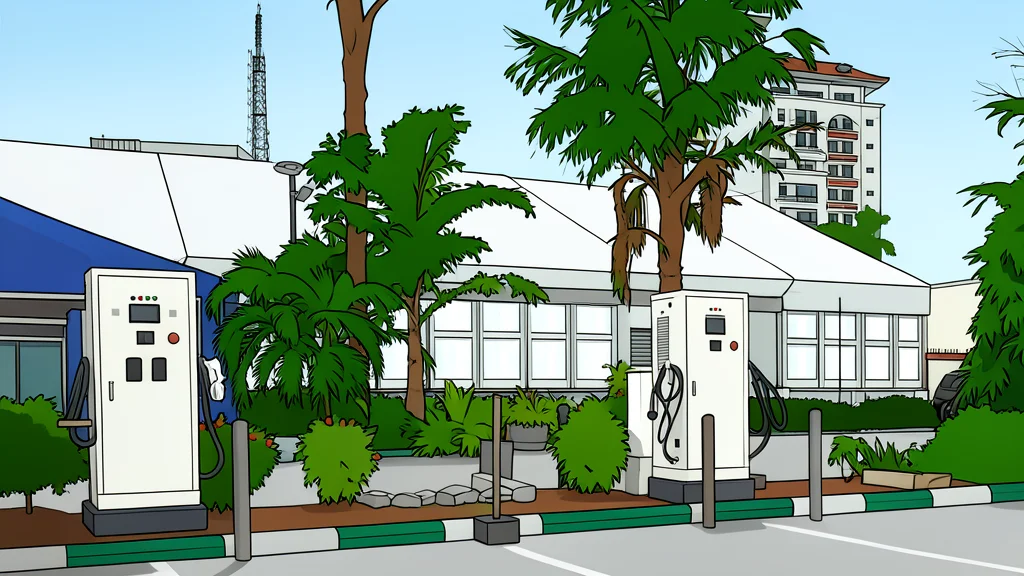
Even with improved financing, the physical infrastructure remains a major bottleneck. While companies are deploying charging stations and solar projects, the grid reliability in many parts of Nigeria is still inconsistent. This forces businesses to rely heavily on renewable energy sources like solar to power their charging networks, adding complexity to the operational model. The trade-off is that while this makes the system more sustainable, it also increases the capital intensity of the business.
For the average driver, the catch is that the current ecosystem is still in its infancy. Although Qoray and others have deployed thousands of electric tricycles and vehicles, the network is not yet dense enough for widespread personal adoption. Until the support system for charging and servicing becomes as ubiquitous as petrol stations, electric vehicles will likely remain a practical option for commercial fleets and tech-savvy early adopters rather than the general population.