Stellantis Debuts Driverless Delivery Concept at IAA

Stellantis has presented BOW at IAA Transportation, a compact driverless vehicle engineered specifically for cargo transport. The concept, standing for Box-on-Wheels, prioritizes autonomous operation over traditional van architecture.
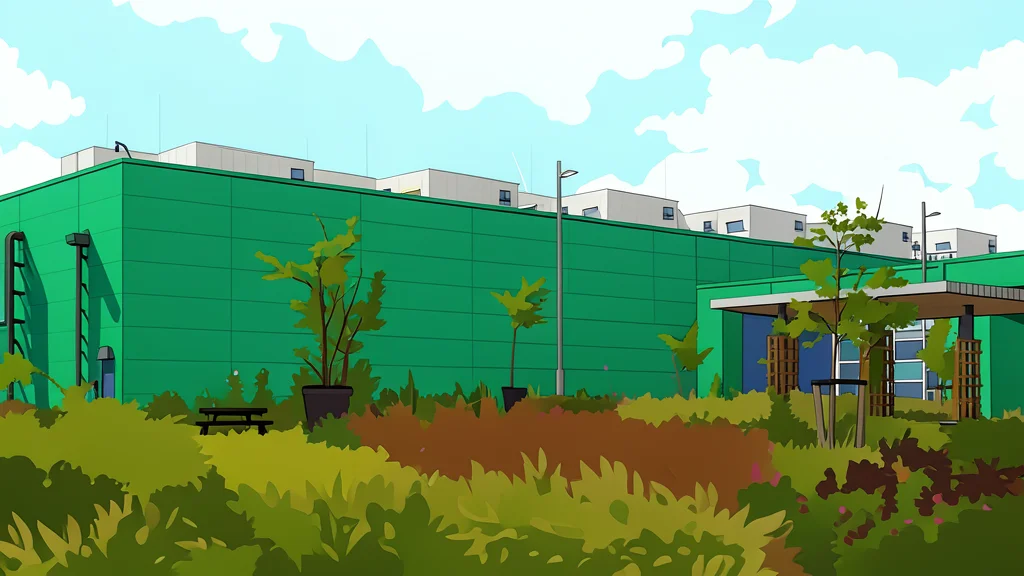
At the IAA Transportation exhibition in Hanover, Stellantis presented a small, green vehicle that looks more like a mobile storage unit than a traditional van. Known as BOW, or Box-on-Wheels, the prototype lacks a cabin, steering wheel, or driver’s seat entirely. Instead, it features a roof-mounted sensor array and a compact body built around four wheels. This design choice reflects a fundamental rethinking of how commercial electric vehicles are constructed, prioritizing cargo space over human accommodation.
The vehicle was developed in partnership with UQI Robotics, a company specializing in autonomous systems. The goal is to address last-mile delivery challenges by removing the need for a human operator. While the concept is often associated with urban logistics, Stellantis is also exploring applications in controlled environments such as airports, hospitals, and factories. In these settings, routes can be mapped and obstacles limited, making autonomous operation significantly more feasible than in unpredictable city traffic.
Design Prioritizes Cargo Over Cabin
Most current electric commercial vehicles are adapted versions of existing diesel vans, where the driver’s compartment dictates the vehicle's shape. BOW takes a different approach by assuming no one will be sitting inside. This allows the entire interior volume to be dedicated to cargo. The vehicle is essentially a mobile box equipped with the necessary hardware to move itself. This architectural decision maximizes payload efficiency and reduces the physical footprint of the vehicle, potentially allowing it to navigate tighter spaces than conventional delivery vans.
However, this design philosophy comes with significant technical and regulatory complexities. Building a vehicle without a manual override or driver control requires highly reliable autonomous systems. The partnership with UQI Robotics focuses on integrating these robotics technologies with Stellantis’ commercial vehicle expertise. The aim is to create a system that can handle the physical logistics of moving goods, not just demonstrate driving capability. This involves complex decision-making algorithms to manage interactions with other vehicles and infrastructure, even in controlled environments.
No Production Specifications Announced
Despite the attention the prototype has received, Stellantis has not released any concrete production specifications for BOW. There are no official figures for battery capacity, range, payload limits, or maximum speed. The company emphasizes that BOW is a development project and a proof of concept rather than a ready-to-buy product. As reported by GN auto tech/ev, the absence of these details means that any performance numbers circulating online should be treated with caution. The vehicle does not necessarily use the same powertrain components as Stellantis’ existing electric van lineup.
This lack of finalized data highlights the gap between a working prototype and a mass-produced commercial vehicle. Regulatory approval for driverless operation on public roads remains a significant hurdle in many jurisdictions. Even in controlled sites, liability and safety standards must be rigorously defined. Stellantis is using the IAA exhibition to demonstrate the technology and gather feedback on potential commercial applications. The focus is on understanding how such a vehicle could integrate into existing delivery networks, where the movement of goods is currently organized around the working hours and availability of human drivers.
Challenges of Autonomous Delivery
The transition from a controlled environment to open urban streets presents a substantial challenge. While navigating a factory floor or airport tarmac involves predictable obstacles, city driving requires handling pedestrians, cyclists, roadworks, and erratic traffic. The technology in BOW is designed to test the limits of autonomous operation in less chaotic settings first. This staged approach allows developers to refine the system’s reliability before attempting deployment in complex urban landscapes. The ultimate goal is to reduce the cost and environmental impact of last-mile delivery by eliminating the labor-intensive driving component.
For now, BOW remains a concept that illustrates a possible future for logistics. It challenges the assumption that delivery vehicles must resemble passenger cars or vans. By removing the driver, the vehicle becomes a pure utility tool. While the commercial viability and regulatory path are still being explored, the project represents a significant step in the evolution of electric commercial vehicles. It suggests that the next generation of delivery fleets may look fundamentally different from the trucks and vans that dominate roads today, offering a glimpse into a more automated and efficient supply chain.
BOW optimizes cargo space by removing driver cabin
The vehicle's design philosophy centers on eliminating the need for a human operator, allowing the entire interior volume to be dedicated to freight. Unlike conventional electric vans that retain a cab structure, BOW is built from the ground up as a mobile box on wheels, maximizing utility for last-mile delivery or controlled industrial environments.