Volkswagen's One-Off EV Sets New Efficiency Benchmark
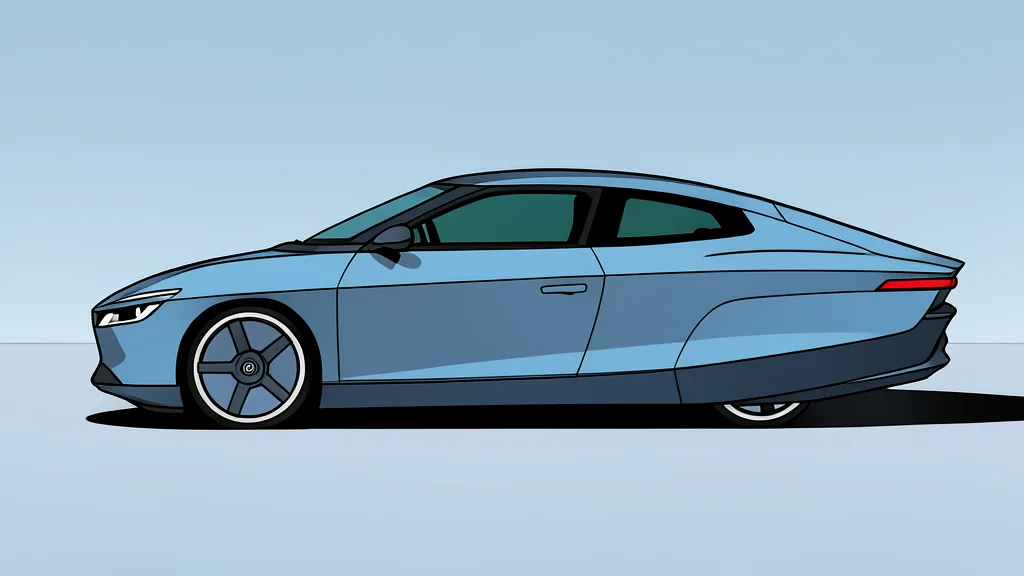
A sleek, teardrop-shaped prototype from Volkswagen has achieved record-breaking range and aerodynamics, proving that extreme efficiency is possible with existing mass-market components.
Volkswagen has unveiled a one-off electric vehicle designed to prove that extreme efficiency is achievable without exotic, unproven technology. The prototype, known as the Mission Efficiency, uses standard parts from the ID. Polo but encases them in a bespoke aerodynamic body. This approach allows the German automaker to demonstrate real-world performance gains while relying on hardware that is already commercially available.
The vehicle completed a journey of 1,278 kilometers from Wolfsburg to Vienna with range to spare, achieving a consumption rate of just 6.89 kWh per 100 km. According to reports from GN auto tech/ev: electric vehicle, this performance has earned the car recognition as the most economical in its class. However, the vehicle is strictly a prototype and is not intended for immediate sale to the public.
Aerodynamic Design Drives Record Performance
The primary driver of this efficiency is the car’s shape. With a drag coefficient of 0.158, the Mission Efficiency holds the record for the lowest resistance among road-approved vehicles. The teardrop profile minimizes air turbulence, allowing the car to move through the air with significantly less energy loss than a conventional hatchback. This design choice is the core reason the standard ID. Polo powertrain could achieve such a high range.
Beyond the exterior shape, engineers focused on reducing weight and mechanical drag. The chassis utilizes lightweight aluminum, while the body panels are made from carbon fiber and aramid composites. The rear braking system uses an electromechanical setup that eliminates heavy hydraulic lines and fluid. Even the wheel interiors feature patented deflectors to prevent air from spinning inside the rims, further reducing the energy required to maintain speed.
Trade-offs in Comfort and Practicality
These aerodynamic and weight-saving measures come with significant compromises for the occupants. While the car retains four seats and 481 liters of storage, the low roofline creates a tight space for taller drivers and passengers. Volkswagen acknowledges that anyone over 1.6 meters tall may find the rear seats uncomfortable. This illustrates the fundamental trade-off in automotive design: maximizing efficiency often requires sacrificing headroom and ease of entry.
The vehicle also integrates a solar panel system into the roof and boot lid. This setup generates up to 370 watts of power, which is used to run auxiliary systems like fans and lighting rather than directly charging the main battery. While this adds up to 30 kilometers of additional range per day, it does not replace the need for regular plug-in charging. The solar array is a supplementary feature, not a primary energy source.
Path from Prototype to Production
Volkswagen emphasizes that the Mission Efficiency is a concept vehicle designed to test the limits of current technology. It is not a production model ready for dealership floors. However, the lessons learned from this prototype will likely inform future mass-market vehicles. Components such as the wheel deflectors and aerodynamic body shapes may eventually appear in standard models, though the specific carbon fiber body of the one-off will likely remain too expensive for widespread use.