Compact Robots Target Living Rooms with New Safety Focus

Chinese manufacturers are shifting focus from industrial giants to small, safe companions designed for the unpredictability of daily life.
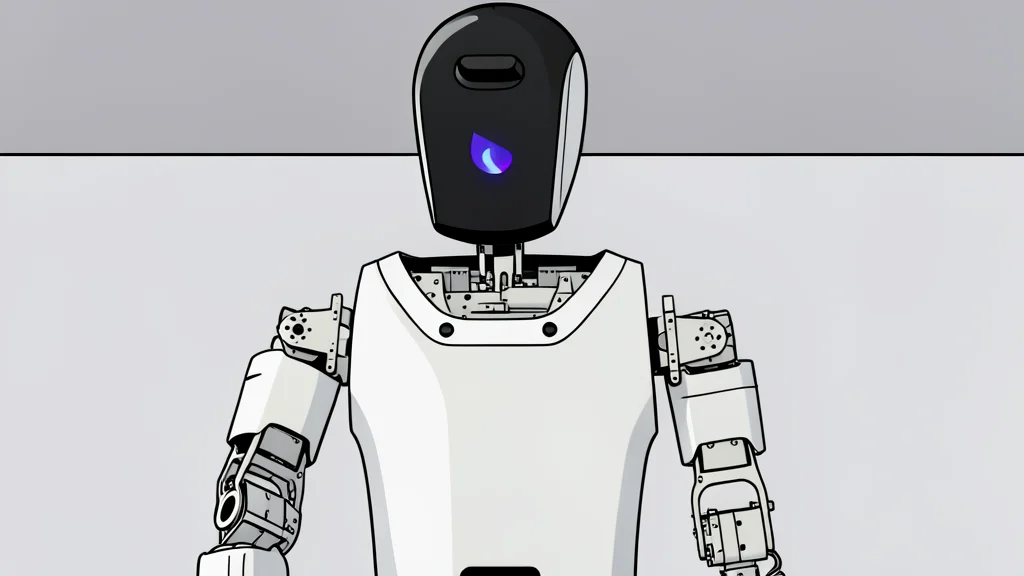
Chinese robotics firms are pivoting away from towering industrial machines toward compact devices designed for living rooms. Swancor Advanced Materials recently introduced the Qiyuan Q1, a robot standing just 88 centimeters tall and weighing 15 kilograms. This shift marks a significant departure from the previous two years, where the industry focused primarily on demonstrating that humanoid robots could perform complex physical tasks in controlled factory settings.
The move reflects a broader recognition that the consumer market presents a far more challenging environment than the factory floor. While industrial spaces offer fixed routes and predictable lighting, homes are chaotic spaces filled with moving objects, pets, and unpredictable human behavior. According to GN auto tech/robotics, this new frontier requires a different approach to design and safety, one that prioritizes approachability over raw capability.
Small size addresses safety concerns
The Q1’s compact dimensions are a deliberate choice aimed at reducing risk around children and elderly users. By keeping the weight low and the frame small, the company aims to minimize the potential for injury if the robot collides with a person or object. This design philosophy suggests that for a robot to be accepted in a home, it must first be perceived as harmless and manageable, rather than just powerful.
Tian Hua, the CEO of Swancor, describes these devices not as simple toys or industrial tools, but as a new form of human-machine interaction. He envisions personal robots becoming the next major interface after smartphones and smart speakers, serving as physical bridges between digital AI services and real-world activities. The goal is to create a companion that can navigate the messiness of daily life without causing anxiety for its owners.
Versatile designs for varied terrains
Alongside the Q1, the company is developing the T1, a robot that can transform its structure to suit different environments. Standing about one meter tall, it can switch between a wheeled humanoid form for smooth indoor surfaces and a four-legged configuration for grass, gravel, or slopes. This adaptability highlights a growing industry trend: the most useful consumer robots may not be those that look most human, but those that best fit into the diverse physical spaces people inhabit.
This strategy mirrors efforts by international competitors, such as 1X and LG Electronics, who are also developing home-focused units. However, the challenge for Swancor is not just design but scale. The company has received significant advance payments and invested heavily in research and development, signaling a serious commitment to moving from prototype to mass production. Partnerships for manufacturing and the development of robot-ready homes indicate that the infrastructure for this technology is beginning to take shape.
Production challenges remain significant
Despite the promising designs, the transition to mass production remains the biggest hurdle. Swancor has partnered with Lens Intelligent Robotics to build a production line capable of handling 10,000 units, focusing on precision parts and final assembly. The company also leverages its background in advanced materials to solve technical issues related to lightweight construction and environmental sustainability. Success will depend on whether these robots can function reliably in unstructured environments, not just in controlled demonstrations.
The trade-off for consumers will likely be a device that is safer and more accessible but potentially less capable than its industrial counterparts. By prioritizing safety and adaptability over sheer power, manufacturers are betting that trust is the key to bringing robotics into the home. As these devices near delivery, the industry will face its truest test: can a robot truly live with people rather than just work alongside them?