NASA's Roman Telescope Begins Infrared Testing in Deep Space
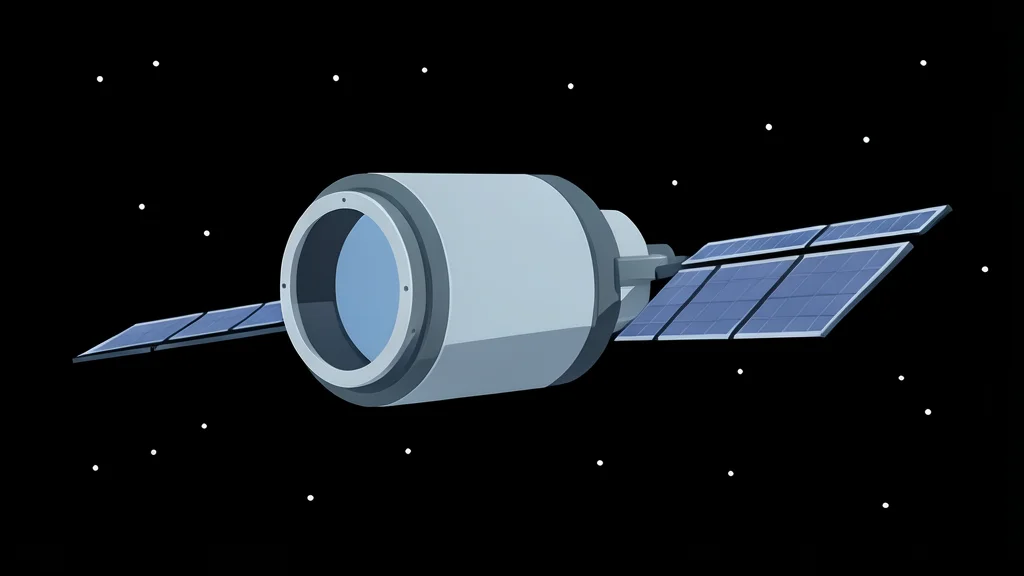
The Nancy Grace Roman Space Telescope has successfully activated its primary camera one million miles from Earth, marking a critical step toward mapping the universe's dark structures.
NASA’s new 300-megapixel infrared telescope, the Nancy Grace Roman Space Telescope, has passed its initial operational checks in deep space. Launched at the end of August 2026, the observatory is now positioned at the second Lagrange point, a stable gravitational spot roughly one million miles beyond the Moon. Engineers have successfully woken up the Wide Field Instrument, the spacecraft’s main camera, to begin a series of essential tests. This milestone confirms that the complex hardware survived the journey and is functioning in the vacuum of space.
The activation process was not immediate. Upon reaching its designated orbit, the team had to wait ten days for the spacecraft to dry out and decontaminate. During this period, the image sensors were held at a temperature of -65 degrees Celsius, which is actually warmer than their operational setting. Once the system cooled further to -143 degrees Celsius, the engineers activated the eighteen infrared sensors that make up the camera. These sensors, collectively the size of a typical laptop screen, began collecting test data and transmitting it back to Earth for analysis.
Calibrating the Wide Field Instrument
The primary goal of the Wide Field Instrument is to capture wide swaths of the cosmos with exceptional detail. According to reporting from GN auto tech/space: space launch, the instrument is designed to map how matter is structured in the universe, specifically targeting dark energy and dark matter. The recent tests involved checking the optics and filters for the first time in the absence of gravity. While the camera underwent extensive ground-based testing, this is the first time it has operated in the full environment of space.
Scientists at NASA’s Goddard Space Flight Center describe this as a significant milestone. Josh Schlieder, the Wide Field Instrument scientist, noted that the team has confirmation the instrument is operational. He emphasized that while much work remains, the project is moving toward groundbreaking science. The data received so far indicates that the telescope is in excellent condition, with all systems responding as expected to the commands sent from Earth.
Challenges of Direct Planet Imaging
Beyond the wide-field camera, the spacecraft also carries the Coronagraph Instrument. This system uses a complex arrangement of optics, masks, and flexible mirrors to block starlight. This capability is crucial for directly imaging exoplanets, which are significantly fainter than the stars they orbit. The Coronagraph has also completed its initial power-up and mechanical checks, stretching its electronic and mechanical components to ensure they are ready for scientific operations.
The trade-off in this design is complexity. Achieving the precision required to block bright starlight while allowing faint planetary light to pass through demands extreme engineering accuracy. Any slight misalignment or thermal shift could ruin the data. The success of the initial tests suggests that the team has managed to stabilize these delicate components in the harsh environment of space. This paves the way for the telescope to potentially provide some of the clearest images of other worlds ever captured.
Timeline for Scientific Operations
The months-long calibration process is ongoing. The team is currently verifying the performance of the various filters and optics to ensure that the images meet the high standards required for scientific research. Preliminary high-resolution images from the Roman Space Telescope could arrive as soon as December, although early 2027 is considered a realistic target for full operational status. Once these calibrations are complete, the telescope will begin its primary mission of sweeping surveys of the universe.