Xpeng Begins Mass Production of Home-Ready Humanoid Robot
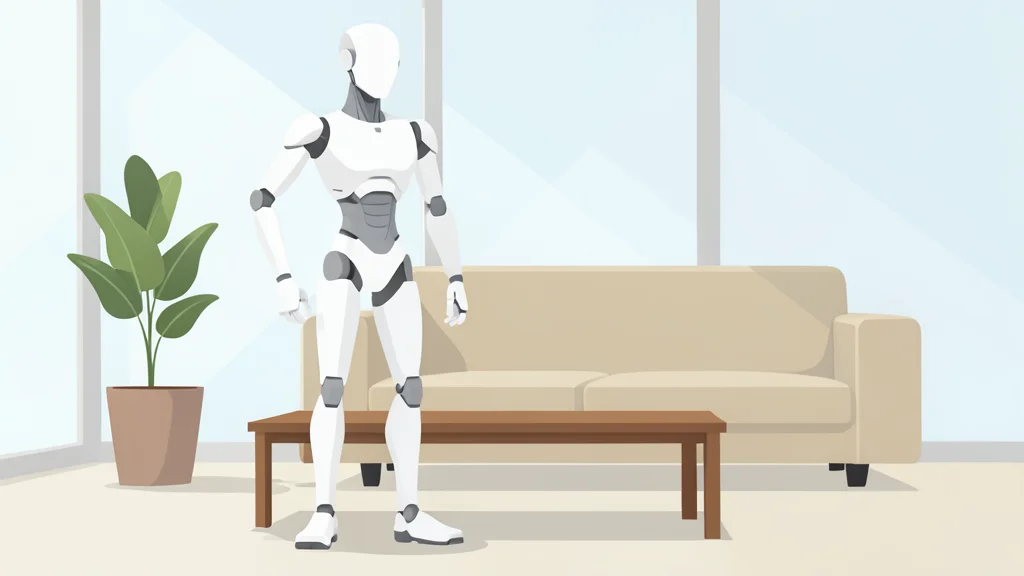
Xpeng has started building its IRON humanoid robot in Berlin, aiming to bring autonomous household help from the lab to the living room by 2027.
Xpeng has officially begun mass production of its IRON humanoid robot, a significant shift from the prototype phase that has dominated the industry for years. Announced at the IFA 2026 trade fair in Berlin, the company stated that the robot is now being manufactured in its existing facilities. This move marks a critical step toward making autonomous household assistance a reality rather than just a technological demonstration.
The primary goal of IRON is to handle routine domestic tasks, such as cleaning and folding laundry, without constant human supervision. By integrating advanced AI systems similar to those used in Xpeng’s electric vehicles, the robot is designed to interpret its surroundings, plan multi-step actions, and navigate cluttered environments. While the technology promises a significant reduction in daily chores, the path from factory floor to consumer home remains a complex engineering challenge.
Specs designed for real-world navigation
The production version of IRON stands approximately 5 feet 7 inches tall and weighs around 143 pounds. It features 76 degrees of freedom, allowing for fluid movement, with 21 degrees of freedom in each hand to manipulate objects. The robot can travel at speeds of about 6.5 feet per second, a pace suited for indoor spaces rather than outdoor speeds.
To function independently, IRON utilizes a "world model" AI approach that helps it predict outcomes and adapt to changing environments. It also includes a self-charging capability, enabling the machine to locate its docking station and recharge autonomously when battery levels drop. These features are essential for a robot that needs to operate without constant human intervention.
Onboard intelligence reduces latency
A major technical advantage of IRON is its ability to process data locally. The robot is equipped with three Turing AI chips, providing a total computing power of 2,250 trillion operations per second. This processing capacity allows the device to run large language models directly on its hardware, eliminating the need for a constant internet connection to perform basic reasoning tasks.
This local processing capability is crucial for ensuring responsiveness in a home environment, where internet connections may be unstable or latency can disrupt real-time interactions. By keeping the AI logic onboard, Xpeng aims to provide a more reliable user experience. However, this also increases the hardware complexity and cost of the unit compared to simpler, cloud-dependent robots.
Commercial rollout precedes home use
Despite the focus on household applications, Xpeng plans to deploy IRON in commercial settings first. The company intends to use the robots internally in its showrooms and tech campuses for tasks like customer service and guided tours. Shipments to commercial customers in China are expected to begin in 2027, allowing the technology to be tested in semi-public environments before reaching individual consumers.
This phased approach allows Xpeng to gather data on reliability and safety in controlled settings. The broader industry context shows that while competitors like Figure AI and AGIBOT have also moved toward mass production, few have successfully transitioned from industrial demos to consistent commercial deployment. For Xpeng, the success of IRON in these early commercial roles will determine whether it can eventually fulfill its promise as a domestic companion.