50 Faint Ghost Galaxies Found Near Distant Systems
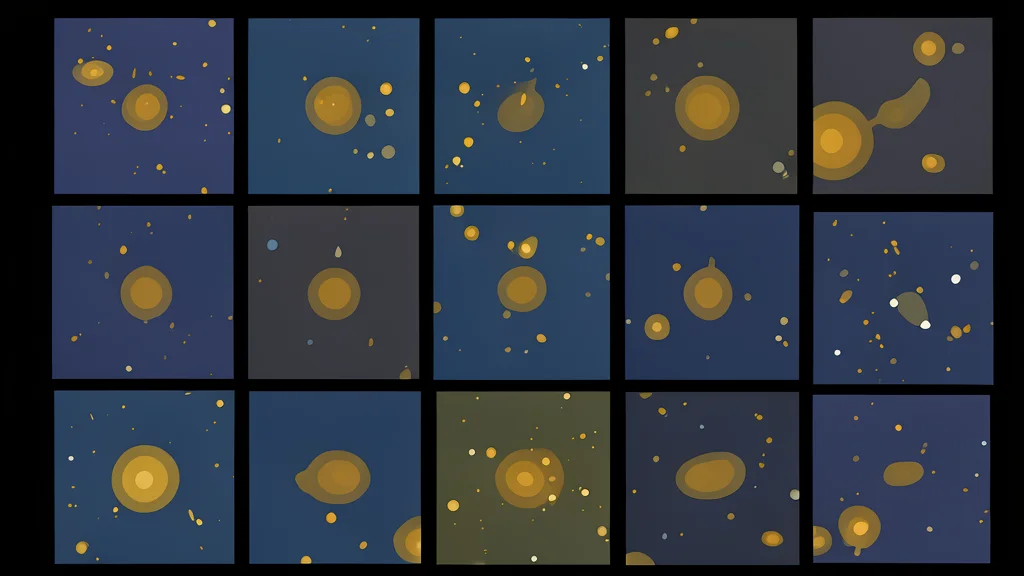
Astronomers have identified nearly 50 previously unseen dwarf galaxies, helping to resolve long-standing discrepancies in our understanding of cosmic structure.
Astronomers have identified nearly 50 previously unseen dwarf galaxies, helping to resolve long-standing discrepancies in our understanding of cosmic structure. These faint celestial bodies, often called ghost galaxies, were found orbiting three distant galaxies located between 17 and 100 million light-years away. The discovery addresses a persistent puzzle in cosmology: simulations predicted that large galaxies should be surrounded by more satellite systems than we typically observe, yet other studies suggested the opposite in certain regions.
The team, led by researcher Crescenzo Tortora from the Italian National Institute for Astrophysics, utilized the Very Large Telescope to capture some of the deepest images ever taken of these specific areas. Unlike automated software that might miss subtle details, the researchers manually inspected the data, carefully masking out the bright light from foreground stars. This painstaking process allowed the dim, diffuse shapes of the dwarf galaxies to emerge from the background noise, revealing a population that had largely escaped previous detection.
Manual Inspection Reveals Hidden Structures
The methodological choice to rely on human visual inspection over algorithms was crucial for this success. By manually masking foreground objects, the scientists were able to isolate the extremely faint light profiles of the candidate galaxies. This approach not only identified 47 new dwarfs, but also allowed for a more precise characterization of their shapes and outer regions. Only four of these objects had been cataloged before, indicating that the vast majority were invisible to standard automated surveys.
The newly identified galaxies exhibit a variety of forms, including dwarf spheroidals, ellipticals, and irregulars. Some even show signs of spiral structure. Their masses range from one million to one billion times that of our sun. This diversity in shape and mass provides valuable data points for understanding how dark matter influences the formation and distribution of these small systems around their larger hosts.
Solving The Satellite Counting Puzzle
This discovery directly impacts the ongoing debate about whether the standard model of cosmology overestimates or underestimates the number of satellite galaxies. By finding a significant number of missing dwarfs in these specific fields, the team provides evidence that such objects are more common than previously thought. This helps reconcile conflicting data from different studies and suggests that the distribution of dwarf galaxies is more complex than earlier models proposed.
However, the findings are not yet final. The objects are currently classified as candidates based on their color and structure. Confirming their status as true dwarf galaxies requires further observation. The catch is that these objects are so faint that standard telescopes struggle to distinguish them from background noise, making definitive identification a slow and difficult process.
Future Confirmation With Space Telescopes
Fortunately, the region studied by the team falls within the field of view of the Euclid space telescope. Euclid has already begun yielding discoveries of faint galaxies, and its upcoming data releases are expected to provide the high-precision measurements needed to confirm these new candidates. As reported by GN auto tech/science: space discovery, this follow-up work is essential for validating the current findings and refining our models of the universe's small-scale structure.
The trade-off for this level of precision is time. While the initial discovery is significant, the full picture will only emerge as more data from Euclid becomes available. For now, these 50 ghost galaxies serve as a crucial test case for our understanding of how matter clumps together in the cosmos, highlighting how much remains hidden in the darkest corners of the sky.