NASA Telescope Captures First Light from Deep Space
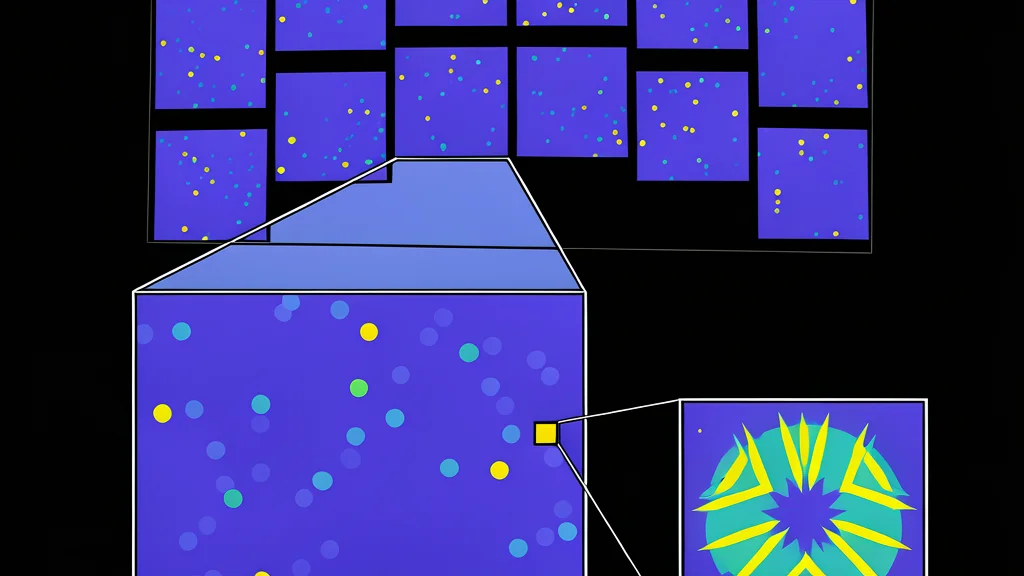
The Nancy Grace Roman Space Telescope has successfully activated its main camera, marking a critical step toward detailed observations of the universe.
NASA’s Nancy Grace Roman Space Telescope has captured its first faint signals from the cosmos, confirming that its primary camera is functioning in orbit. This milestone, reported by GN auto tech/space, signals that the spacecraft is ready to begin its long-term mission to map the galaxy and hunt for distant planets.
The successful activation of the Wide Field Instrument represents a major engineering achievement. For years, this 300-megapixel camera was the most complex component of the project. Now that it has seen light, engineers can begin the delicate process of fine-tuning its focus and calibration for scientific use.
Extreme cooling protects sensitive sensors
To function properly, the telescope’s instruments must operate in near-freezing conditions. After launch, the spacecraft spent ten days drying out to prevent internal damage. Once dry, heaters were switched off, allowing the system to cool to minus 143 degrees Celsius. At this temperature, the infrared detectors become sensitive enough to detect the faint heat signatures of distant celestial objects without interference from the telescope's own warmth.
This cooling process is a trade-off. It ensures data accuracy but requires precise thermal management. If the temperature fluctuates too much, the images could blur or become distorted. The current status indicates that the thermal control systems are holding steady, a prerequisite for the high-resolution imaging planned for the coming months.
Surveying more sky than Hubble
The Roman Telescope is designed to be a wide-field surveyor. Its camera can capture patches of sky that are larger than the apparent size of a full moon. This breadth allows it to observe a vast amount of space in a single exposure, covering more than 50 times the area that the Hubble Space Telescope has surveyed in its three decades of operation.
This capability is central to its scientific goals. By scanning large sections of the sky, Roman can search for signs of dark energy and matter, which are invisible to the naked eye but affect the motion of galaxies. It will also monitor the Milky Way in detail, providing a comprehensive view of our home galaxy’s structure and evolution.
Testing tools for exoplanet discovery
In addition to the main camera, engineers have tested the coronagraph, a specialized system designed to block out the bright light of stars. This allows the telescope to directly image planets orbiting those stars, a feat that is extremely difficult with current technology. The successful testing of this component suggests that Roman may soon provide the first clear views of worlds around other suns.
While the hardware is working as expected, the timeline remains tight. The first preliminary images are expected later this year, but full science operations are not scheduled to begin until January 2027. Until then, the team must complete rigorous calibration to ensure that the data is scientifically valid. The catch is that any error in this phase could delay the most critical discoveries for months.