Starship Targets Orbit on September 22
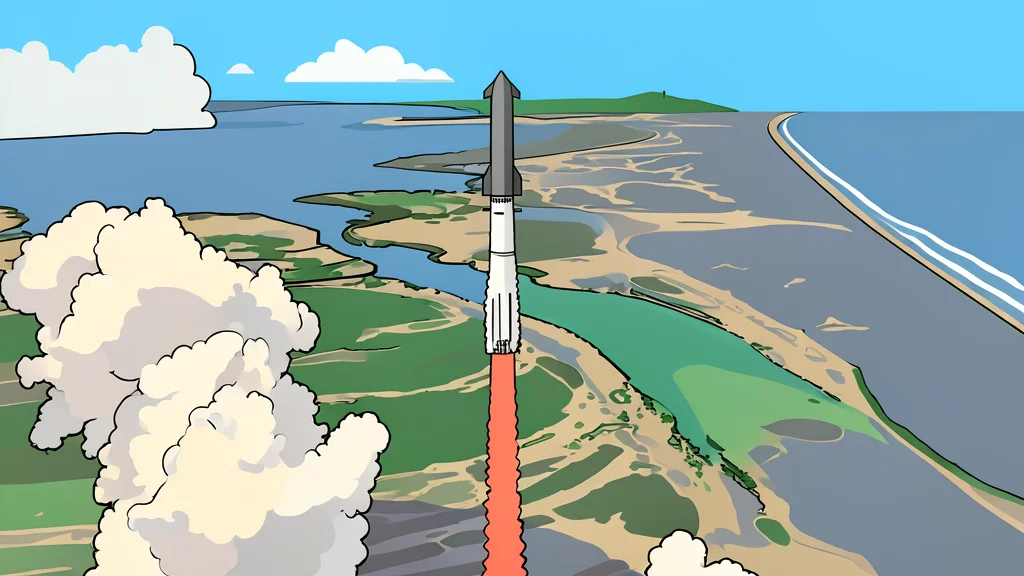
SpaceX has set a date for the first orbital flight of its Starship rocket, marking a major step in the vehicle's development.
SpaceX has confirmed that its Starship vehicle will attempt its first orbital flight on September 22. This mission, designated as Flight 14, represents a significant milestone for the 408-foot-tall rocket, which has previously only conducted suborbital test flights from its base in South Texas.
The launch window opens at 8:15 a.m. Eastern Daylight Time, offering a 75-minute period for liftoff. According to reporting from GN auto tech/science: space discovery, this flight is critical because it transitions the program from simple altitude tests to a full loop around Earth, a prerequisite for long-term space exploration goals.
Orbital flight enables satellite deployment
A primary objective of this mission is to deploy 26 Starlink V3 satellites into orbit. These next-generation satellites are designed to provide significantly faster broadband connectivity compared to the current constellation of over 11,000 spacecraft. Successfully placing these payloads into orbit would demonstrate the rocket's capability to carry heavy loads to space, a key requirement for its commercial and scientific missions.
To improve the vehicle's durability, three of the satellites are equipped with cameras to photograph the heat shield of the Starship upper stage after deployment. This data will help engineers refine the protection system that keeps the vehicle intact during re-entry into Earth's atmosphere, addressing a critical engineering challenge for reusable rocket systems.
Recovery plans differ for stages
The flight plan involves distinct recovery methods for the two stages of the rocket. The Super Heavy booster is expected to splash down in the Gulf of Mexico approximately seven minutes after liftoff, consistent with previous test flights. In contrast, the upper stage, known as Ship, will complete six orbits of Earth before splashing down in the Pacific Ocean west of Chile.
Notably, the launch tower will not attempt to catch either stage during this mission. While SpaceX has successfully retrieved the booster using tower arms in the past, the upper stage will continue to use ocean splashdown. This trade-off prioritizes the validation of orbital mechanics and heat shield performance over immediate full-stack reuse.
Future milestones remain pending
Although reaching orbit is a landmark achievement, it does not conclude the development process. Engineers still need to demonstrate that the vehicle can be caught by the launch tower and refueled in space. These capabilities are essential for future missions to the moon and Mars, where rapid reuse and orbital logistics will determine the feasibility of long-duration space travel.