Retired General Pamonag Leads National Peace Task Force
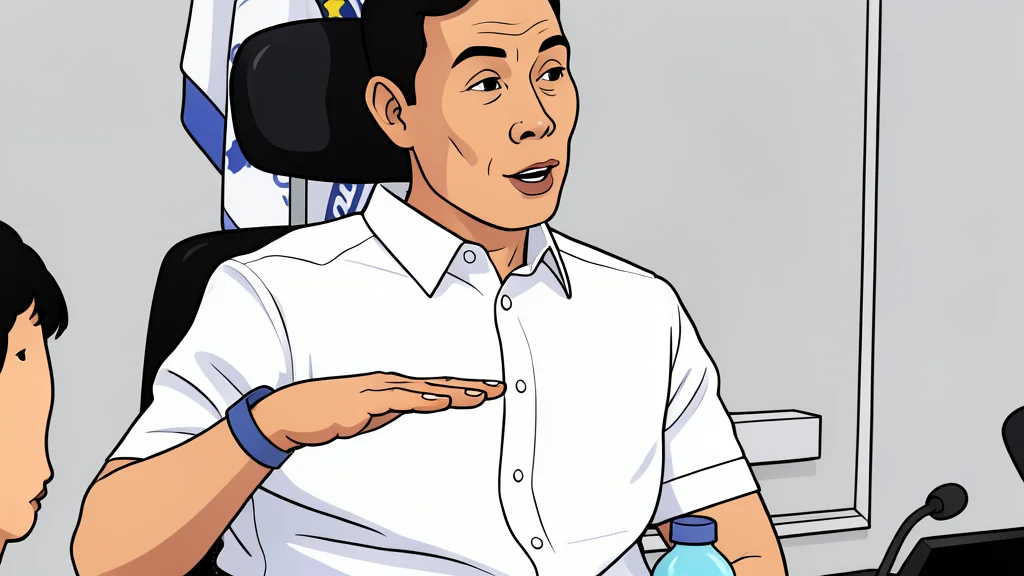
Retired Lieutenant General Danilo Pamonag has assumed leadership of the National Task Force to End Local Communist Armed Conflict, signaling a strategic pivot toward development and institutional coordination in formerly conflict-affected areas.
Retired Lieutenant General Danilo G. Pamonag has formally assumed the role of executive director for the National Secretariat of the National Task Force to End Local Communist Armed Conflict. The appointment, confirmed by the Office of the Presidential Adviser on Peace, Reconciliation and Unity, marks a significant shift in the government’s approach to addressing residual armed conflict in the Philippines.
According to reports from GN geopolitics/war (en-US), the new leadership aims to consolidate peace gains by prioritizing development over purely military engagement. This transition reflects a broader administrative goal to integrate basic services and livelihood opportunities into the national strategy for stability in geographically isolated communities.
Strategic Shift Toward Development
The task force has outlined a comprehensive strategy centered on the National Action Plan for Unity, Peace and Development for the period 2025 to 2028. This framework emphasizes a Whole-of-Nation approach, which seeks to align the efforts of national government agencies, local government units, and civil society organizations. The objective is to address the root causes of conflict, including poverty, geographic isolation, and limited access to public services.
A central component of this strategy is the Barangay Development Program. According to official statements, the initiative focuses on delivering tangible improvements such as farm-to-market roads, water systems, electrification, and health facilities. These infrastructure projects are designed to enhance economic opportunities and ensure that formerly conflict-affected communities have sustainable access to essential services.
Veteran Leadership and Institutional Coordination
Pamonag brings extensive experience from both military and civilian sectors to the position. During his active service, he played a pivotal role in the 2013 Zamboanga siege and commanded the Joint Special Operations Task Force Trident during the 2017 Marawi crisis. His appointment follows his tenure as an undersecretary at the Department of Social Welfare and Development, where he managed social services during the pandemic.
The executive director will oversee the coordination between national agencies and local governments to ensure that development programs complement one another. Pamonag also serves as co-chairman of the Joint Task Forces on Camps Transformation, which oversees the integration of designated conflict zones into productive civilian communities. This dual role underscores the administration’s intent to link security outcomes with long-term social stability.
Challenges in Remote Areas
Despite the strategic plan, the implementation of these projects faces logistical hurdles. The targeted areas are often characterized by difficult terrain and limited infrastructure, requiring robust coordination to deliver resources effectively. The task force has noted that stronger inter-agency cooperation is necessary to respond to the specific priorities of these communities, ensuring that development efforts are both timely and relevant.
As the new leadership settles into the role, observers will watch how the National Secretariat balances its security mandate with its developmental objectives. The success of the Barangay Development Program in delivering tangible benefits to isolated communities will likely serve as a key indicator of the task force’s effectiveness in achieving lasting peace.