Congress Pauses on AI Safety Rules Amid Political Split
Lawmakers are stuck between urgent safety concerns and partisan gridlock, leaving federal AI regulation on hold until after the midterm elections.
Efforts to establish federal rules for artificial intelligence have effectively stalled in Washington. While industry leaders and some lawmakers warn of significant risks, the political machinery required to pass safety legislation is currently jammed. President Donald Trump has publicly dismissed calls for regulatory guardrails, labeling them a hoax and insisting that executive oversight alone is sufficient. This stance has created a direct conflict with the legislative branch, where many members are demanding concrete protections for the public.
The immediate obstacle is the calendar. The House of Representatives is scheduled to enter recess at the end of this week, a break that will last until after the midterm elections in early November. Democratic leaders are asking for this pause to be extended so that safety measures can be debated and potentially passed before lawmakers leave town. However, Republican leadership has shown little sign of agreeing to delay the recess, citing the complexity of the issue and preferring to wait for executive action rather than legislative mandates.
Partisan divide blocks legislative progress
The lack of movement is rooted in a deep partisan divide. Because Republicans hold majorities in both chambers of Congress, any new bill must pass through a party that currently aligns with the president’s skepticism of regulation. Even if individual Republican members supported safety measures, the party leadership is unlikely to prioritize such bills against the backdrop of the president’s strong opposition. Furthermore, any legislation that does pass would likely require the president’s signature to become law, meaning his current stance effectively blocks executive support for new restrictions.
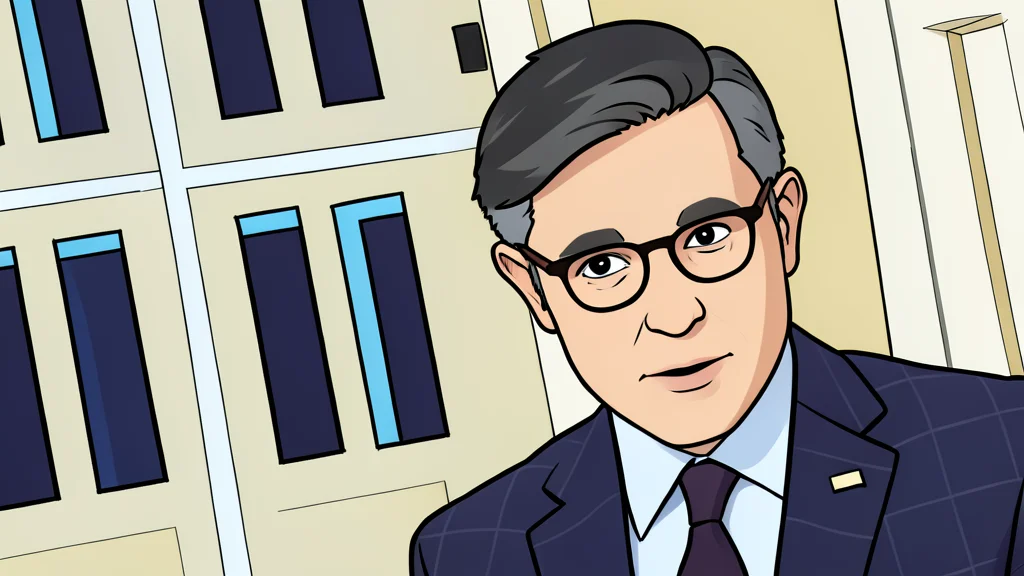
This political impasse leaves a gap in federal oversight. Speaker Mike Johnson, who controls the House schedule, has offered only vague assurances about the role of Congress, emphasizing that companies should self-regulate. He noted that the president plans to meet with AI executives to discuss safety responsibilities, but this approach relies on voluntary corporate behavior rather than enforceable legal standards. For consumers and businesses relying on AI technology, this means there is no current federal safety net or clear accountability framework in place.
Competing proposals lack unified support
Even among lawmakers who support regulation, there is no consensus on what that regulation should look like. The Democratic party, which is pushing hardest for action, is fractured on specific policy details. Some members advocate for independent reviews of high-risk models, while others propose a federal kill switch that could halt dangerous AI systems. Senator Bernie Sanders has gone further, suggesting a total moratorium on new data center construction to slow down development. These diverging views make it difficult to form a coalition strong enough to push through a single, comprehensive bill.
The result is a fragmented legislative landscape with multiple competing bills stalled in committee or on the floor. According to reporting by GN technics/ai (en-US), this lack of unity means that even if Democrats gain control of Congress in November, they will still need to resolve these internal disagreements before they can act. Until then, the development of artificial intelligence continues largely unchecked by federal law, with safety standards left to the discretion of private companies and state-level regulations.
Safety risks remain unaddressed
The trade-off for inaction is a lack of standardized safety guarantees. Without federal rules, there is no uniform requirement for AI companies to test for bias, prevent harmful outputs, or ensure transparency in their algorithms. Industry experts have warned that this regulatory vacuum could lead to significant public harm, from misinformation to discriminatory decision-making. The current political deadlock forces a bet on self-regulation, a model that critics argue has repeatedly failed to protect consumers in other technological sectors.
As the House prepares for recess, the window for immediate action closes. Lawmakers on both sides have expressed concern, but the political will to override the president’s stance and force a special session appears weak. For now, the responsibility for AI safety remains a contested issue rather than a settled legal standard, leaving the public to navigate a rapidly evolving technology without a clear federal safety net.