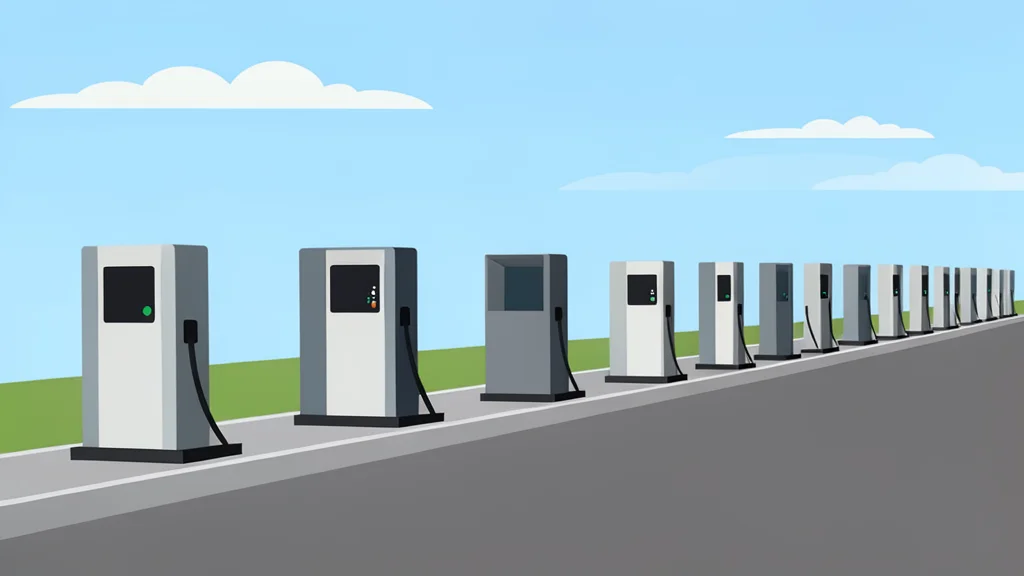
Estonia Skips Mandatory EV Charging Rules for Parking Lots
Estonian authorities have decided against enforcing a new European Union requirement that would have mandated charging points in large commercial parking areas. The decision reflects a local assessment that the infrastructure costs outweigh the current demand for electric vehicles in the country.
Estonia has opted out of a specific provision in the EU’s Energy Efficiency Directive that requires large non-residential buildings to install electric vehicle charging infrastructure. Under the original rule, businesses would have been required to equip one charging station for every ten parking spaces and prepare every second space with the electrical connections needed for future chargers. The Estonian Ministry of Climate has removed this requirement from the draft bill sent to stakeholders, signaling a departure from the broader European standard.
The move is driven by significant cost concerns. Nele Peil, head of the Estonian Traders Association, estimated earlier this year that meeting the directive’s minimum standards would cost companies between 500 million and 2 billion euros. This financial burden is particularly heavy given the current state of the national vehicle fleet, where electric vehicles account for less than two percent of all registered cars. The government argues that investing in this infrastructure now is not economically sensible given the low penetration rate of electric cars.
Grid capacity takes priority over chargers
Ivo Jaanisoo, Deputy Secretary General at the Ministry of Climate, explained that Estonia has formally proposed to the European Commission that these requirements be relaxed. The ministry argues that the priority for sustainable transport should be ensuring sufficient grid capacity to support existing energy practices rather than expanding charging hardware. Jaanisoo noted that after consulting with business associations and assessing technological progress since the directive was adopted, it remains unclear how the regulation could be implemented effectively in Estonia’s current context.
The ministry also highlighted a broader trend across the European Union, noting that all member states are currently behind schedule in implementing this particular aspect of the directive. While Estonia hopes other nations will follow its lead in rejecting the mandate, discussions suggest the issue is not a pressing concern for many other countries. Several EU states have already made significant strides in developing charging networks and possess large numbers of electric vehicles, meaning the immediate pressure to build new infrastructure is lower there compared to Estonia.
Businesses welcome the regulatory pause
The Estonian Traders Association supports the ministry’s decision, arguing that it prevents unnecessary financial strain on retailers. Peil pointed out that some companies have already begun preparing for the mandate by establishing electrical connections for charging stations. However, she emphasized that the alternative of addressing only a portion of the requirement, or delaying full compliance, is a better financial outcome than bearing the full cost of equipping every space. This approach allows businesses to manage their capital expenditure more effectively while the market for electric vehicles continues to grow gradually.
According to data from the Estonian Transport Administration, there are currently nearly 12,300 electric vehicles in the country. This small share of the total vehicle fleet underpins the argument that large-scale, mandatory installation of charging points is premature. The Ministry of Climate will accept feedback from stakeholders regarding the planned changes until the end of September, with the final implementation dependent on the outcome of these consultations and ongoing discussions with the European Commission.