Musk Hints at Tesla and SpaceX Merger
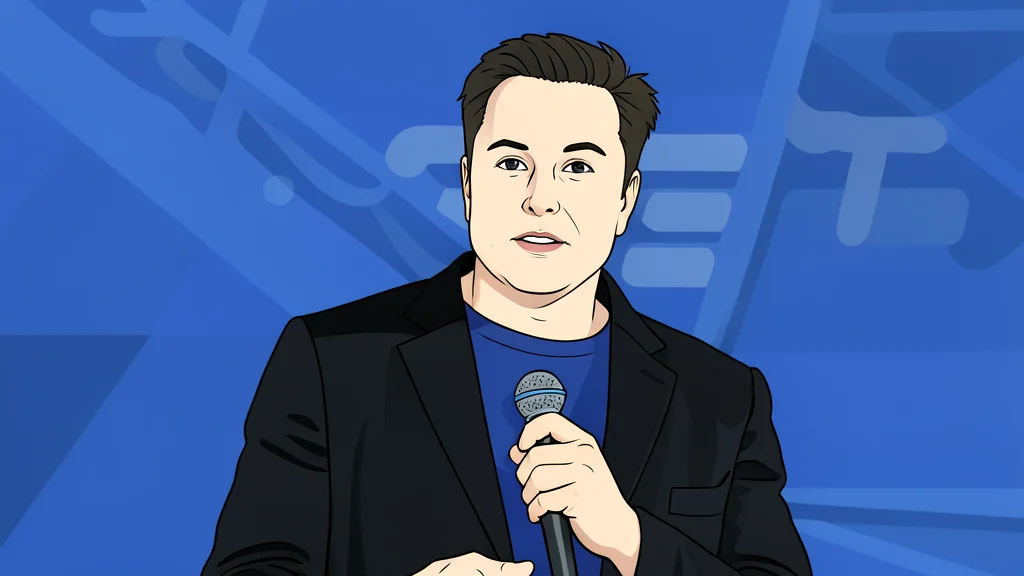
Elon Musk suggested that the deepening ties between his electric vehicle and aerospace companies could lead to a formal merger, a move that has already significantly distorted Tesla's financial reports.
During a recent appearance at the All-In Summit, Elon Musk declined to rule out combining Tesla and SpaceX. He pointed to the extensive collaboration between the two entities as a reason why such a step might be logical. However, he offered no timeline, structural details, or formal commitment, leaving investors to speculate on the next steps.
The potential merger is not just theoretical; it is already visible in Tesla’s financial statements. In the second quarter, the company recorded a $1.01 billion unrealized gain on its SpaceX stake. This paper profit far exceeds Tesla's actual operating income, meaning most of the company's net income came from holding shares in Musk's other business rather than from selling cars.
Financial reliance on paper gains
Tesla holds approximately 19 million SpaceX Class A shares, a stake that originated from an earlier investment in xAI. When SpaceX acquired xAI, Tesla's rights converted into these SpaceX shares. This accounting entry has become a major driver of reported earnings, creating a significant discrepancy between the company's operational performance and its bottom line.
Critics and analysts point out that this structure blurs the lines between the two businesses. While Tesla reported a 57% drop in operating income year-over-year, the valuation of its SpaceX stake kept its net income positive. This raises questions about the true health of Tesla's core automotive and energy operations versus its investment portfolio.
Deep operational integration underway
The two companies are increasingly intertwined in their day-to-day operations. SpaceX has purchased hundreds of millions of dollars worth of Tesla Cybertrucks and Megapack battery systems. Conversely, Tesla vehicles now integrate Grok, the AI model developed by xAI, and Starlink hardware is installed in new Cybercabs produced at the Texas Gigafactory.
Gwynne Shotwell, SpaceX’s President and COO, noted that the businesses are integrating faster than expected. She highlighted personnel moves, such as SpaceX engineers joining xAI to fill leadership gaps. These cross-pollinations suggest that the two entities are becoming functionally linked, even if they remain legally separate for now.
IPO fuels merger speculation
Speculation about a merger has accelerated since SpaceX went public in June. The company raised approximately $75 billion in what became the largest initial public offering in history. The stock surged on its first day, propelling Musk to the status of the world's first trillionaire.
Wall Street is closely watching these developments. A merger would create a massive conglomerate spanning electric vehicles, energy storage, aerospace, and artificial intelligence. As reported by GN auto tech/ev, the scenario is now one of the most tracked corporate possibilities on the market. The trade-off is clear: while synergy may improve efficiency, the complexity of merging such distinct industries poses significant regulatory and operational risks.