New Funding Reshapes EV Charging Infrastructure in Europe

Two European companies have secured significant capital to expand electric vehicle charging networks and fleet management software, aiming to solve growing infrastructure gaps.
EZO and Rightcharge have both closed new funding rounds to accelerate the rollout of electric vehicle charging infrastructure across the UK and Ireland. For EZO, an Irish-based provider, this means deploying thousands of new chargepoints. For Rightcharge, a UK software firm, the capital supports its expansion of a platform that simplifies billing for corporate fleets.
The move comes as demand for EV charging rises, creating a critical need for reliable public infrastructure. According to GN auto tech/ev, these investments are designed to address that gap by combining large-scale hardware installation with streamlined software solutions for businesses.
EZO secures debt for network expansion
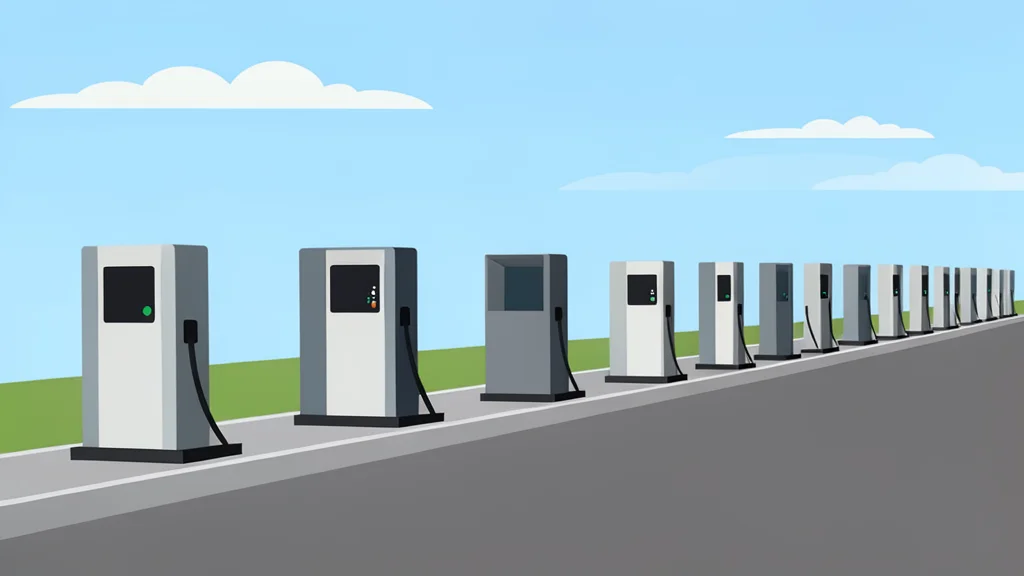
EZO has finalized a 150 million euro debt facility to install over 3,000 chargepoints. This financing structure is notable because it is non-recourse, meaning the debt is secured only by the assets being built, not the company’s other holdings. The funds will cover the design, installation, and maintenance of these units in the UK and Ireland.
The project operates under long-term public-private partnerships. Over a 20-year period, these chargers are projected to generate more than 1 billion pounds in electricity sales. A portion of this revenue will be shared with the public sector, and at the end of the concession, ownership of the infrastructure reverts to the government. This model shifts the financial risk of building the network to private lenders while ensuring public ownership in the long run.
Rightcharge expands fleet payment software
Rightcharge, which provides payment and cost monitoring software for company cars, has raised an additional 500,000 pounds. This follows a previous 1.6 million pound seed round. The new capital is intended to support the company’s push into France and Germany, where it has already established initial partner relationships.
The company’s platform consolidates charging, reimbursement, and cost tracking into a single system. Rightcharge claims this approach can reduce charging costs by up to 90% and lower carbon emissions by 30%. The software also aims to cut the administrative workload for fleet managers by automating the reconciliation of charging expenses.
Trade-offs in infrastructure financing models
While the funding addresses immediate capacity needs, the structures involve specific trade-offs. EZO’s debt must be repaid over seven years using ring-fenced revenues from the chargers themselves. This creates a direct link between charger utilization and financial stability. If the chargers are not used as projected, the repayment schedule could become difficult to manage.
Rightcharge faces a different challenge. Its growth depends on convincing large fleets to switch to its platform. While the software offers significant cost savings, it requires integration with existing vehicle systems and charging providers. The company has partnered with Andersen EV to integrate home chargepoints, but broader adoption will depend on seamless compatibility across different vehicle types and regional energy markets.