Humanoid Robot Makers Pivot to Uptime Strategies
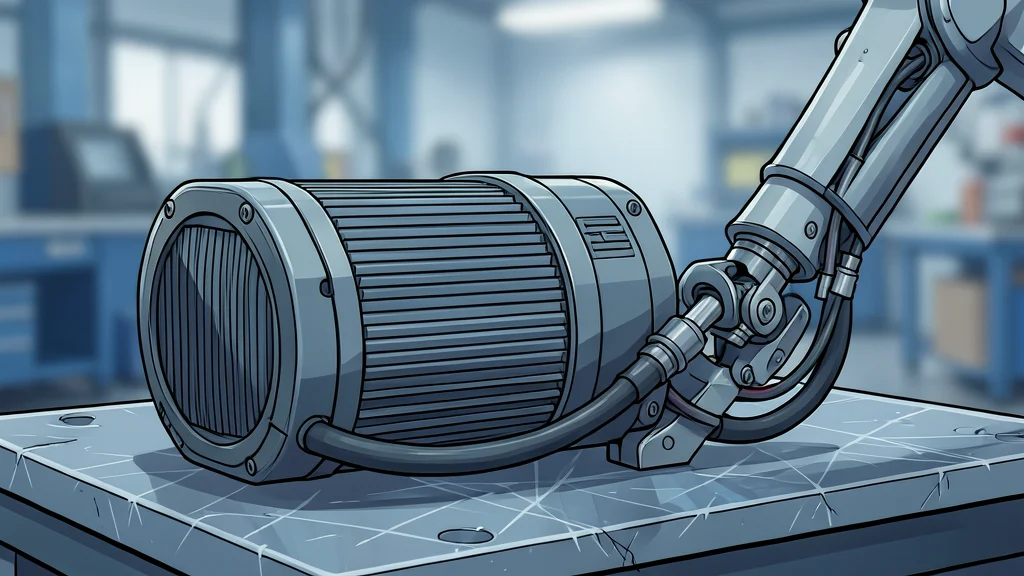
As physical limits prevent larger batteries, manufacturers are trading raw capacity for smarter power management and faster swap systems to keep robots working.
The race to power humanoid robots is no longer about who can fit the biggest battery into a chassis. Instead, the focus has shifted to maximizing operational uptime. As engineers hit the physical limits of how much weight a robot can carry without losing balance, the industry is pivoting toward solutions that keep machines moving rather than simply storing more energy.
This strategic shift comes as market forecasts for humanoid deployment soar. Analysts now predict the global market could reach $38 billion by 2035, with some estimates suggesting over a billion units in operation by 2050. However, current technology remains a bottleneck. Most existing robots, including popular models like Unitree's G1, operate for only two to four hours on a single charge, a duration far too short for standard eight-hour industrial shifts.
Weight limits constrain battery size
The primary obstacle is physics. A heavier battery requires more energy for the robot to move its own mass, creating a vicious cycle that drains power faster. According to research cited by the Institute of Electrical and Electronics Engineers, a 70-kilogram robot must limit its battery pack to just 5 to 8 kilograms to maintain stability. This constraint forces manufacturers to use small packs, typically under 2 kilowatt-hours, which inherently limits runtime.
To work around this, companies are experimenting with different architectural approaches. Some, like Tesla and Figure AI, have integrated batteries directly into the torso structure to save space and reduce weight. While Figure AI's latest model supports fast charging and offers up to five hours of runtime, this method has a significant trade-off: the robot generally cannot operate while it is charging. This creates a gap in continuous availability that industrial clients find difficult to accept.
Swapping technologies extend operational hours
An alternative approach prioritizes speed over storage capacity. Boston Dynamics and UBTECH have developed systems where robots can replace their own batteries in about three minutes. UBTECH’s Walker S2, for instance, aims for 24-hour continuous operation by using multiple battery packs and automatic swap stations. This strategy allows companies to use smaller, lighter batteries that are easier for the robot to handle, while the swap infrastructure ensures the machine never stays idle for long.
This shift changes the value proposition for battery suppliers. It is no longer just about energy density; it is about high-power delivery and compatibility with swapping mechanisms. Industry analysis suggests that for humanoids to become a major market, annual production would need to reach tens of millions of units, requiring hundreds of gigawatt-hours of battery capacity. This volume is comparable to a significant portion of the current electric vehicle battery market, signaling a substantial new demand stream.
South Korean makers adopt distinct paths
Major battery manufacturers in South Korea are responding with divergent strategies. LG Energy Solution is optimizing its mass-produced cylindrical cells, creating specific versions for long-duration operation and others for high-power bursts. Meanwhile, Samsung SDI is co-developing solutions with automotive partners, leveraging their existing supply chains. These companies are betting that the humanoid sector will soon require specialized components like high-current connectors and advanced thermal management, moving beyond simple EV battery adaptation.
Looking further ahead, all-solid-state batteries are seen as the long-term solution to these constraints, with demand potentially rising to 74 gigawatt-hours by 2035. For now, however, the industry is focused on the immediate trade-off: accepting smaller, lighter batteries in exchange for the ability to keep robots running through rapid swaps and efficient power management. This practical approach addresses the urgent need for industrial reliability before next-generation chemistry becomes commercially viable.