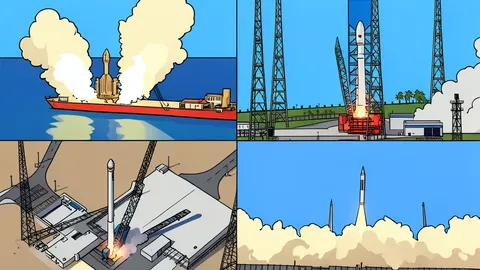
Canada and France Commit to Shared Space Infrastructure

Leaders pledge to jointly develop launch systems and reception facilities, marking a shift toward autonomous strategic capabilities.
Key points
- Canada and France will jointly develop space launch systems and ground-based reception facilities.
- The agreement aims to reduce strategic dependencies and strengthen independent decision-making capabilities.
- Chambers of commerce in both countries are expected to sign a new business cooperation agreement soon.
Prime Minister Mark Carney and President Emmanuel Macron have pledged to coordinate on space infrastructure, a move designed to reduce reliance on third-party systems. Speaking from Saint-Pierre-et-Miquelon, the leaders announced that their respective space agencies and defense ministries will work to develop and share common assets, including launch systems and ground-based reception facilities.
The agreement extends beyond the technical, with both nations tasking their chambers of commerce to deepen business ties. According to CBC, the leaders framed this cooperation as a way to strengthen independent decision-making capabilities in a geopolitical landscape marked by rising tensions and new dependencies.
Shared Space Infrastructure Goals
The core of the technical agreement involves the joint development of space launch systems and ground-based reception facilities. This infrastructure will allow both countries to share the costs and logistical burdens of accessing space. By pooling resources, Canada and France aim to create a more resilient and cost-effective operational framework for their respective space programs.
However, this cooperation comes with significant trade-offs. Building shared infrastructure requires deep integration of technical standards and data security protocols. It also implies a level of strategic dependency between the two nations, where the failure or political shift of one partner could impact the other’s access to critical space capabilities.
Economic and Strategic Context
The pledge arrives as both nations navigate increased tensions with the United States. European Commission President Ursula von der Leyen recently proposed that Canada become the first associate member of the European Union. This broader diplomatic push suggests that the space infrastructure deal is part of a larger effort to build autonomous strategic partnerships outside of traditional North American security frameworks.
Business leaders view the move as a chance to unlock new value chains. Candace Laing, CEO of the Canadian Chamber of Commerce, noted that the two economies offer genuine complementarities. Alain Di Crescenzo of the French Chamber of Commerce added that this trust is a rare advantage in global commercial partnerships, allowing both sides to explore shared opportunities without closing off other markets.
Historic Significance of the Visit
The meeting in Saint-Pierre-et-Miquelon carries symbolic weight, as Carney is the first Canadian prime minister to make an official visit to the French territory. Macron is also the first French president to visit in over a decade. The location underscores the historical and geographic ties between the two nations, situated just 20 kilometers off the coast of Newfoundland and Labrador.
While the visit highlights unity, it also signals a distinct shift in diplomatic posture. By choosing a remote French territory for high-level talks on space and economy, the leaders are emphasizing a relationship that is both historically deep and strategically forward-looking, independent of broader transatlantic friction.