US Orbital Weapons Statement Sparks Public Anxiety
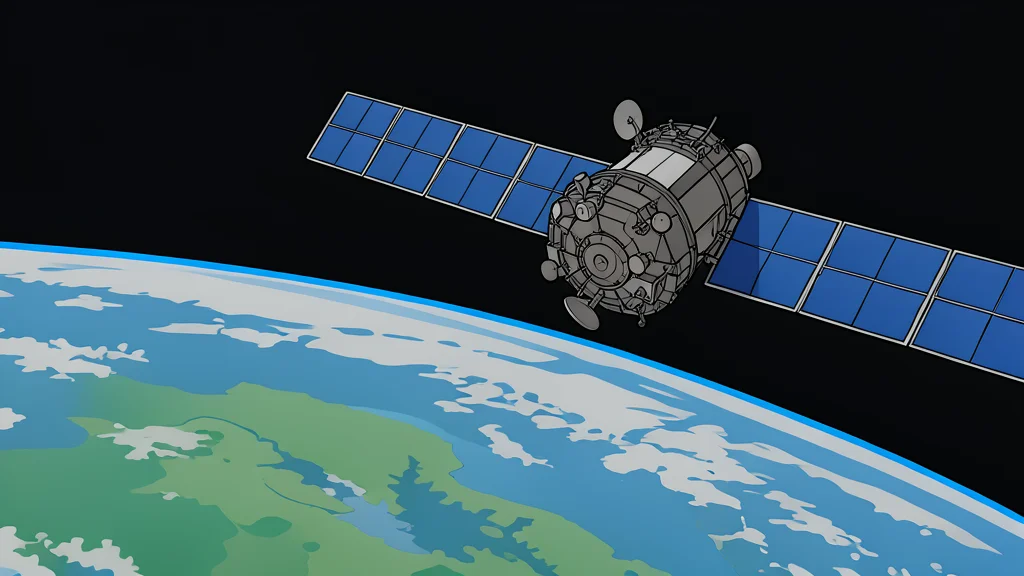
A recent poll indicates that a significant majority of science readers are worried about the militarization of space following new statements from US officials.
Concern over the potential militarization of space is widespread among science enthusiasts in the United States. A recent survey conducted by Live Science found that 80% of participants expressed deep worry about the possibility of an arms race in orbit. This anxiety follows a public statement by US Air Force Secretary Troy Meink, who confirmed that the United States has deployed orbital space-control capabilities. He described these systems as defensive tools designed to protect military assets from hostile actions, yet the announcement has triggered fears of a new era of conflict beyond Earth.
The debate highlights a growing tension between national security interests and international stability. While the US government frames these developments as protective measures, many observers view them as a step toward weaponizing the vacuum above the atmosphere. The stakes are high, as the deployment of such technologies could destabilize the delicate balance of power that has kept space relatively peaceful since the Cold War. For the average reader, the implications are no longer abstract; they represent a tangible shift in how nations interact on the global stage.
Official Defense Rationale
Troy Meink made his remarks during the Air, Space and Cyber Conference in Maryland on September 14. He emphasized that the new capabilities are intended to safeguard the Joint Force from adversaries who might attempt to disrupt American assets in orbit. The administration argues that having defensive systems in place is necessary to maintain deterrence and ensure the safety of critical infrastructure. By framing these tools as shields rather than swords, the US aims to reassure the public that its primary goal is protection, not aggression.
However, critics argue that the line between defense and offense is increasingly blurred in space. In an environment where speed and precision matter, a system designed to intercept threats can easily be perceived as a threat itself. This ambiguity is a major concern for international diplomats, who fear that one nation's defensive posture could be interpreted as an offensive capability by others. The result could be a spiral of escalation, where each country feels compelled to develop its own countermeasures, leading to an unstable and dangerous situation in orbit.
Weak International Legal Frameworks
The current legal landscape governing space activities is outdated and lacks strong enforcement mechanisms. The 1967 Outer Space Treaty, signed by the United States and the Soviet Union, prohibits the placement of nuclear weapons and other weapons of mass destruction in orbit. However, it does not cover all types of weapons, nor does it have a robust system for punishing violations. This gap in the treaty means that there are few consequences for nations that push the boundaries of what is allowed in space.
Experts warn that this lack of enforcement could encourage other states to develop their own orbital weapons. If the United States deploys such systems without facing significant international sanctions, other countries may feel justified in doing the same. This could lead to a fragmented space domain, where different nations operate under different rules and priorities. The absence of a clear, enforceable global standard makes it difficult to prevent an arms race, leaving the future of space governance uncertain.
Public Sentiment and Debate
The reaction from the public, as reflected in the Live Science poll, is largely one of concern. While 80% of respondents are worried, a smaller group of 14% believes the fears are premature. These skeptics argue that it is too early to judge the intentions behind the US deployment and that a more measured response is needed. They suggest that waiting to see how other countries react before drawing conclusions is a wiser approach.
Comments from readers further illustrate the complexity of the issue. Some expressed alarm at the prospect of weapons in space, fearing a new Cold War in orbit. Others, however, pointed out that such systems could be intended for purely defensive purposes, such as protecting satellites from debris or hostile maneuvers. This divide in public opinion mirrors the broader debate among experts, with no clear consensus on whether the US move represents a defensive necessity or a dangerous escalation. The outcome will likely depend on how other nations respond and whether new international agreements can be reached.